


Inside the Greek Citizen Engagement Workshop
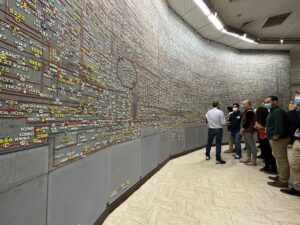
On July, 2026, the OPENTUNITY Greek Pilot reached a significant milestone in its mission to place citizens at the heart of the energy transition. In a collaborative effort, partners HEDNO, IPTO, HYPERTECH and ICCS, under the strategic guidance of JOANNEUM RESEARCH, hosted a dynamic online workshop titled:
"Becoming Part of the Energy Future – How OPENTUNITY Empowers Citizens and Professionals".
Bridging the Gap: From Technical Concepts to Daily Benefits
The primary goal of the session was to strip away complex technical jargon and introduce the OPENTUNITY ecosystem in a simple, engaging way. Rather than focusing solely on engineering, the workshop highlighted how small changes in everyday energy consumption can collectively improve the stability of the national electricity system.
Participants explored the necessity of smart grids and flexibility services, discovering how these innovations allow households to transition from passive consumers to active partners who benefit directly from new digital energy services.
An Interactive Look at the Future Grid
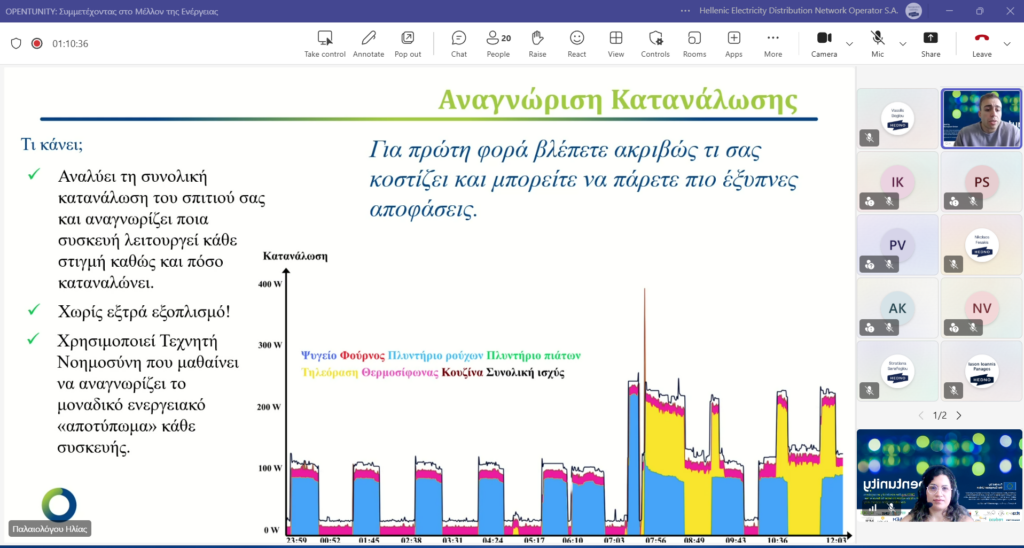
To keep the two-hour session engaging for its 23 participants, the presenters utilised interactive live polls via QR codes and short videos to illustrate key concepts. The comprehensive agenda covered:
- The Big Picture: An introduction to the OPENTUNITY project and the specific challenges facing today’s electricity system.
- Defining Flexibility: Why smart grids are essential for the modern energy landscape and how flexibility benefits both the system and the consumer.
- Live Tool Demonstrations: A first-hand look at the innovations driving the project, including NILM (Non-Intrusive Load Monitoring), HEMS/BEMS (Home/Building Energy Management Systems), the Network Planning Tool, and the Local Flexibility Market.
Strengthening DSO-TSO Synergies in Greece
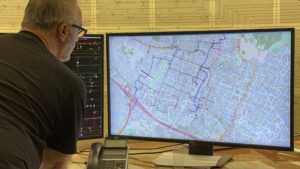
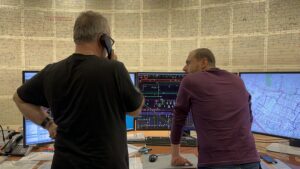
The workshop is a core part of the activities in the Greek pilot site, which covers the Mesogia area (Koropi, Lavrio, and N. Makri) as well as the interconnected islands of Kea, Andros, and Tinos. A key focus of this pilot is increasing the digitalisation of both the DSO (HEDNO) and the TSO (IPTO) while establishing vital synergies between them to better manage grid operations.
The Human Element of the Energy Transition
The event concluded with an open discussion where experts shared their views on how these digital tools can be practically adopted in daily life. By fostering this direct dialogue, OPENTUNITY continues to ensure that the European energy ecosystem is not just technically advanced, but truly user-centric and accessible to all citizens.
To explore more about our innovations or to view technical details on our Greek pilot:

Understanding User Acceptance of Flexible EV Car-Sharing Models
The transition towards more sustainable mobility is not only about developing new technologies. It also depends on understanding how people use these technologies and what would encourage them to adopt new ways of moving and consuming energy.
Mobility and housing are among the areas with the greatest impact on individuals’ private lifestyles and energy demand. As electric vehicles become increasingly common, new opportunities are emerging to connect mobility with the electricity system. One of these opportunities lies in combining car-sharing services with the flexibility offered by electric vehicle charging.
Within the OPENTUNITY project, Joanneum Research and Avantcar are working together to investigate how users perceive new car-sharing business models that make use of EV charging flexibility both at home and on the go.

Exploring the user perspective
These business models could enable electric vehicles to contribute more actively to the energy system. By adapting when and how vehicles are charged, it may be possible to make better use of renewable electricity and reduce pressure on the grid during periods of high demand.
However, the success of these solutions depends on more than their technical feasibility. Users need to see clear benefits and feel comfortable with the services being offered. For this reason, the research carried out by Joanneum Research and Avantcar focuses on understanding the factors that influence the acceptance of these new mobility and energy services.
A major strength of the study is that it is based on the opinions of nearly 1,000 actual car-sharing users, rather than relying solely on general public perceptions. This provides a more realistic picture of how potential users may react to the proposed business models.
Adapting the offer to different user needs could increase the size of the potential target groups by between 18% and 44%.
Looking at the complete user journey
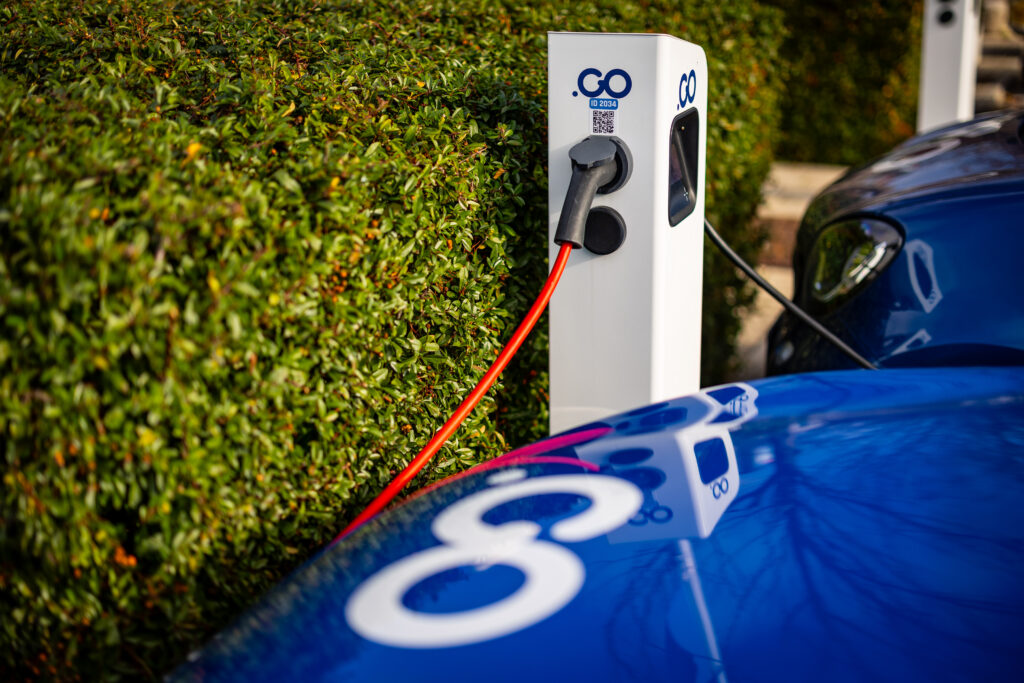
The research covers the full experience of using the service, from making a reservation to returning the vehicle. This approach allows the project partners to examine how users might respond to the different steps involved in participating in more flexible EV charging schemes.
The study also goes beyond simply asking whether users are interested or not. It explores the reasons behind their responses, including more specific concerns such as comfort, financial benefits, fear of vehicle damage, or questions related to responsibility and liability.
Preliminary findings indicate that comfort and financial benefits are among the main drivers of user acceptance. At the same time, the research is now going further to identify how these motivations and concerns vary between different groups of users.
Unlocking the potential of new business models
A better understanding of users who express interest under certain conditions could significantly expand the potential target groups for these new business models. Based on the research conducted so far, adapting the offer to different user needs could increase the size of the potential target groups by between 18% and 44%.
Users need to see clear benefits and feel comfortable with the services being offered.
These insights will help Avantcar refine and validate the proposed business models in real-life conditions, ensuring that they are not only technically viable but also aligned with the expectations and concerns of potential users.
Through this collaboration, OPENTUNITY is contributing to a more integrated approach to the energy transition, one in which electric vehicles are not only a means of transport, but can also become a source of flexibility for the wider energy system. Understanding the people who will use these services is an essential step towards making that vision a reality.
Driving Efficiency: OPENTUNITY Successfully Validates Day-Ahead EV Charging Optimization in Ljubljana
As part of our mission to open the electricity ecosystem to multiple actors for a real decarbonisation opportunity, OPENTUNITY is proud to share the latest results from our Slovenian pilot. From February 1st to March 31st, 2026, our partners SETUP and AVANTCAR successfully completed a two-month demonstration of a cutting-edge day-ahead participation algorithm designed to optimize electric vehicle (EV) charging operations.
The Challenge: Random Charging vs. Grid Needs
In a traditional, non-optimized environment, EV charging sessions often start at random times, typically when a user arrives home or plugs in for the night. This lack of coordination can lead to higher costs for charging operators and unnecessary strain on the electricity grid. Within the OPENFLEX category of our project, focused on increasing flexibility in prosumer environments, we sought to prove that smart scheduling can significantly reduce these inefficiencies.
The Solution: Smart Scheduling in Ljubljana
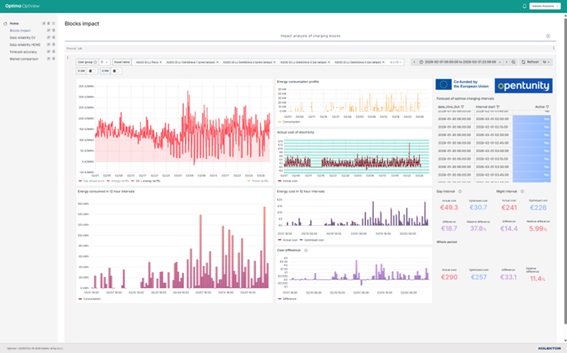
The demonstration took place at several AVANTCAR EV charging locations across Ljubljana, Slovenia, including sites at Peca, Gerbičeva, and Novo Brdo. Using the SETUP aggregation platform and the OptiView monitoring dashboards, the team applied a sophisticated algorithm to a portfolio of six charging stations.
How the algorithm works:
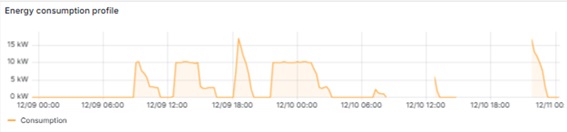
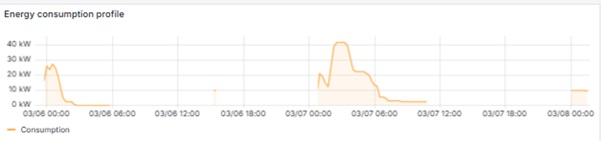
- Time Window: It focuses on the night interval (18:00–06:00).
- Price Signals: It utilizes day-ahead electricity price signals to identify the most cost-effective charging windows.
- Strategic Shifting: Instead of charging immediately, the system shifts sessions toward the less cost-intensive hours after midnight.
- Impactful Results: A 68% Improvement
To measure success, the demonstration results were compared against a baseline period (December 2025 – January 2026) where no optimization was applied.
The findings were definitive:
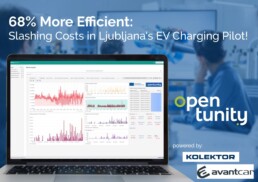
- Baseline Performance: Without optimization, there was an 18.9% gap between actual charging costs and the theoretical least-cost scenario.
- Demo Performance: With the OPENTUNITY algorithm active, this gap was slashed to just 5.99%.
- Overall Efficiency: This represents an improvement of approximately 68% in aligning charging behavior with optimal price intervals.
Real-World Readiness
This demonstration confirms that the OPENTUNITY optimization tools are practical solutions ready for real operating conditions. By effectively steering charging toward low-price hours, we are providing tangible value to flexibility service providers and EV charging operators.
This milestone is a key part of our broader effort in Slovenia to utilize the flexibility potential of domestic assets and EVs to provide services to the Distribution Grid, ultimately fostering a more resilient and sustainable energy ecosystem.
Revolutionising Grid Planning: OPENTUNITY and ICCS at the GSM 2026 Conference
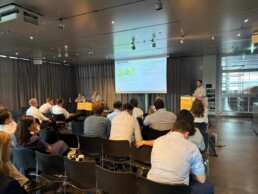
On June 29, 2026, the picturesque city of Lucerne, Switzerland, hosted the 8th Grid Services & Markets (GSM) Conference, a premier event dedicated to the evolution of the electricity market. Among the experts and industry leaders gathered to discuss the future of distribution and transmission grids, the OPENTUNITY project took center stage through a high-impact presentation by our partner, ICCS (National Technical University of Athens).
The primary objective of GSM 2026 was to explore the increasing opportunities for flexibility in generation, storage, and consumption. As renewable energy penetration grows and demand fluctuates, Distribution System Operators (DSOs) face the daunting task of planning future grids that are both resilient and cost-effective.
Representing OPENTUNITY in the session “Planning & Providing Technologies,” ICCS presented a breakthrough solution: the Network Planning Tool.
A Speed Revolution in Network Planning
Traditional grid planning often relies on time-consuming processing, which limits the ability of operators to perform multi-scenario analysis. The OPENTUNITY tool, developed by ICCS, changes the game by being interactive, user-friendly, and incredibly fast.
Key technical innovations highlighted during the presentation included:
- The FPI Advantage: The tool uses a Fixed-Point Iteration (FPI) load-flow algorithm that allows for parallel processing. This methodology is over 100 times faster than conventional Newton-Raphson methods.
- Advanced Clustering: By utilizing K-Means clustering, the tool can group 365 daily profiles into three distinctive, manageable scenarios, enabling deep analysis in practical computation times.
- Mathematical Precision: Using advanced optimization techniques like MILP (Mixed-Integer Linear Programming) and MISOCP (Mixed-Integer Second-Order Cone Programming), the tool delivers highly accurate results for multi-year planning.
Real-World Impact: Investment Deferral and RES Growth
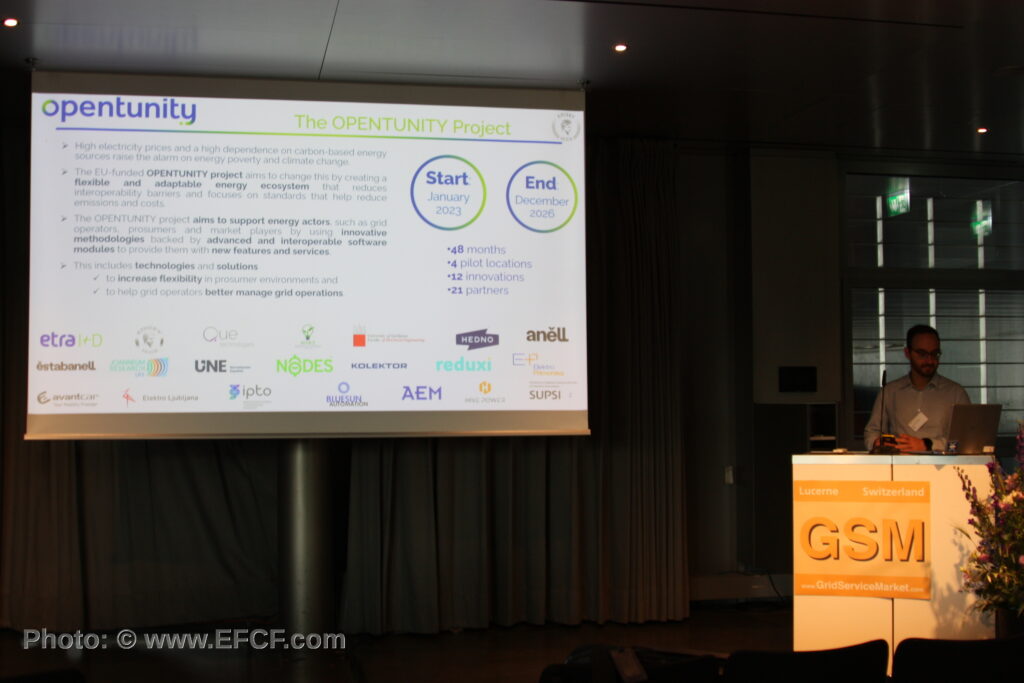
The core mission of this tool is to help DSOs make smarter financial and environmental decisions. The ICCS presentation demonstrated through various scenarios that:
- Investment Deferral: By integrating flexibility services from demand and renewable resources, DSOs can significantly postpone or even avoid the need for expensive conventional grid reinforcements.
- Maximising Renewables: Increased flexibility availability directly enables a higher integration of renewable energy generation within distribution networks.
Market Readiness and Expert Reception
The presentation sparked an engaging discussion among the audience of approximately 50 participants, including researchers, industry experts, and policymakers. Attendees were particularly impressed by the minute-scale calculation speed and the high Technology Readiness Level (TRL) of the OPENTUNITY solutions. The audience noted that these tools are close to being ready-to-market commercial products, a critical factor for the rapid digitalization of the European energy sector.
The Path Forward
This successful participation at GSM 2026 underscores OPENTUNITY’s commitment to building a flexible, adaptable, and decarbonized energy ecosystem. By providing DSOs with the tools to manage grid issues more effectively, we are ensuring that the transition to clean energy is not only sustainable but also cost-efficient for all European citizens.
Download the Presentation
You can now download the full presentation slides below to explore the technical details and results of the Network Planning Tool.
📊 [Download: OPENTUNITY Distribution Grid Planning Slides]

OPENTUNITY Showcases Advanced Flexibility Algorithms at EEM 2026
From June 22nd to 24th, 2026, the OPENTUNITY project participated in the 22nd International Conference on the European Energy Market (EEM 2026) held in Trondheim, Norway. Organized by the Norwegian University of Science and Technology (NTNU), SINTEF, and the IEEE PES Norway Chapter, this prestigious event brought together approximately 500 experts from the scientific community, industry, and policy sectors to discuss the evolution of energy markets.
Innovating Aggregator Strategies
Representing the project, partners from the University of Ljubljana (UL) and IRI UL presented their latest research during the session on Flexibility Markets and Aggregator Strategies. The core of their contribution was the research paper titled: "A Rolling-Horizon Optimal Selection Algorithm for Disaggregating Flexibility in Heterogeneous Asset Portfolio".
The study, authored by Janez Gregor Golja and Dr. Tomi Medved, addresses a critical challenge for modern energy aggregators: how to translate market-level signals into specific instructions for a diverse (heterogeneous) mix of assets, such as Electric Vehicles (EVs), heat pumps, battery storage, and PV systems.


A Smart Approach to Grid Flexibility
The paper introduces a rolling-horizon genetic algorithm designed to identify the most cost-effective combination of assets to deliver requested flexibility. This innovation stands out by integrating a unified cost modelling framework that considers:
- Energy price impacts: Shifting consumption to optimal time slots.
- Asset health: Factoring in the degradation costs of storage systems.
- User comfort: Specifically ensuring that HVAC (heating/cooling) activations respect the user's temperature preferences.
- Uncertainty management: Steering the system toward the most reliable and predictable resources.
Proven Scalability and Impact
The effectiveness of the algorithm was validated across different scenarios, including a large portfolio of 47 assets. The results confirmed that the algorithm can successfully meet market flexibility requests while minimizing costs and maintaining operational limits in real-time.
The presentation was highly regarded by the international audience, underscoring OPENTUNITY’s commitment to providing the technical foundations for a more resilient and decarbonised European grid.
Read the Full Research Paper
Are you interested in the technical details of the rolling-horizon algorithm and its performance results? You can access the full paper through our project library:
📥 [Download the Full Paper: A Rolling-Horizon Optimal Selection Algorithm]
📊 [Access the EEM 2026 Presentation Slides]
JOANNEUM RESEARCH Presents Carsharing Flexibility at STS Conference Graz
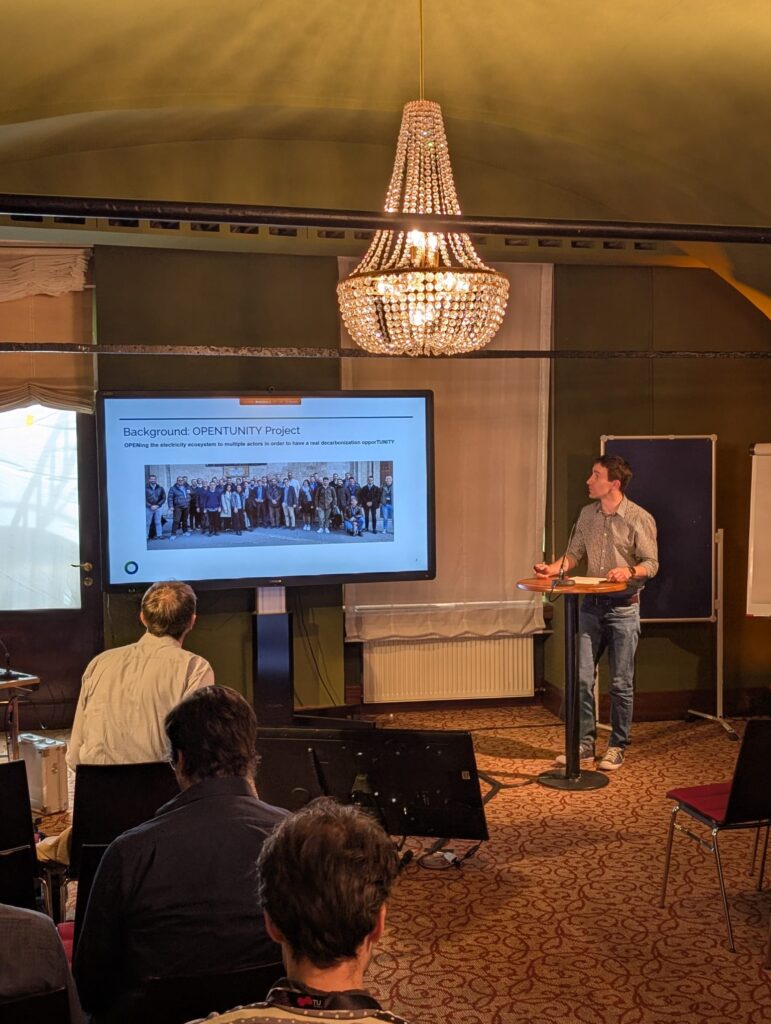
Between May 4 and 6, 2026, our partner JOANNEUM RESEARCH (JR) represented the OPENTUNITY project at the STS Conference Graz 2026 in Austria. Organized by the Graz University of Technology, this event is a cornerstone for the scientific community to discuss the intersections of Science, Technology, and Society.
The Focus: Can Carsharing Support Grid Flexibility?
The core of JR’s participation was the presentation of their latest research titled: “Shared cars, flexible charging: When cost savings meet additional effort”. The study addresses a fundamental challenge in the energy transition: how to manage the volatility of renewable energy by utilizing the inherent flexibility of electric vehicles (EVs).
The research specifically explores whether integrating flexibility into a carsharing business model (such as the one operated by our partner Avant car in Slovenia) is viable from both a technical and social perspective.
Key Insights: Flex On-the-Go vs. Flex at Home
The study, based on a survey of over 950 Avant car customers, analyzed two main scenarios for flexible charging:
- Flex on-the-go: Charging the rented vehicle at suggested points during the trip to support the grid.
- Flex at home: Taking the rented vehicle home and allowing it to be charged flexibly overnight.
The findings were revealing:
- Motivation: Cost savings remain the primary driver for users (over 85% interest), followed by a desire to support sustainability and the energy transition.
- Barriers: For many users, the "additional effort" is a significant hurdle. Many feel that since they are paying for a mobility service, they do not want the extra complexity of managing charging schedules.
- Feasibility: The research suggests there is no "quick win," but flexibility models can succeed if cost savings are high enough and the additional effort for the user is kept to an absolute minimum.
Scientific Exchange and Future Outlook
For the OPENTUNITY project, participating in the STS Conference was a "great opportunity for exchange between applied research and colleagues with a more academic approach". This collaboration with Avant car allowed the team to access real-world field data, reducing sampling bias and ensuring that the project's innovations are grounded in actual user behavior.
By exploring these social and technical boundaries, OPENTUNITY continues to pave the way for a more integrated and decarbonized European electricity ecosystem.
--------------------------------------------------------------------------------
Resources for Download
You can access the full technical details and the results presented at the conference through the following links:
📥 [Download the Presentation Slides] (PDF)
Enhancing Grid Reliability in Slovenia: OPENTUNITY Deploys Advanced Transformer Monitoring
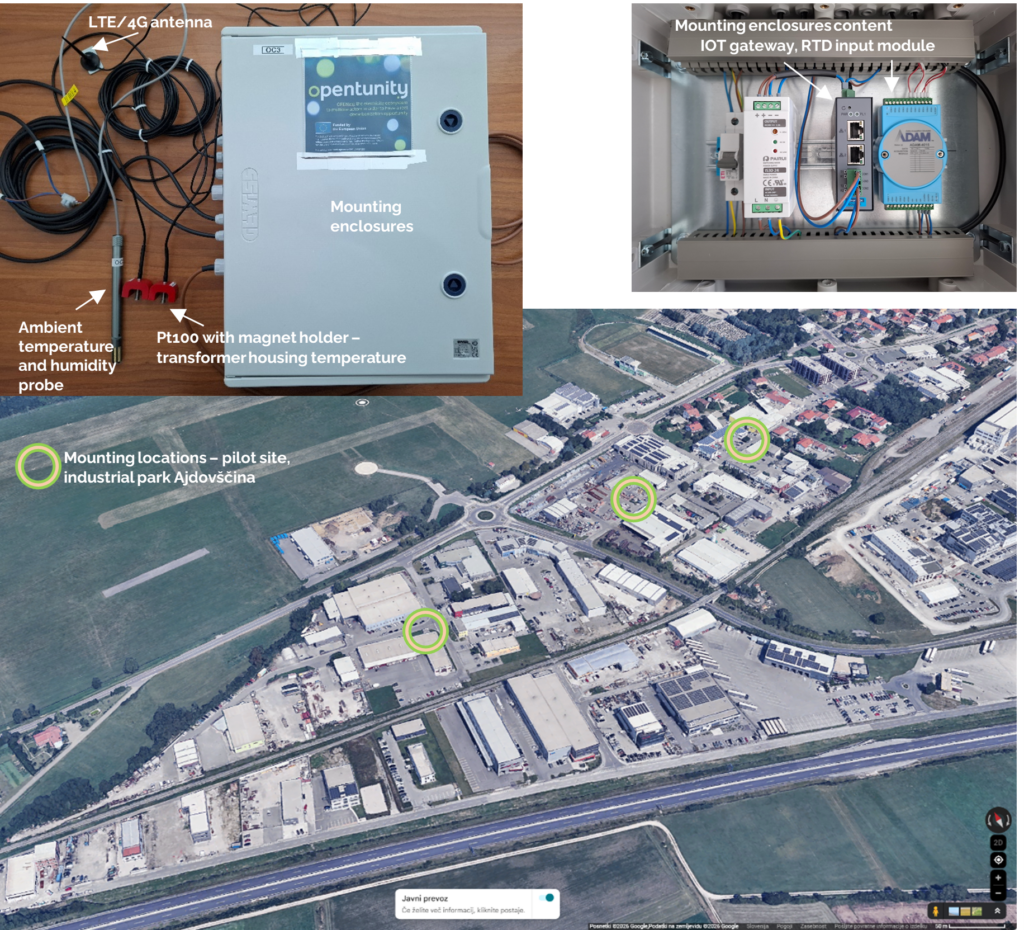
In the drive toward a more resilient and decarbonised European energy grid, monitoring critical infrastructure is paramount. On April 18, 2026, a significant milestone was reached in the Slovenian pilot site of the OPENTUNITY project. Our partner Elektro Primorska (EP), in collaboration with ICCS, successfully installed specialized measurement equipment on three Medium Voltage/Low Voltage (MV/LV) transformers located in the Ajdovščina industrial park.
The Challenge: Real-Time Asset Management
Power transformers are essential components of the electricity distribution network, but they are often the most vulnerable to failure. Traditionally, asset management has been a long-term process, looking at equipment health over months or years. However, to ensure grid stability, there is a growing need for short-term asset management.
The tool developed by ICCS is designed to operate in a near real-time context. Its primary goal is to identify transformers that may be on the verge of failure within hours, allowing operators to intervene before a blackout occurs.
Innovation through Indirect Measurement
To predict these failures, the tool requires precise data on transformer load current,
ambient temperature, and top-oil temperature. A technical challenge arises because many older MV/LV transformers are not equipped with built-in top-oil temperature sensors.
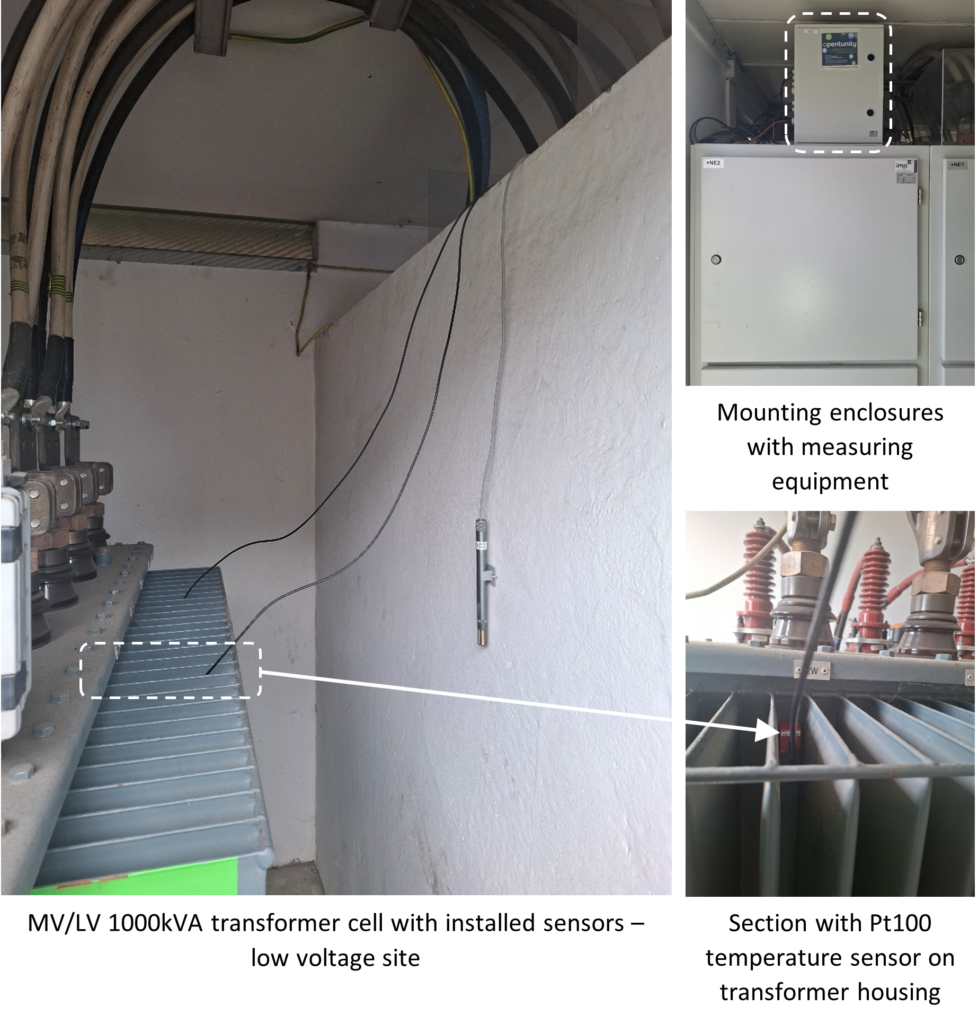
To solve this, the team at Elektro Primorska developed an innovative, purpose-built measuring system. Instead of invasive procedures, the system uses Pt100 sensors with magnet holders placed directly on the transformer housing. This allows for the indirect measurement of top-oil temperature through a direct correlation with the housing temperature.
A Robust Technical Setup for Smart Monitoring
The installation at the Ajdovščina pilot site features a high-tech stack of industrial components designed for reliability and speed:
- Data Acquisition: The system utilizes Advantech components, including IoT gateways and RTD input modules, for local data storage and transmission.
- Environmental Sensing: Along with transformer housing temperature, the system includes an ambient probe to measure surrounding air temperature and relative humidity.
- High-Speed Connectivity: Data is transmitted via a secure MQTT protocol over a mobile LTE/4G network.
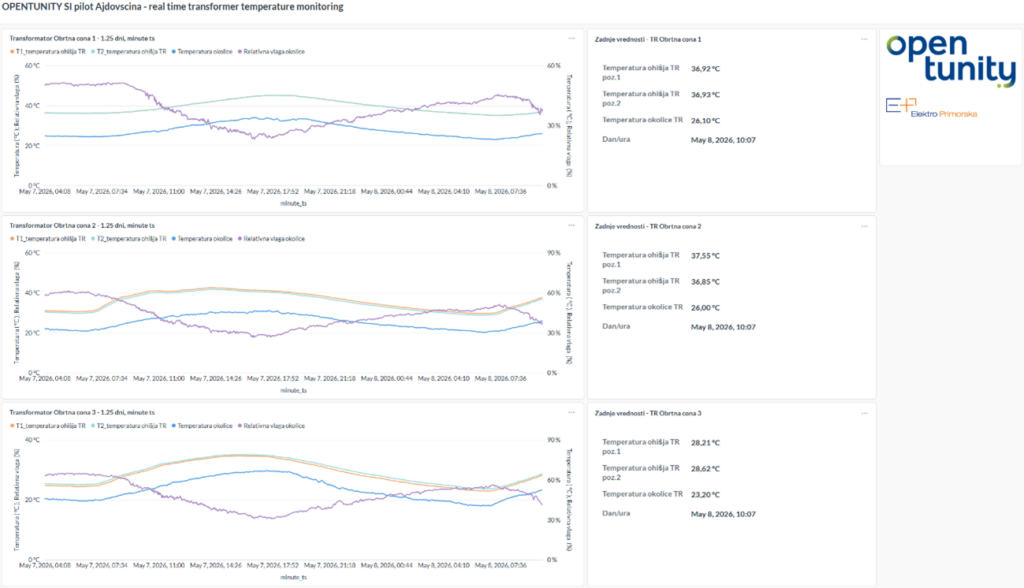
- Real-Time Visualization: Measurements are received at 5-second intervals and stored in an SQL database. This high frequency allows for a real-time dashboard where operators can monitor current and historical data instantly.
 Why This Matters for the Future of Energy
This activity falls under the OPENGRID category of the OPENTUNITY project, which focuses on supporting Distribution System Operators (DSOs) in managing grid issues more effectively. By transforming standard transformers into "smart" assets, Elektro Primorska is demonstrating how existing infrastructure can be upgraded to support a more flexible and digitalised energy ecosystem.
As part of the broader Slovenian pilot, which also involves portions of the grids of Elektro Ljubljana, these advancements are crucial for utilizing the flexibility potential of domestic assets and electric vehicles while maintaining a stable and secure grid.
--------------------------------------------------------------------------------
Project Overview
- Location: Ajdovščina industrial park, Slovenia.
- Partners Involved: Elektro Primorska (EP) and ICCS.
- Key Innovation: Indirect top-oil temperature monitoring for predictive maintenance.
Standardising Peer-to-Peer Energy Trading: Opentunity Leads the Way with New CENELEC Agreement
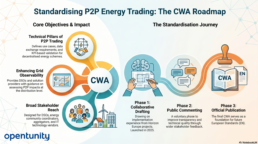
OPENTUNITY is proud to announce significant progress in its contribution to European standardisation. As a primary promoter, the project is spearheading the CENELEC Workshop Agreement (CWA) titled “Impact of P2P trading at distribution grid level,” a critical step toward harmonising decentralised energy markets across the continent.
A Collaborative Effort for European Standardisation
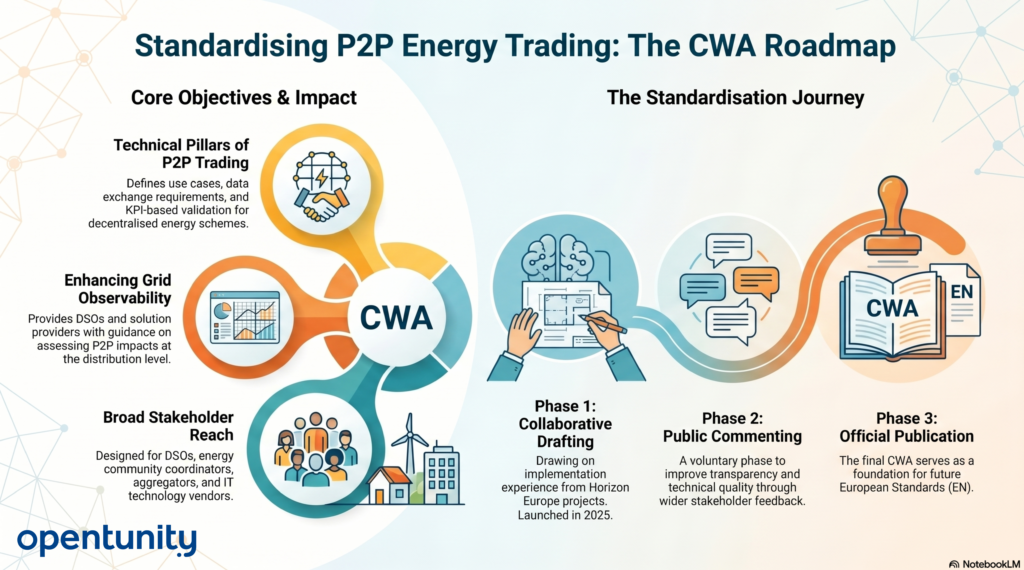
Launched in 2025, this CWA is the result of a strategic collaboration between two major Horizon Europe projects: OPENTUNITY and FEDECOM. A CWA serves as a formal standardisation deliverable that reflects a consensus between the individuals and organisations responsible for its development. By drawing on the collective outcomes of these projects, the agreement aims to establish a common framework for the implementation of peer-to-peer (P2P) energy trading.
Defining the Framework for P2P Implementation
The agreement is designed to be a comprehensive guide for the energy sector. It focuses on several technical and operational pillars necessary for successful P2P integration at the distribution level, including:
- Use Cases and Requirements: Identifying specific scenarios for P2P trading and the necessary data exchange and interoperability standards.
- Grid Observability: Addressing how decentralised trading impacts the monitoring and management of distribution grids.
- Validation Approaches: Establishing KPI-based methods to measure the performance and impact of these schemes.
This CWA will provide essential implementation guidance for a wide range of stakeholders, including Distribution System Operators (DSOs), energy community coordinators, and technology providers such as aggregators and IT integrators.
The Path to Official Publication: Public Engagement
Following the development of a mature draft based on contributor consensus, the document is currently undergoing formal approval by Workshop participants. Once endorsed, the project will enter a vital Public Commenting phase.
This phase allows any interested party to review the text and submit feedback, ensuring the document meets the highest standards of transparency, openness, and technical quality. Engaging a wider pool of stakeholders is considered a highly beneficial step in refining the final agreement.
 Building the Foundation for Future Standards
After the public review, the Workshop will assess all comments to finalise the text for official publication as a CENELEC Workshop Agreement. This document will not only provide a consensual reference for immediate use but will also serve as the foundational roadmap for future European Standards (EN) and Technical Specifications (TS).
By leading this initiative, OPENTUNITY continues to ensure that the innovations developed within the project contribute to a more integrated, standardised, and efficient European energy landscape.
ICCS-NTUA Presents Advanced Transformer Monitoring Research at ISGT Europe 2025 in Malta
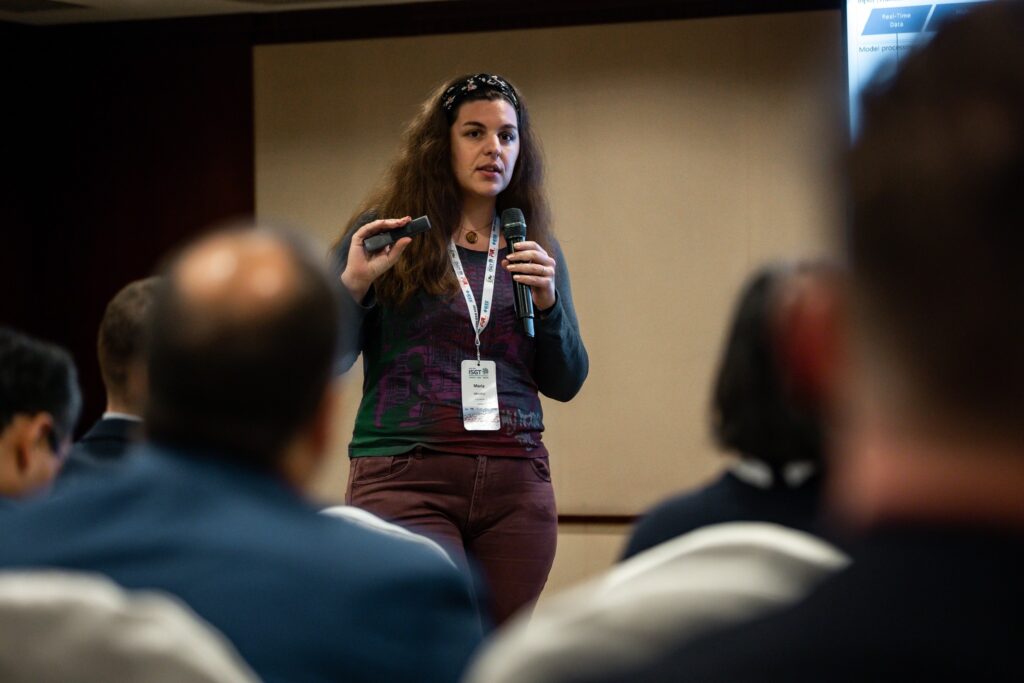
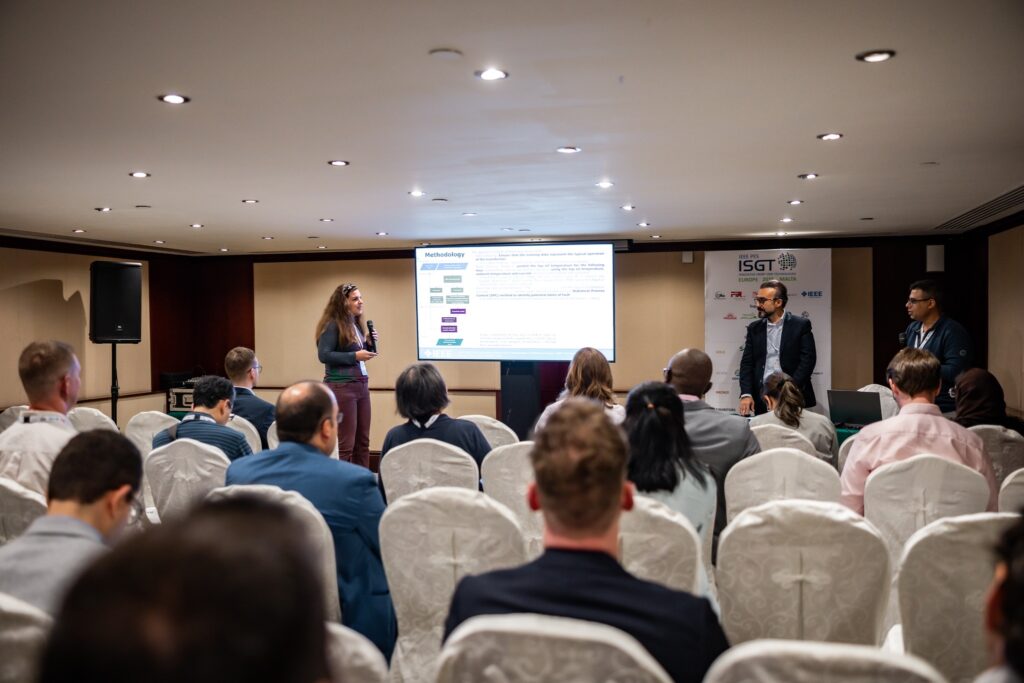
From October 20 to 23, 2025, the ICCS-NTUA team successfully represented the Opentunity project at the IEEE Innovative Smart Grid Technologies (ISGT) Europe 2025 conference in Malta. Organized by IEEE PES, FIR.MT, and the IEEE Malta section, this prestigious forum brought together leading experts from the scientific community and the energy industry to explore the latest innovations in smart grid reliability.
Addressing Critical Infrastructure Risks
Power transformers are the backbone of the grid, but their failure can lead to cascading outages and significant financial losses.
Traditional monitoring methods are often reactive or rely on expensive,
specialized sensors. To address this, the research presented by ICCS-NTUA, titled "Data Driven Model Agnostic Methodology for Transformers Top Oil Anomaly Detection," proposes a proactive, predictive maintenance approach.
The core of the study is a methodology that detects anomalies in top-oil temperature, a primary indicator of a transformer's health. Unlike complex physical models, this approach is "model-agnostic," meaning it can be applied across different types of equipment using only minimal, standard measurements: load current, ambient temperature, and top-oil temperature.
Innovative Methodology and Real-World Validation
The research combines Deep Neural Networks (DNN) with Statistical Process Control (SPC). The process involves:
- Predictive Modeling: A machine learning model is trained on historical data to predict the expected top-oil temperature under normal conditions.
- Anomaly Detection: By comparing real-time measurements against these predictions, the system uses SPC control charts to identify deviations that signify potential faults, such as cooling pump failures or insulation degradation.
The effectiveness of this tool was validated using data from two real-world autotransformers currently operating in the Greek Transmission System. The results showed a high predictive accuracy, with R² values exceeding 0.98. Crucially, the methodology successfully identified anomalies that correlated with significant deviations in bushing capacitance, a clear diagnostic indicator of a developing issue.
Impact and Reception
The presentation was highly valued by attendees, who particularly praised the quality and accessibility of the dataset used for the research. The technical session also sparked a productive debate regarding the algorithm's ability to distinguish between noise and real-world operational anomalies, highlighting the relevance of this work for future industrial applications.
By utilizing data already available via standard SCADA systems, this Opentunity-funded research provides grid operators with a cost-effective early warning system, enabling them to make informed maintenance decisions before a critical failure occurs.
Read the Full Paper
For a detailed look at the technical implementation, mathematical models, and complete case study results, you can access the full publication here:
Download Link: Data Driven Model Agnostic Methodology for Transformers Top Oil Anomaly Detection
OPENTUNITY Advances Smart Energy Management with NILM Pilot Testing
Bringing appliance-level insights to users
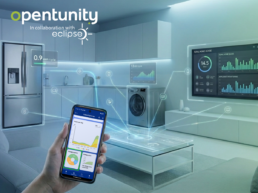
The OPENTUNITY project has recently started testing its Non-Intrusive Load Monitoring (NILM) module with participants across its pilot sites.
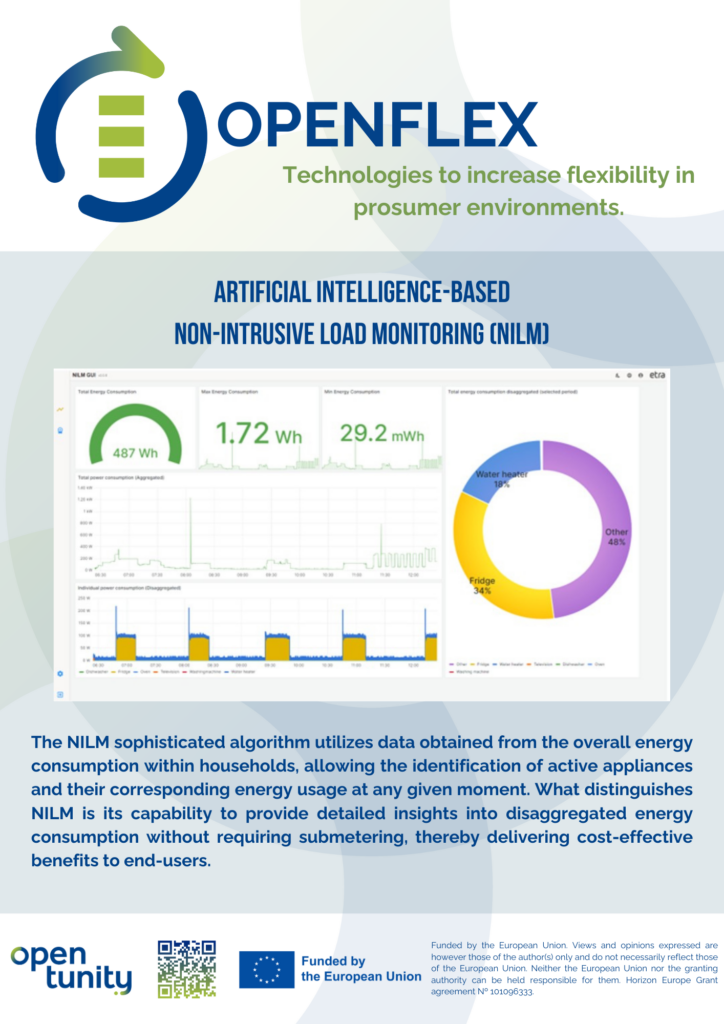
Users can now access the application and monitor the energy consumption of individual appliances in their homes or buildings, without the need for additional hardware.
From static labels to real performance
Early feedback highlights the app’s user-friendly design and the value of its dynamic energy label certification. This feature allows users to compare the real-time performance of their appliances with the static labels provided by manufacturers, helping to identify inefficiencies or potential malfunctions.
By making energy consumption more transparent, the tool supports more informed decisions and encourages more efficient use of energy.
Scaling up at European level
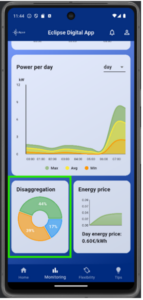 Beyond the pilot phase, OPENTUNITY is already extending the impact of this solution. The NILM module is being integrated into the Common European Reference Framework (CERF), developed within the Digital Europe project ECLIPSE. This framework aims to define a common architecture for Home Energy Management Systems across the EU, paving the way for large-scale adoption.
Towards smarter energy use
This milestone highlights OPENTUNITY’s focus on user-centric innovation and its role in bridging advanced research with real-world applications. As testing continues, further feedback will help refine the tool and strengthen its contribution to smarter, more efficient energy systems.