


News
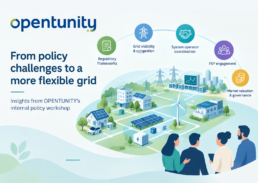
OPENTUNITY explores policy and regulatory challenges for flexibility in European electricity grids
An internal policy workshop held on 1 October brought together project partners to examine regulatory barriers to distribution-level flexibility, discuss lessons from the pilot demonstrations and shape recommendations for the project’s final policy deliverable.
As Europe’s electricity system becomes increasingly decentralised, flexibility is gaining importance as a way to manage congestion, integrate renewable energy and make better use of existing grid infrastructure.
However, regulatory differences, limited network visibility and barriers to market participation can still hinder its wider deployment.
These challenges were at the centre of the OPENTUNITY Internal Policy Workshop, held on 1 October 2026. The session reviewed regulatory approaches across European countries and explored how the project’s findings could contribute to more effective frameworks for flexibility procurement and activation.
Five key challenges for flexibility deployment
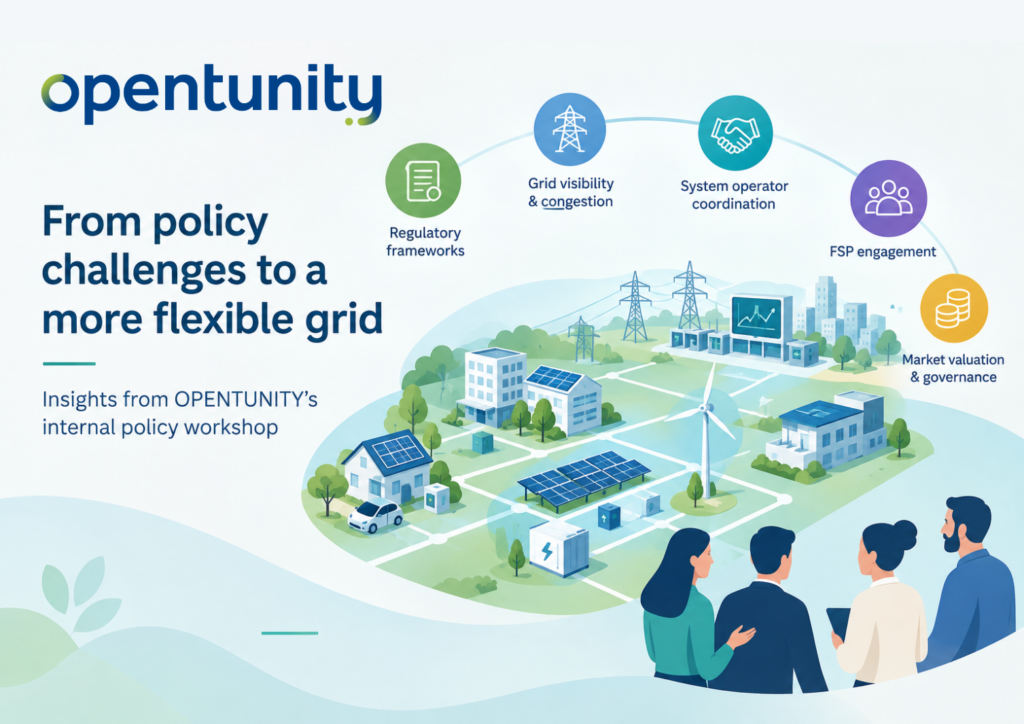
Discussions highlighted five interconnected areas requiring further attention:
- Diverging national regulations: Different approaches to implementing EU electricity market rules can slow the development of flexibility markets. Regulatory sandboxes and pilot schemes offer opportunities to test new mechanisms before their wider adoption.
- Limited low-voltage grid visibility: Incomplete monitoring and delays in smart meter data can make it difficult for distribution system operators (DSOs) to identify and manage local congestion in real time.
- Coordination between system operators: Effective flexibility activation requires better coordination between transmission and distribution system operators, as well as between neighbouring or interconnected distribution networks.
- Barriers to participation: Smaller flexibility service providers, including households, farmers and municipal facilities, may face high entry costs, administrative complexity and concerns about financial penalties.
- Economic incentives and market governance: Existing regulatory frameworks can favour traditional grid reinforcement over flexibility procurement, underlining the need for clearer valuation methodologies and suitable market arrangements.
The workshop also emphasised that technical solutions alone are not enough. Building trust among participants, demonstrating tangible local benefits and ensuring that participation costs remain proportionate to potential revenues are important to encourage wider engagement in flexibility markets.
 From project findings to policy recommendations
Experiences from the OPENTUNITY pilots provided a practical basis for discussing how digital platforms and coordination mechanisms can support flexibility services. In particular, the Greek demonstration highlighted workflows for coordination between transmission and distribution system operators.
Participants also examined different models for flexibility platform governance, the role of dynamic tariffs compared with market-based flexibility procurement, and opportunities to harmonise flexibility products across Europe. Greater convergence in areas such as minimum bid sizes, response times and verification procedures could help reduce fragmentation and support wider market development.
Next steps
The workshop marks an important step towards OPENTUNITY’s final policy and regulatory recommendations, which will consolidate the challenges identified, the solutions explored through the project and the remaining gaps that need to be addressed.
The next steps include updating the policy analysis, preparing a structured matrix linking regulatory bottlenecks with project solutions and areas for further work, and organising a follow-up workshop with external stakeholders, including DSOs, regulators, aggregators and flexibility service providers.
The feedback gathered will contribute to the final policy deliverable, planned for December 2026, helping translate OPENTUNITY’s findings into recommendations to support the wider adoption of flexibility solutions across Europe.

OPENTUNITY Contributes to CWA on Peer-to-Peer Energy Trading
CWA 50784:2026 provides a European framework for assessing the impact of P2P energy trading on distribution grids, bringing together lessons from research and innovation projects to support the wider deployment of energy communities and local flexibility.
As OPENTUNITY enters its final months, one of the project’s contributions is reaching beyond the project itself. CENELEC has officially published CWA 50784:2026 – Impact of P2P trading at distribution grid level, a new Workshop Agreement developed through collaboration between the OPENTUNITY and FEDECOM projects.
The document is now publicly available for free download through the CENELEC website, providing a common European reference for understanding how peer-to-peer (P2P) and peer-to-pool energy trading can affect electricity distribution networks.
From project innovation to a common European framework
P2P energy trading is gaining attention as energy communities and distributed energy resources become an increasingly important part of Europe's energy system. However, enabling users to trade energy and flexibility locally also raises questions about grid capacity, congestion, voltage management, data exchange and interoperability.
CWA 50784:2026 addresses these challenges by providing a framework to assess and quantify the impact of P2P and peer-to-pool trading at low- and medium-voltage distribution grid level.
The agreement brings together expertise from energy technology, research, industry and standardisation, helping translate lessons from European R&I activities into a shared approach that can support future deployment.
For OPENTUNITY, this work is particularly relevant to the project's objective of connecting local flexibility, digitalisation and interoperable grid operation with real-world energy system needs.
Bringing the DSO perspective into P2P trading
One of the key contributions from OPENTUNITY is the distribution system operator (DSO) perspective.
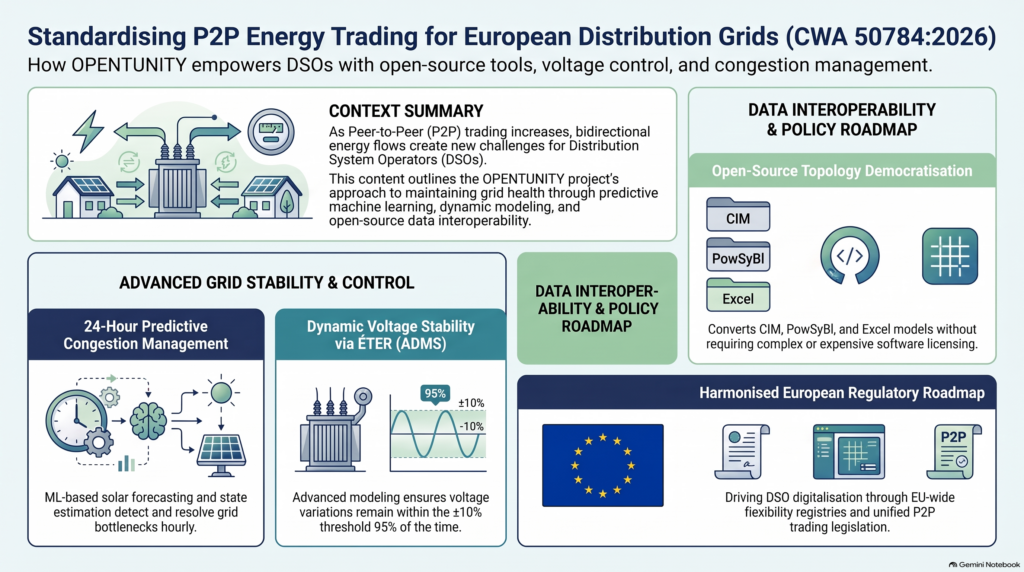
While P2P trading is often considered primarily from the perspective of market transactions between consumers and prosumers, these exchanges also have a direct impact on the physical electricity network. More decentralised generation and consumption can create new patterns of power flows, congestion and voltage variations that need to be monitored and managed.
The OPENTUNITY approach addresses this technical dimension through advanced grid observability and flexibility management.
Short-term renewable generation forecasts and state estimation can be used to anticipate network conditions and identify potential congestion. When flexibility is needed, this information can support the activation of local flexibility services before network constraints become critical.
The project also explores how an advanced ADMS environment can help DSOs assess voltage variations associated with distributed energy resources and ensure that network performance remains within the applicable quality limits.
Making grid interoperability more accessible
Another important contribution concerns network topology and interoperability.
For P2P energy trading and other flexibility-based services to scale, different platforms and actors need to be able to work with compatible representations of the electricity network. However, adopting complex standardised models and digital tools can be challenging, particularly for smaller and medium-sized DSOs.
OPENTUNITY has therefore developed an open-source approach to network topology conversion and visualisation, supporting interoperability between different network modelling formats, including CIM, PowSyBl and Pandapower, as well as more accessible formats such as Excel.
This work can help DSOs integrate and visualise network information without depending on complex or highly specialised software environments, lowering some of the barriers to digitalisation and interoperability.
Supporting the next step towards market adoption
The publication of CWA 50784:2026 represents an important step in connecting research, standardisation and market deployment.
The agreement highlights the need for appropriate regulatory and digital frameworks to enable P2P and peer-to-pool trading at scale. This includes clearer approaches to the roles of different market actors, data exchange, settlement mechanisms and the interaction between local energy markets and distribution grid operation.
It also underlines the importance of giving DSOs the digital capabilities needed to understand and manage the network impacts of increasing local energy trading and flexibility.
For European R&I projects such as OPENTUNITY, this type of standardisation activity provides an opportunity to ensure that project results do not remain isolated demonstrations, but can contribute to common approaches that facilitate replication and future uptake.
CWA 50784:2026 now available
The CWA 50784:2026 – Impact of P2P trading at distribution grid level is now officially published by CENELEC and available free of charge through its CWA download area.
The Workshop Agreement was developed under the FEDECOM and OPENTUNITY projects, with contributions from organisations across the energy, research and standardisation communities.
The publication is not only a project milestone, but also an example of how European collaborative research can contribute to the common frameworks needed to move innovative energy solutions towards wider deployment.

Smart Grids in Practice: OPENTUNITY Brings Flexibility into the Discussion
On 10 September 2026, energy professionals and researchers gathered in Ljubljana, Slovenia, for “Smart Grids in Practice: Experiences and Results from European Projects STREAM and OPENTUNITY”, an event organised by Elektro Ljubljana and the University of Ljubljana.
Bringing together around 30 participants from distribution and transmission system operators, technology companies, research organisations and the energy media, the event provided an opportunity to present the results emerging from both projects and, importantly, to discuss how these experiences can translate into practical changes in the energy system.
From project results to practical discussions
OPENTUNITY was represented throughout the event by several project partners, providing different perspectives on the project's work and its results.
Janez Gregor Golja from the University of Ljubljana opened the OPENTUNITY contributions with an overview of the project's objectives, innovations, pilot sites and current stage, highlighting some of the main outcomes from the demonstration activities carried out across the four pilots, as well as the project's cross-platform demonstrations.
The presentations then moved into specific examples of how OPENTUNITY technologies are being applied and tested in practice. Amibit presented its Reduxi HEMS system and its work within the project on heat pump flexibility, coordination with Elektro Ljubljana, NILM participation and user research. Elektro Ljubljana shared its experience as a DSO and data provider, including the processes required to make operational data available for testing OPENTUNITY's DSO-focused tools, such as ICCS's short- and long-term asset management and grid planning solutions.


Other contributions connected OPENTUNITY's work with broader questions around flexibility and electrification. Avantcar discussed the challenges and opportunities associated with the rapid growth of e-mobility and highlighted the OPENTUNITY solution developed with Kolektor sETup for optimising EV charging schedules according to day-ahead electricity prices. The approach significantly reduced charging costs for the part of the fleet where it was tested.
How can flexibility support smarter grid development?
The event's two roundtable discussions provided an opportunity to move from project results towards some of the practical challenges facing the energy sector.
The first discussion focused on the DSO perspective and the value of flexibility. Participants explored where flexibility can be most useful for network operators and what regulatory, technical and operational changes may be needed to make greater use of it.
 One of the key ideas discussed was the potential of flexible connections to make better use of existing grid capacity. Instead of dimensioning networks exclusively around occasional peaks, flexibility could in some situations allow certain assets to temporarily adjust their consumption or generation when network constraints occur. This could help operators accommodate additional renewable generation or new connections while potentially delaying or reducing some infrastructure investments.
The discussion also highlighted that flexibility should not be seen as a replacement for traditional grid reinforcement. Its value depends on the specific network conditions, the reliability of the flexibility service and the regulatory and contractual framework governing its use.
Connecting flexibility with the growth of e-mobility

The second roundtable focused on e-mobility, looking at both the challenges created by the rapid electrification of transport and the opportunity for EVs to become an additional source of flexibility for the electricity system.

EV charging infrastructure can create new peaks in electricity demand, but smart charging and other flexibility mechanisms can also turn these assets into a resource for grid management. The experience presented by Avantcar within OPENTUNITY provided a concrete example of how charging schedules can be optimised while reducing costs.
This dual role of electric vehicles as both a new source of demand and a potential flexibility resource, will become increasingly relevant as EV adoption continues to grow.
From European projects to real-world change
The event demonstrated the value of bringing project partners and energy-sector stakeholders together to discuss not only what has been developed, but also how these solutions could work in practice.
For OPENTUNITY, the discussions provided an opportunity to share the results of its demonstrations while gathering perspectives from actors directly involved in operating and developing electricity networks. The exchange also highlighted some of the remaining challenges that need to be addressed if flexibility is to become a reliable and scalable tool for the future energy system.
As OPENTUNITY approaches the final months of the project, these discussions are particularly relevant:
the focus is increasingly shifting from developing and demonstrating individual innovations towards understanding their practical impact, scalability and potential contribution to a more flexible and resilient European grid.

OPENTUNITY puts its innovations to the test across four pilots
Over the past year, OPENTUNITY has moved from developing its innovations to putting them to the test in real distribution grids, households, and energy markets. Across four pilot sites in Greece, Slovenia, Spain, and Switzerland, the project deployed and demonstrated its full set of tools for grid operators, prosumers, and flexibility markets under operating conditions. Work package 6 (WP6), coordinated by the University of Ljubljana, marks the point where years of design and development met the complexity of the real world.
A coordinated, evidence-based demonstration
Demonstrating a large set of innovations across four countries required careful coordination. Building on the demonstration plan defined in the first phase of WP6, each pilot worked through a structured set of test cases, with progress tracked systematically across all sites through regular coordination meetings. A dedicated monitoring process kept close watch on the datasets flowing from pilot partners to the technology developers, ensuring that every tool had the data it needed to be tested properly. In total, more than fifty test cases were executed, each documented with concrete evidence of what was deployed, how it was demonstrated, and what the outcome was.
Connecting tools to real infrastructure
Turning a working prototype into a tool running on live infrastructure is not straightforward. Sensors had to be installed on transformers and power lines, data pipelines built between utility systems and the project's platforms, and software connected to everything from household heat pumps to EV charging stations. This integration effort, often the least visible part of a project, was essential groundwork that made the demonstrations possible. - UL, Work Package 6 coordinator.
Results from across the four pilots
Each pilot brought something distinct to the project. Here are a few highlights, with more detailed pilot-focused articles to follow in the coming months.
- In the Greek pilot, HEDNO and IPTO demonstrated a flexibility market on the NODES platform that coordinated needs between the transmission and distribution operators, alongside a transformer health-monitoring tool that flagged real anomalies across high-voltage assets.
- In the Swiss pilot, AEM and its partners ran a local flexibility market for an energy community in Massagno that operated continuously and autonomously across 49 trading days, matching bids and dispatching real assets without manual intervention.
- In the Spanish pilot, ANELL operated a real-time thermal rating tool live on a 40 kV overhead line for roughly ten months, while a state estimation tool gave the operator visibility into low-voltage grids that are normally difficult to observe, reaching voltage estimation with very high accuracy.
- In the Slovenian pilot, smart charging of a shared EV fleet cut the gap to optimal charging cost by more than half in two months of real operation, while a network planning tool showed that even modest flexibility could defer grid reinforcement investments by several years.

What comes next
These demonstrations provide the evidence base for the next phase of the project, where OPENTUNITY will formally assess the impact of its innovations against the project's targets. In the meantime, watch this space for upcoming articles taking a closer look at each pilot and what it achieved.
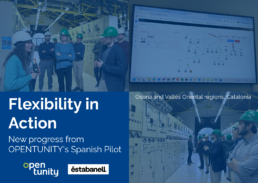
Putting Flexibility to the Test: New Progress from OPENTUNITY’s Spanish Pilot
As OPENTUNITY moves into the final phase of the project, its Spanish pilot is progressing from technology validation towards real-world demonstration. In recent months, Estabanell, ETRA and Hypertech have been working together to validate the project’s solutions with distribution teams and to test flexibility activation in the pilot environment.
These activities are providing valuable feedback on both the technical performance of the solutions and their potential use in day-to-day grid operation.
Validating OPENTUNITY tools with distribution teams
As part of the pilot activities, Estabanell recently completed a series of internal presentations of ETER and the ICCS tools with the Distribution System Operator’s operations teams. The sessions provided an opportunity to introduce the technologies to potential end users, demonstrate their functionalities and collect feedback based on their operational experience.
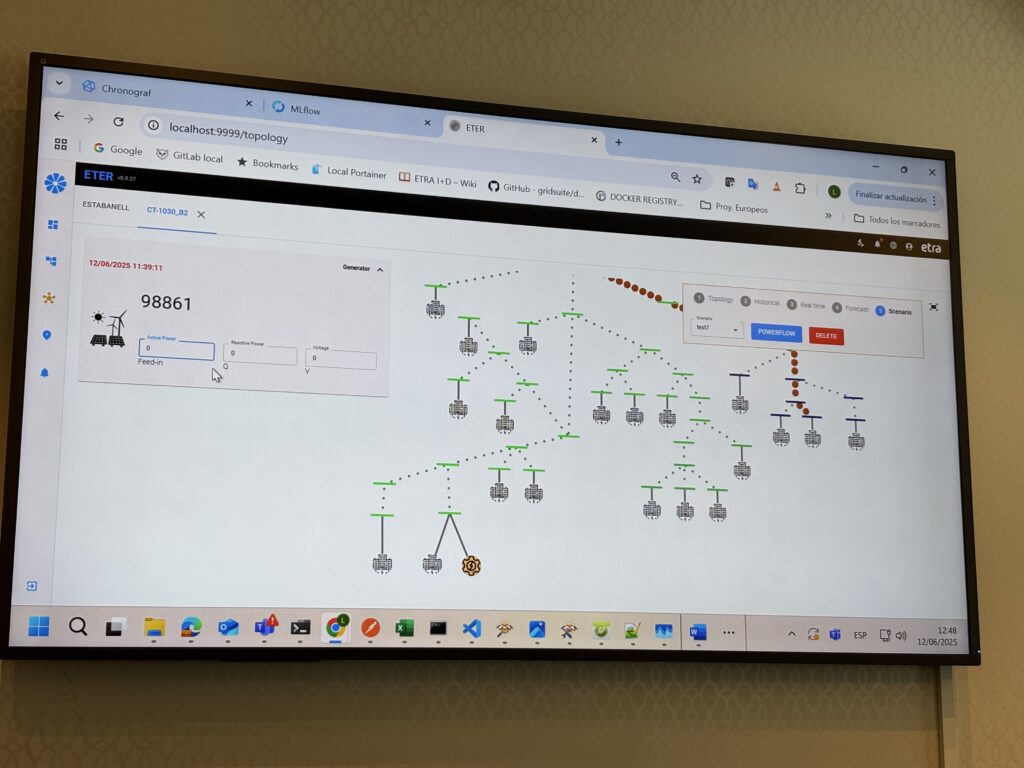
Overall, the feedback was positive, with particular interest in three functionalities that are currently not covered by Estabanell’s existing applications. These include capabilities offered by both ETER and the ICCS tools.
One of the aspects that attracted most attention was ETER’s ability to bring together different data sources in a single environment. By combining real-time information from medium- and low-voltage networks with state estimation algorithms, ETER’s digital twin can provide enhanced observability of the distribution grid.
The teams also highlighted the potential of ETER to support scenario analysis and operational planning. The tool can be used to explore how future changes in grid operation could affect power flows, as well as to assess how the availability of flexibility could help alleviate potential congestion.
Another area of interest was the advanced asset management tool developed by ICCS, particularly its potential to support decisions when purchasing new smart meters by providing additional information on their expected reliability and performance.
The sessions also identified aspects of the solutions that still require further refinement. This feedback will be used by the project partners to improve the tools and strengthen the user experience ahead of the next stages of the pilot.
Moving towards real flexibility activation
Alongside the validation of the technologies with distribution teams, the Spanish pilot has also taken an important step towards demonstrating flexibility in practice.
During the last weeks of July, ETRA, Estabanell and Hypertech carried out the flexibility activation tests planned for the pilot. The activities will continue throughout August, allowing the partners to further assess the performance of the solution and prepare for the next stages of the demonstration.
An encouraging result from the tests carried out so far is that flexibility activations have taken place without users noticing any impact on their service or comfort. This is an important aspect of the demonstration, showing how flexibility can be activated to support the electricity system while maintaining a seamless experience for end users.
The ongoing tests will provide further insights into how the different components developed within OPENTUNITY work together in a real pilot environment. Once the pilot is completed, the partners will analyse the results and share the main conclusions and lessons learned.
From technology validation to real-world demonstration
The latest activities mark an important transition for the Spanish pilot. By combining feedback from distribution professionals with practical flexibility activation tests, OPENTUNITY is moving beyond the development of individual technologies towards integrated, real-world validation.
The coming months will focus on completing the remaining demonstrations and analysing the results, helping the project assess how its solutions can contribute to more observable, flexible and efficient distribution grids while keeping end users at the centre.

OPENTUNITY Showcased Flexible Energy Solutions at Power2Drive Europe 2026
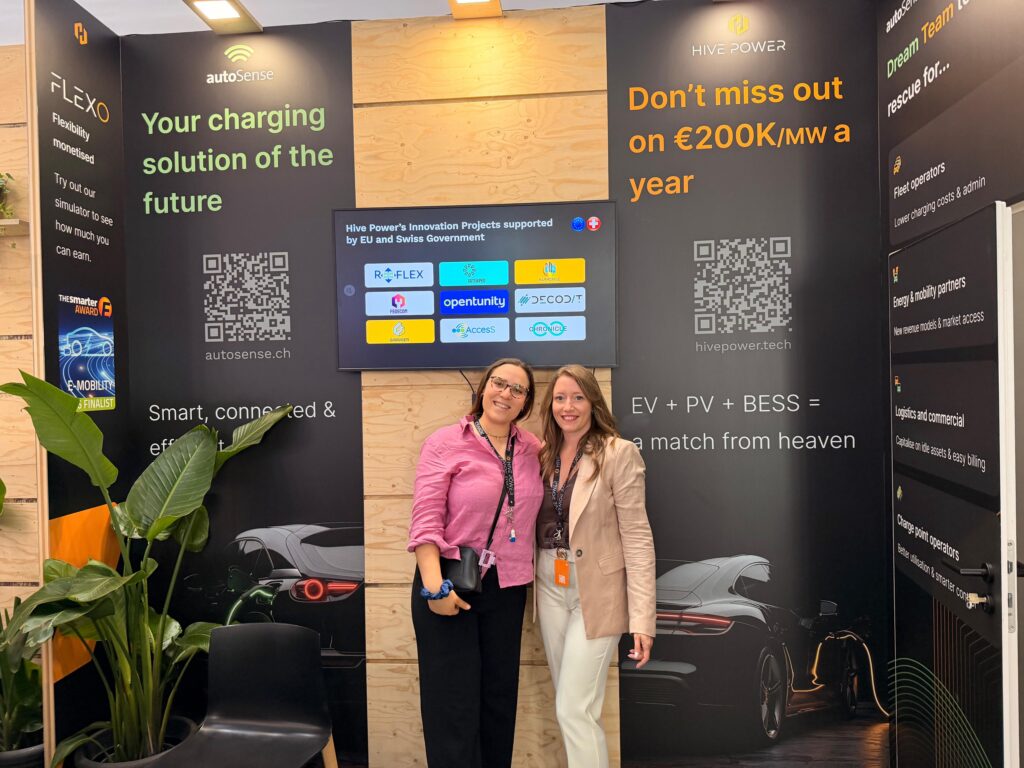
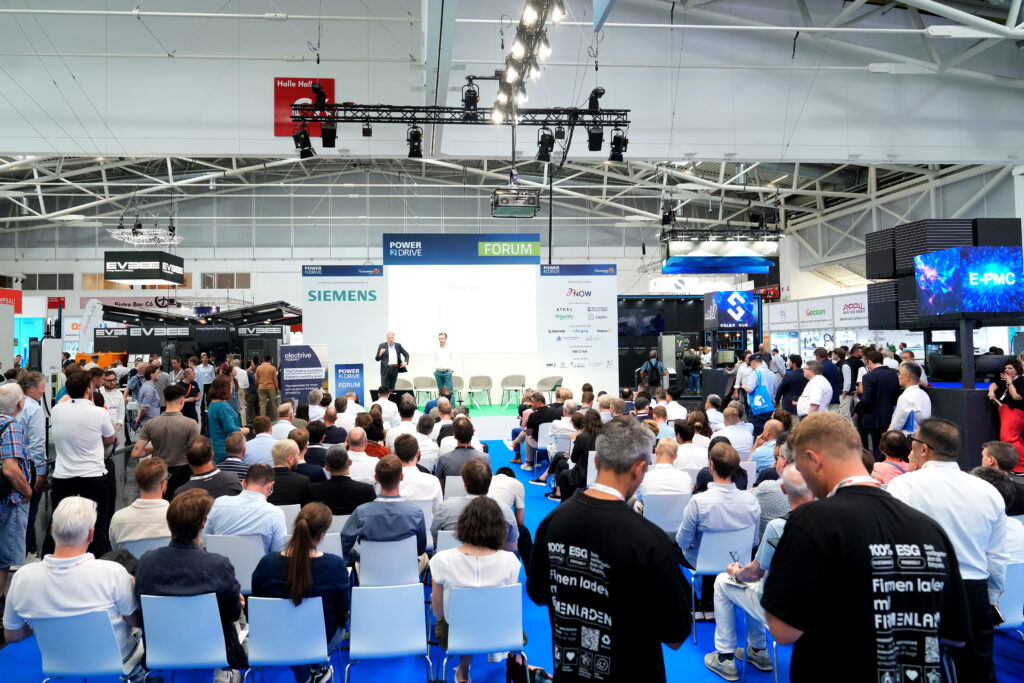
From 22 to 25 June 2026, the OPENTUNITY project was represented at Power2Drive Europe, Europe's leading exhibition for charging infrastructure and electric mobility, held as part of The smarter E Europe in Munich, Germany.
Project partner Hive Power presented OPENTUNITY's work to an international audience of energy professionals, highlighting how the project is helping build a more flexible, interoperable and user-centric energy ecosystem for Europe's electricity grids.
Strong interest from the e-mobility sector
Power2Drive brought together key players from across the electric mobility value chain, providing an ideal setting to discuss the role of flexibility in future energy systems.
According to Hive Power, the greatest interest came from charge point operators and fleet managers, who
were particularly interested in understanding how smart charging and Vehicle-to-Grid (V2G) technologies can unlock flexibility services while making better use of existing charging infrastructure.
The project's interoperability approach also attracted considerable attention. Many visitors recognised the need for solutions capable of connecting different platforms and technologies, rather than introducing additional complexity into an already fragmented ecosystem.

Discussions focused on flexibility and market value
Throughout the event, conversations frequently centred on two key topics that are also at the heart of OPENTUNITY.
The first concerned the assessment of flexibility available from electric vehicles and battery storage systems, and how these distributed resources can actively contribute to demand response programmes and grid services.
The second focused on the business perspective, exploring how the value created through flexibility services can be fairly distributed among prosumers, aggregators and grid operators, an essential aspect for accelerating the adoption of flexibility markets across Europe.
Within OPENTUNITY, Hive Power contributes to these challenges by developing solutions to estimate flexibility from EVs and battery storage while optimising demand response actions through interoperable software integrated into the project's wider flexibility ecosystem.
Creating opportunities beyond the exhibition
Participation in Power2Drive also opened the door to new collaborations. Hive Power established several promising contacts with fleet operators and managers, with follow-up meetings already scheduled to explore how electric vehicle fleets could participate in future flexibility markets.
These discussions demonstrate the growing interest in practical flexibility solutions and reinforce the relevance of OPENTUNITY's work in supporting Europe's transition towards a smarter, more resilient and consumer-centred energy system.
Inside the Greek Citizen Engagement Workshop
On July, 2026, the OPENTUNITY Greek Pilot reached a significant milestone in its mission to place citizens at the heart of the energy transition. In a collaborative effort, partners HEDNO, IPTO, HYPERTECH and ICCS, under the strategic guidance of JOANNEUM RESEARCH, hosted a dynamic online workshop titled:
"Becoming Part of the Energy Future – How OPENTUNITY Empowers Citizens and Professionals".
Bridging the Gap: From Technical Concepts to Daily Benefits
The primary goal of the session was to strip away complex technical jargon and introduce the OPENTUNITY ecosystem in a simple, engaging way. Rather than focusing solely on engineering, the workshop highlighted how small changes in everyday energy consumption can collectively improve the stability of the national electricity system.
Participants explored the necessity of smart grids and flexibility services, discovering how these innovations allow households to transition from passive consumers to active partners who benefit directly from new digital energy services.
An Interactive Look at the Future Grid
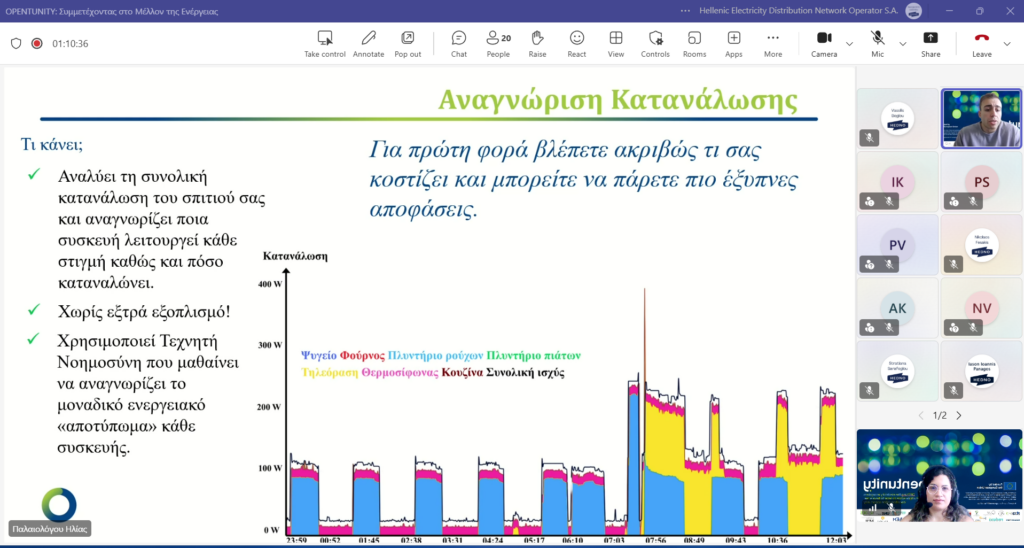
To keep the two-hour session engaging for its 23 participants, the presenters utilised interactive live polls via QR codes and short videos to illustrate key concepts. The comprehensive agenda covered:
- The Big Picture: An introduction to the OPENTUNITY project and the specific challenges facing today’s electricity system.
- Defining Flexibility: Why smart grids are essential for the modern energy landscape and how flexibility benefits both the system and the consumer.
- Live Tool Demonstrations: A first-hand look at the innovations driving the project, including NILM (Non-Intrusive Load Monitoring), HEMS/BEMS (Home/Building Energy Management Systems), the Network Planning Tool, and the Local Flexibility Market.
Strengthening DSO-TSO Synergies in Greece
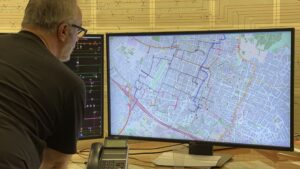
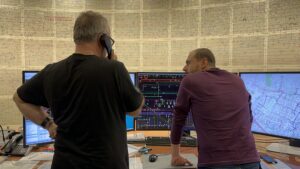
The workshop is a core part of the activities in the Greek pilot site, which covers the Mesogia area (Koropi, Lavrio, and N. Makri) as well as the interconnected islands of Kea, Andros, and Tinos. A key focus of this pilot is increasing the digitalisation of both the DSO (HEDNO) and the TSO (IPTO) while establishing vital synergies between them to better manage grid operations.
The Human Element of the Energy Transition
The event concluded with an open discussion where experts shared their views on how these digital tools can be practically adopted in daily life. By fostering this direct dialogue, OPENTUNITY continues to ensure that the European energy ecosystem is not just technically advanced, but truly user-centric and accessible to all citizens.
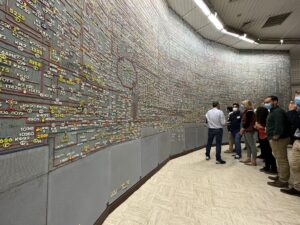
To explore more about our innovations or to view technical details on our Greek pilot:
Understanding User Acceptance of Flexible EV Car-Sharing Models
The transition towards more sustainable mobility is not only about developing new technologies. It also depends on understanding how people use these technologies and what would encourage them to adopt new ways of moving and consuming energy.
Mobility and housing are among the areas with the greatest impact on individuals’ private lifestyles and energy demand. As electric vehicles become increasingly common, new opportunities are emerging to connect mobility with the electricity system. One of these opportunities lies in combining car-sharing services with the flexibility offered by electric vehicle charging.
Within the OPENTUNITY project, Joanneum Research and Avantcar are working together to investigate how users perceive new car-sharing business models that make use of EV charging flexibility both at home and on the go.

Exploring the user perspective
These business models could enable electric vehicles to contribute more actively to the energy system. By adapting when and how vehicles are charged, it may be possible to make better use of renewable electricity and reduce pressure on the grid during periods of high demand.
However, the success of these solutions depends on more than their technical feasibility. Users need to see clear benefits and feel comfortable with the services being offered. For this reason, the research carried out by Joanneum Research and Avantcar focuses on understanding the factors that influence the acceptance of these new mobility and energy services.
A major strength of the study is that it is based on the opinions of nearly 1,000 actual car-sharing users, rather than relying solely on general public perceptions. This provides a more realistic picture of how potential users may react to the proposed business models.
Adapting the offer to different user needs could increase the size of the potential target groups by between 18% and 44%.
Looking at the complete user journey
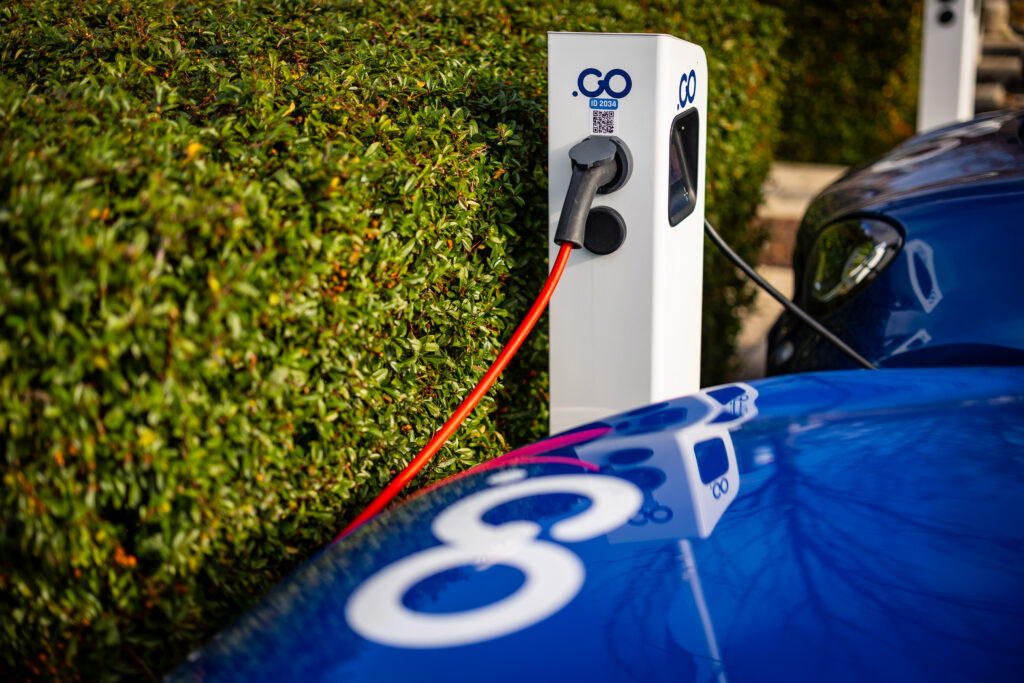
The research covers the full experience of using the service, from making a reservation to returning the vehicle. This approach allows the project partners to examine how users might respond to the different steps involved in participating in more flexible EV charging schemes.
The study also goes beyond simply asking whether users are interested or not. It explores the reasons behind their responses, including more specific concerns such as comfort, financial benefits, fear of vehicle damage, or questions related to responsibility and liability.
Preliminary findings indicate that comfort and financial benefits are among the main drivers of user acceptance. At the same time, the research is now going further to identify how these motivations and concerns vary between different groups of users.
Unlocking the potential of new business models
A better understanding of users who express interest under certain conditions could significantly expand the potential target groups for these new business models. Based on the research conducted so far, adapting the offer to different user needs could increase the size of the potential target groups by between 18% and 44%.
Users need to see clear benefits and feel comfortable with the services being offered.
These insights will help Avantcar refine and validate the proposed business models in real-life conditions, ensuring that they are not only technically viable but also aligned with the expectations and concerns of potential users.
Through this collaboration, OPENTUNITY is contributing to a more integrated approach to the energy transition, one in which electric vehicles are not only a means of transport, but can also become a source of flexibility for the wider energy system. Understanding the people who will use these services is an essential step towards making that vision a reality.
Driving Efficiency: OPENTUNITY Successfully Validates Day-Ahead EV Charging Optimization in Ljubljana
As part of our mission to open the electricity ecosystem to multiple actors for a real decarbonisation opportunity, OPENTUNITY is proud to share the latest results from our Slovenian pilot. From February 1st to March 31st, 2026, our partners SETUP and AVANTCAR successfully completed a two-month demonstration of a cutting-edge day-ahead participation algorithm designed to optimize electric vehicle (EV) charging operations.
The Challenge: Random Charging vs. Grid Needs
In a traditional, non-optimized environment, EV charging sessions often start at random times, typically when a user arrives home or plugs in for the night. This lack of coordination can lead to higher costs for charging operators and unnecessary strain on the electricity grid. Within the OPENFLEX category of our project, focused on increasing flexibility in prosumer environments, we sought to prove that smart scheduling can significantly reduce these inefficiencies.
The Solution: Smart Scheduling in Ljubljana
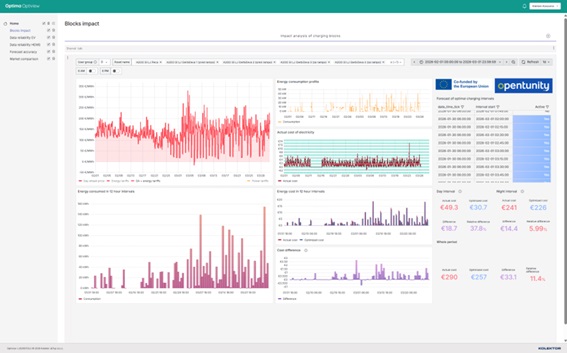
The demonstration took place at several AVANTCAR EV charging locations across Ljubljana, Slovenia, including sites at Peca, Gerbičeva, and Novo Brdo. Using the SETUP aggregation platform and the OptiView monitoring dashboards, the team applied a sophisticated algorithm to a portfolio of six charging stations.
How the algorithm works:
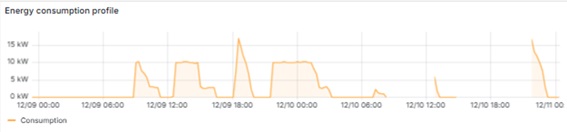
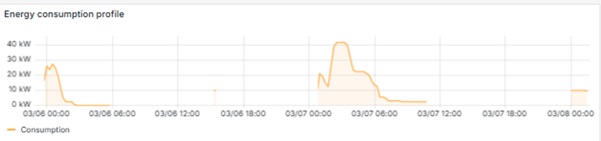
- Time Window: It focuses on the night interval (18:00–06:00).
- Price Signals: It utilizes day-ahead electricity price signals to identify the most cost-effective charging windows.
- Strategic Shifting: Instead of charging immediately, the system shifts sessions toward the less cost-intensive hours after midnight.
- Impactful Results: A 68% Improvement
To measure success, the demonstration results were compared against a baseline period (December 2025 – January 2026) where no optimization was applied.
The findings were definitive:
- Baseline Performance: Without optimization, there was an 18.9% gap between actual charging costs and the theoretical least-cost scenario.
- Demo Performance: With the OPENTUNITY algorithm active, this gap was slashed to just 5.99%.
- Overall Efficiency: This represents an improvement of approximately 68% in aligning charging behavior with optimal price intervals.
Real-World Readiness
This demonstration confirms that the OPENTUNITY optimization tools are practical solutions ready for real operating conditions. By effectively steering charging toward low-price hours, we are providing tangible value to flexibility service providers and EV charging operators.
This milestone is a key part of our broader effort in Slovenia to utilize the flexibility potential of domestic assets and EVs to provide services to the Distribution Grid, ultimately fostering a more resilient and sustainable energy ecosystem.
Revolutionising Grid Planning: OPENTUNITY and ICCS at the GSM 2026 Conference
On June 29, 2026, the picturesque city of Lucerne, Switzerland, hosted the 8th Grid Services & Markets (GSM) Conference, a premier event dedicated to the evolution of the electricity market. Among the experts and industry leaders gathered to discuss the future of distribution and transmission grids, the OPENTUNITY project took center stage through a high-impact presentation by our partner, ICCS (National Technical University of Athens).
The primary objective of GSM 2026 was to explore the increasing opportunities for flexibility in generation, storage, and consumption. As renewable energy penetration grows and demand fluctuates, Distribution System Operators (DSOs) face the daunting task of planning future grids that are both resilient and cost-effective.
Representing OPENTUNITY in the session “Planning & Providing Technologies,” ICCS presented a breakthrough solution: the Network Planning Tool.
A Speed Revolution in Network Planning
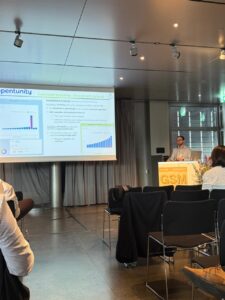
Traditional grid planning often relies on time-consuming processing, which limits the ability of operators to perform multi-scenario analysis. The OPENTUNITY tool, developed by ICCS, changes the game by being interactive, user-friendly, and incredibly fast.
Key technical innovations highlighted during the presentation included:
- The FPI Advantage: The tool uses a Fixed-Point Iteration (FPI) load-flow algorithm that allows for parallel processing. This methodology is over 100 times faster than conventional Newton-Raphson methods.
- Advanced Clustering: By utilizing K-Means clustering, the tool can group 365 daily profiles into three distinctive, manageable scenarios, enabling deep analysis in practical computation times.
- Mathematical Precision: Using advanced optimization techniques like MILP (Mixed-Integer Linear Programming) and MISOCP (Mixed-Integer Second-Order Cone Programming), the tool delivers highly accurate results for multi-year planning.
Real-World Impact: Investment Deferral and RES Growth
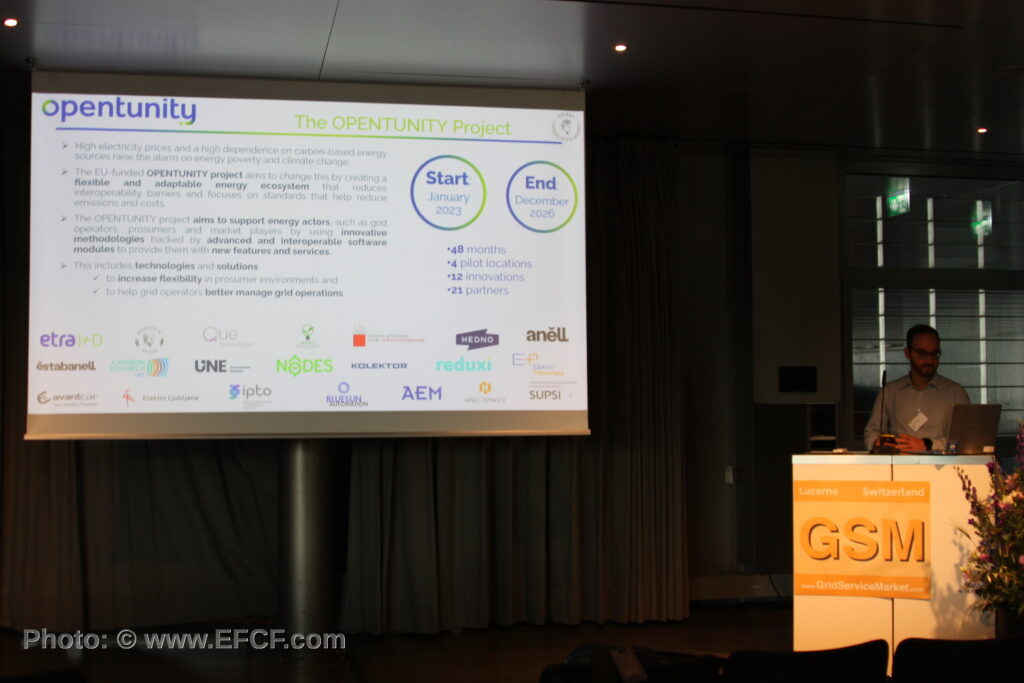
The core mission of this tool is to help DSOs make smarter financial and environmental decisions. The ICCS presentation demonstrated through various scenarios that:
- Investment Deferral: By integrating flexibility services from demand and renewable resources, DSOs can significantly postpone or even avoid the need for expensive conventional grid reinforcements.
- Maximising Renewables: Increased flexibility availability directly enables a higher integration of renewable energy generation within distribution networks.
Market Readiness and Expert Reception
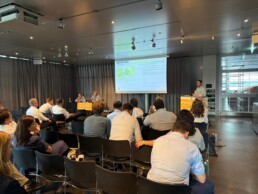
The presentation sparked an engaging discussion among the audience of approximately 50 participants, including researchers, industry experts, and policymakers. Attendees were particularly impressed by the minute-scale calculation speed and the high Technology Readiness Level (TRL) of the OPENTUNITY solutions. The audience noted that these tools are close to being ready-to-market commercial products, a critical factor for the rapid digitalization of the European energy sector.
The Path Forward
This successful participation at GSM 2026 underscores OPENTUNITY’s commitment to building a flexible, adaptable, and decarbonized energy ecosystem. By providing DSOs with the tools to manage grid issues more effectively, we are ensuring that the transition to clean energy is not only sustainable but also cost-efficient for all European citizens.
Download the Presentation
You can now download the full presentation slides below to explore the technical details and results of the Network Planning Tool.
📊 [Download: OPENTUNITY Distribution Grid Planning Slides]