


Month: October 2025

SETUP Develops an Optimal Market Selection Algorithm
Over the past 10 months, SETUP, in collaboration with Avantcar and the University of Ljubljana, has been working on an innovative algorithm designed to help flexibility providers make smarter decisions across multiple energy markets.
As part of the OPENTUNITY project, this work focuses on how the flexibility of distributed energy assets, such as electric vehicles, batteries, or demand-response resources, can be effectively offered in different market environments, each with its own technical and regulatory rules.
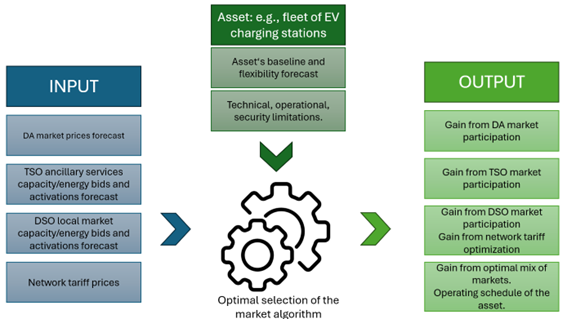
The result is an optimal market selection algorithm that identifies the most beneficial market combinations for flexibility providers. It analyses opportunities across day-ahead, intraday, ancillary services, and local DSO markets, recommending how and where flexibility should be offered to maximise its value.
By processing data on tariffs, market prices, and technical constraints, the algorithm provides:
- The optimal market or market combination for each asset,
- The expected revenues or cost savings, and
- The optimal operating schedule for flexibility deployment.
This development represents a significant step forward in enabling data-driven decision-making for aggregators and flexibility service providers, ensuring that flexibility assets deliver the greatest possible benefit to both the grid and end users.

Real-Time Thermal Monitoring at Anell's Network
At OPENTUNITY, we are committed to unlocking the full potential of the grid, making it smarter, more flexible, and ready for the demands of a high-renewable future. This summer, our partner Anell has taken a significant step toward that goal.
Where?
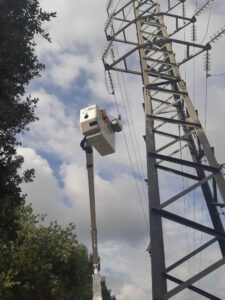
In a medium-voltage line within Anell’s distribution network in Catalonia (Spain).
What Happened?
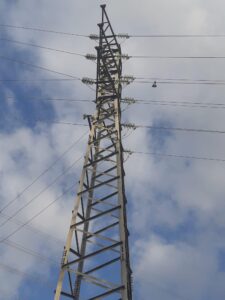
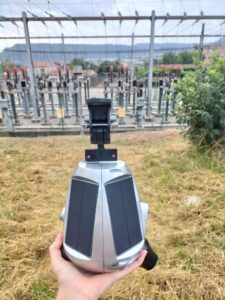
Two temperature sensors were installed directly on the conductor of a medium-voltage line as part of OPENTUNITY’s Real-Time Thermal Rating (RTTR) use case.
Why does this matter?
Traditionally, distribution system operators use static and conservative estimates to define the maximum current capacity of their lines, often based on worst-case weather conditions. In reality, line capacity varies depending on the actual conductor temperature, which fluctuates with current and ambient conditions. Under favorable conditions, the line can safely carry more energy than these conservative limits suggest.
That’s where OPENTUNITY comes in.
Smarter Algorithms for a Smarter Grid
Instead of deploying expensive sensors across the entire grid, OPENTUNITY is developing a data-driven algorithm to estimate conductor temperature in real time, using only ambient temperature and electrical current measurements.
To validate this model, Anell installed two temperature sensors on a live grid segment, enabling a comparison between measured and estimated conductor temperatures. These insights will support further development of the algorithm and its future deployment at scale.
“If we have better information on the capacity of our grid in real time, we can take better decisions when operating it at critical moments. Real-time thermal rating provides us just that.” – Anell team
Why Sentrisense?
As part of the validation, Anell chose to work with Sentrisense, a startup offering a lightweight and cost-effective temperature sensor design that differs from most commercial options. OPENTUNITY partners are now receiving data from the devices to refine their tools and algorithms.

OPENTUNITY at the Renewable Energy Grid Integration Week 2025
Last 7–10 October 2025, OPENTUNITY was represented at one of the most important annual events in the renewable energy sector, the Renewable Energy Grid Integration Week 2025, which hosted the 24th Wind & Solar Integration Workshop in Berlin. The event, organised by Energynautics, gathered more than 420 participants from 38 countries, bringing together leading experts, researchers, and industry representatives to discuss the challenges and innovations shaping the future of renewable energy integration.
Sharing Insights on Flexibility and Data Interoperability

Georgia Eirini Lazaridou from HEDNO presented a joint paper prepared by HEDNO, IPTO, and NODES, highlighting key findings and progress from the Greek Pilot of the OPENTUNITY project. The presentation focused on the importance of flexibility as a cornerstone for maintaining grid stability and reliability in systems with high renewable energy penetration.
The paper explored how Transmission and Distribution System Operators (TSOs and DSOs) can coordinate flexibility procurement through secure, transparent, and interoperable data exchange mechanisms, an approach that is central to OPENTUNITY’s mission.
📥 You can download the presentation slides here to explore the concepts and findings shared during the session.
OPENTUNITY presentation_Renewable Grid Integration Week 2025 – Opentunity
Flexibility: A Core Enabler for the Energy Transition
A recurring message throughout the workshop was clear: flexibility is the key enabler for addressing the operational challenges of modern power systems. As renewable energy sources like wind and solar become dominant, grid operators must adapt to manage variability and uncertainty in both demand and generation.
To achieve this, it is crucial to:
- Strengthen data exchange frameworks that are secure and interoperable,
- Encourage the participation of diverse flexible assets (such as distributed generation, storage, and demand-side response), and
- Support market-based operation models that reward flexibility contributions.
These topics are at the heart of OPENTUNITY’s ongoing work, particularly within the Greek Pilot, where HEDNO and IPTO are testing new coordination mechanisms for flexibility services and demonstrating their real-world potential.
Aligning Research and Practice
OPENTUNITY’s participation in the workshop reaffirmed how closely aligned its objectives are with the broader research and innovation community working on renewable integration. The discussions and feedback gathered in Berlin will help guide ongoing activities in the project, especially in refining data interoperability frameworks, flexibility market design, and grid operation strategies.
As the project moves into its final phase, these insights will play an important role in shaping the next generation of smart, flexible, and decarbonised European power systems.

