


Month: July 2026
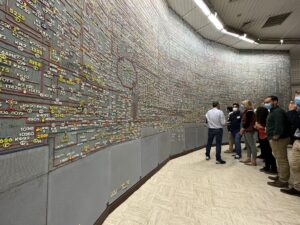
Inside the Greek Citizen Engagement Workshop
On July, 2026, the OPENTUNITY Greek Pilot reached a significant milestone in its mission to place citizens at the heart of the energy transition. In a collaborative effort, partners HEDNO, IPTO, HYPERTECH and ICCS, under the strategic guidance of JOANNEUM RESEARCH, hosted a dynamic online workshop titled:
"Becoming Part of the Energy Future – How OPENTUNITY Empowers Citizens and Professionals".
Bridging the Gap: From Technical Concepts to Daily Benefits
The primary goal of the session was to strip away complex technical jargon and introduce the OPENTUNITY ecosystem in a simple, engaging way. Rather than focusing solely on engineering, the workshop highlighted how small changes in everyday energy consumption can collectively improve the stability of the national electricity system.
Participants explored the necessity of smart grids and flexibility services, discovering how these innovations allow households to transition from passive consumers to active partners who benefit directly from new digital energy services.
An Interactive Look at the Future Grid
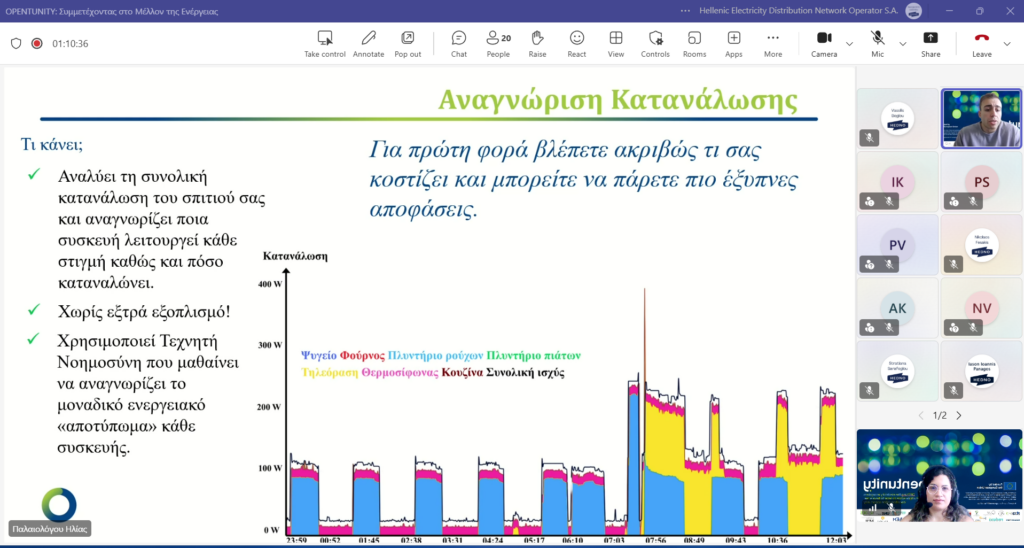
To keep the two-hour session engaging for its 23 participants, the presenters utilised interactive live polls via QR codes and short videos to illustrate key concepts. The comprehensive agenda covered:
- The Big Picture: An introduction to the OPENTUNITY project and the specific challenges facing today’s electricity system.
- Defining Flexibility: Why smart grids are essential for the modern energy landscape and how flexibility benefits both the system and the consumer.
- Live Tool Demonstrations: A first-hand look at the innovations driving the project, including NILM (Non-Intrusive Load Monitoring), HEMS/BEMS (Home/Building Energy Management Systems), the Network Planning Tool, and the Local Flexibility Market.
Strengthening DSO-TSO Synergies in Greece
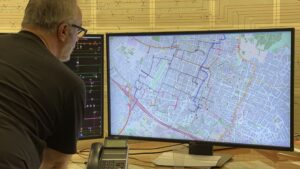
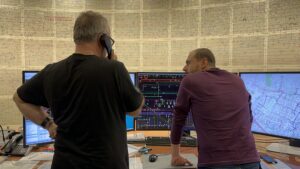
The workshop is a core part of the activities in the Greek pilot site, which covers the Mesogia area (Koropi, Lavrio, and N. Makri) as well as the interconnected islands of Kea, Andros, and Tinos. A key focus of this pilot is increasing the digitalisation of both the DSO (HEDNO) and the TSO (IPTO) while establishing vital synergies between them to better manage grid operations.
The Human Element of the Energy Transition
The event concluded with an open discussion where experts shared their views on how these digital tools can be practically adopted in daily life. By fostering this direct dialogue, OPENTUNITY continues to ensure that the European energy ecosystem is not just technically advanced, but truly user-centric and accessible to all citizens.
To explore more about our innovations or to view technical details on our Greek pilot:

Understanding User Acceptance of Flexible EV Car-Sharing Models
The transition towards more sustainable mobility is not only about developing new technologies. It also depends on understanding how people use these technologies and what would encourage them to adopt new ways of moving and consuming energy.
Mobility and housing are among the areas with the greatest impact on individuals’ private lifestyles and energy demand. As electric vehicles become increasingly common, new opportunities are emerging to connect mobility with the electricity system. One of these opportunities lies in combining car-sharing services with the flexibility offered by electric vehicle charging.
Within the OPENTUNITY project, Joanneum Research and Avantcar are working together to investigate how users perceive new car-sharing business models that make use of EV charging flexibility both at home and on the go.

Exploring the user perspective
These business models could enable electric vehicles to contribute more actively to the energy system. By adapting when and how vehicles are charged, it may be possible to make better use of renewable electricity and reduce pressure on the grid during periods of high demand.
However, the success of these solutions depends on more than their technical feasibility. Users need to see clear benefits and feel comfortable with the services being offered. For this reason, the research carried out by Joanneum Research and Avantcar focuses on understanding the factors that influence the acceptance of these new mobility and energy services.
A major strength of the study is that it is based on the opinions of nearly 1,000 actual car-sharing users, rather than relying solely on general public perceptions. This provides a more realistic picture of how potential users may react to the proposed business models.
Adapting the offer to different user needs could increase the size of the potential target groups by between 18% and 44%.
Looking at the complete user journey
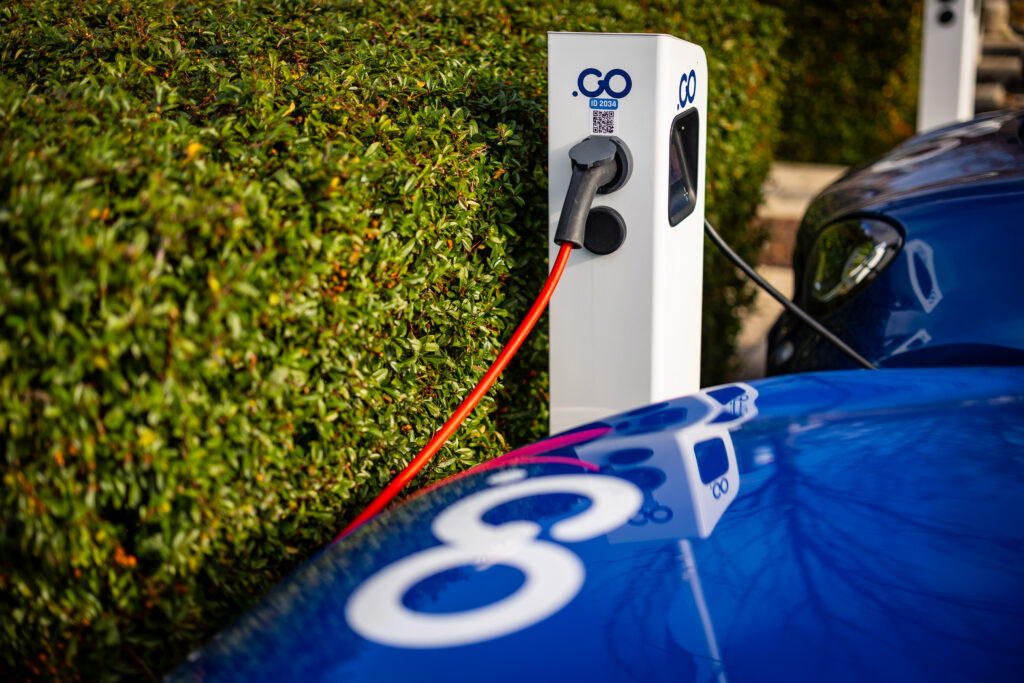
The research covers the full experience of using the service, from making a reservation to returning the vehicle. This approach allows the project partners to examine how users might respond to the different steps involved in participating in more flexible EV charging schemes.
The study also goes beyond simply asking whether users are interested or not. It explores the reasons behind their responses, including more specific concerns such as comfort, financial benefits, fear of vehicle damage, or questions related to responsibility and liability.
Preliminary findings indicate that comfort and financial benefits are among the main drivers of user acceptance. At the same time, the research is now going further to identify how these motivations and concerns vary between different groups of users.
Unlocking the potential of new business models
A better understanding of users who express interest under certain conditions could significantly expand the potential target groups for these new business models. Based on the research conducted so far, adapting the offer to different user needs could increase the size of the potential target groups by between 18% and 44%.
Users need to see clear benefits and feel comfortable with the services being offered.
These insights will help Avantcar refine and validate the proposed business models in real-life conditions, ensuring that they are not only technically viable but also aligned with the expectations and concerns of potential users.
Through this collaboration, OPENTUNITY is contributing to a more integrated approach to the energy transition, one in which electric vehicles are not only a means of transport, but can also become a source of flexibility for the wider energy system. Understanding the people who will use these services is an essential step towards making that vision a reality.
Driving Efficiency: OPENTUNITY Successfully Validates Day-Ahead EV Charging Optimization in Ljubljana
As part of our mission to open the electricity ecosystem to multiple actors for a real decarbonisation opportunity, OPENTUNITY is proud to share the latest results from our Slovenian pilot. From February 1st to March 31st, 2026, our partners SETUP and AVANTCAR successfully completed a two-month demonstration of a cutting-edge day-ahead participation algorithm designed to optimize electric vehicle (EV) charging operations.
The Challenge: Random Charging vs. Grid Needs
In a traditional, non-optimized environment, EV charging sessions often start at random times, typically when a user arrives home or plugs in for the night. This lack of coordination can lead to higher costs for charging operators and unnecessary strain on the electricity grid. Within the OPENFLEX category of our project, focused on increasing flexibility in prosumer environments, we sought to prove that smart scheduling can significantly reduce these inefficiencies.
The Solution: Smart Scheduling in Ljubljana
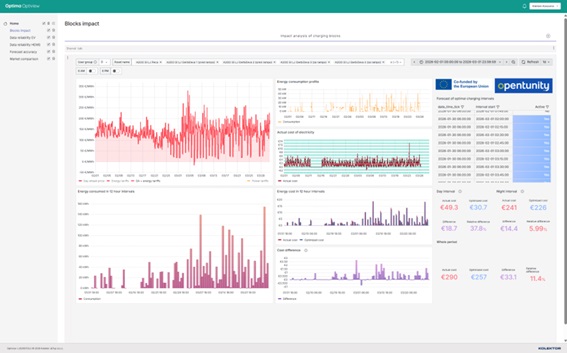
The demonstration took place at several AVANTCAR EV charging locations across Ljubljana, Slovenia, including sites at Peca, Gerbičeva, and Novo Brdo. Using the SETUP aggregation platform and the OptiView monitoring dashboards, the team applied a sophisticated algorithm to a portfolio of six charging stations.
How the algorithm works:
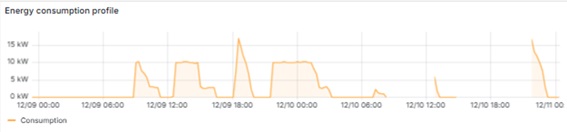
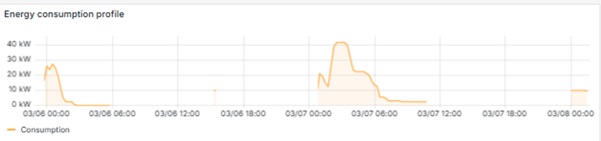
- Time Window: It focuses on the night interval (18:00–06:00).
- Price Signals: It utilizes day-ahead electricity price signals to identify the most cost-effective charging windows.
- Strategic Shifting: Instead of charging immediately, the system shifts sessions toward the less cost-intensive hours after midnight.
- Impactful Results: A 68% Improvement
To measure success, the demonstration results were compared against a baseline period (December 2025 – January 2026) where no optimization was applied.
The findings were definitive:
- Baseline Performance: Without optimization, there was an 18.9% gap between actual charging costs and the theoretical least-cost scenario.
- Demo Performance: With the OPENTUNITY algorithm active, this gap was slashed to just 5.99%.
- Overall Efficiency: This represents an improvement of approximately 68% in aligning charging behavior with optimal price intervals.
Real-World Readiness
This demonstration confirms that the OPENTUNITY optimization tools are practical solutions ready for real operating conditions. By effectively steering charging toward low-price hours, we are providing tangible value to flexibility service providers and EV charging operators.
This milestone is a key part of our broader effort in Slovenia to utilize the flexibility potential of domestic assets and EVs to provide services to the Distribution Grid, ultimately fostering a more resilient and sustainable energy ecosystem.
Revolutionising Grid Planning: OPENTUNITY and ICCS at the GSM 2026 Conference
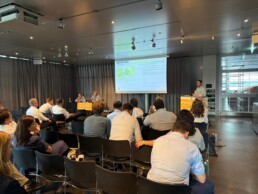
On June 29, 2026, the picturesque city of Lucerne, Switzerland, hosted the 8th Grid Services & Markets (GSM) Conference, a premier event dedicated to the evolution of the electricity market. Among the experts and industry leaders gathered to discuss the future of distribution and transmission grids, the OPENTUNITY project took center stage through a high-impact presentation by our partner, ICCS (National Technical University of Athens).
The primary objective of GSM 2026 was to explore the increasing opportunities for flexibility in generation, storage, and consumption. As renewable energy penetration grows and demand fluctuates, Distribution System Operators (DSOs) face the daunting task of planning future grids that are both resilient and cost-effective.
Representing OPENTUNITY in the session “Planning & Providing Technologies,” ICCS presented a breakthrough solution: the Network Planning Tool.
A Speed Revolution in Network Planning
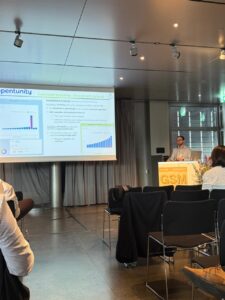
Traditional grid planning often relies on time-consuming processing, which limits the ability of operators to perform multi-scenario analysis. The OPENTUNITY tool, developed by ICCS, changes the game by being interactive, user-friendly, and incredibly fast.
Key technical innovations highlighted during the presentation included:
- The FPI Advantage: The tool uses a Fixed-Point Iteration (FPI) load-flow algorithm that allows for parallel processing. This methodology is over 100 times faster than conventional Newton-Raphson methods.
- Advanced Clustering: By utilizing K-Means clustering, the tool can group 365 daily profiles into three distinctive, manageable scenarios, enabling deep analysis in practical computation times.
- Mathematical Precision: Using advanced optimization techniques like MILP (Mixed-Integer Linear Programming) and MISOCP (Mixed-Integer Second-Order Cone Programming), the tool delivers highly accurate results for multi-year planning.
Real-World Impact: Investment Deferral and RES Growth
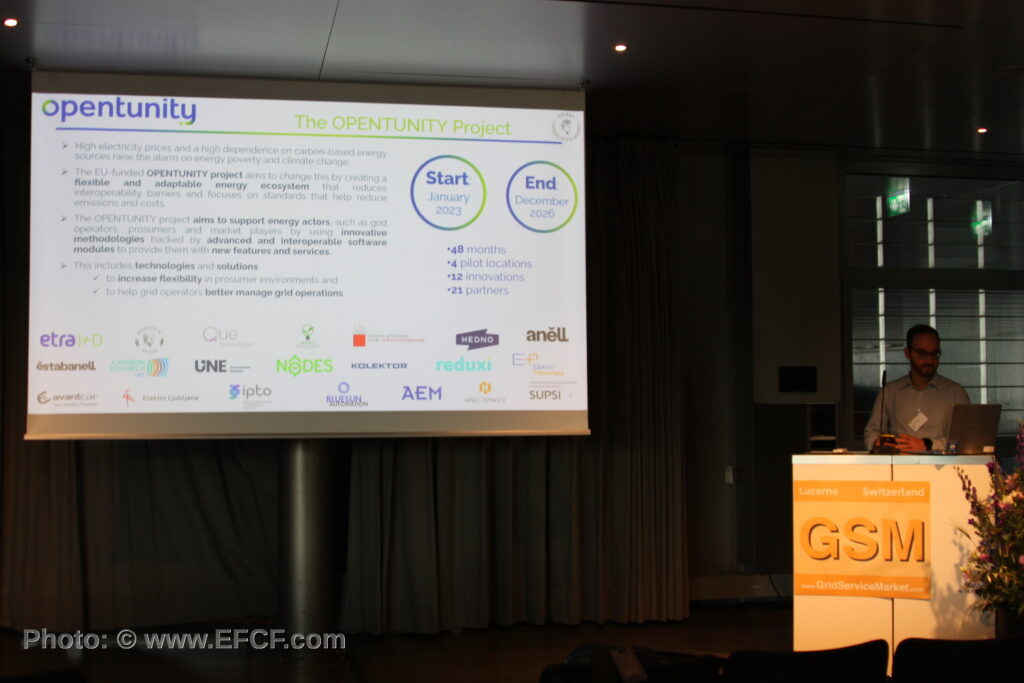
The core mission of this tool is to help DSOs make smarter financial and environmental decisions. The ICCS presentation demonstrated through various scenarios that:
- Investment Deferral: By integrating flexibility services from demand and renewable resources, DSOs can significantly postpone or even avoid the need for expensive conventional grid reinforcements.
- Maximising Renewables: Increased flexibility availability directly enables a higher integration of renewable energy generation within distribution networks.
Market Readiness and Expert Reception
The presentation sparked an engaging discussion among the audience of approximately 50 participants, including researchers, industry experts, and policymakers. Attendees were particularly impressed by the minute-scale calculation speed and the high Technology Readiness Level (TRL) of the OPENTUNITY solutions. The audience noted that these tools are close to being ready-to-market commercial products, a critical factor for the rapid digitalization of the European energy sector.
The Path Forward
This successful participation at GSM 2026 underscores OPENTUNITY’s commitment to building a flexible, adaptable, and decarbonized energy ecosystem. By providing DSOs with the tools to manage grid issues more effectively, we are ensuring that the transition to clean energy is not only sustainable but also cost-efficient for all European citizens.
Download the Presentation
You can now download the full presentation slides below to explore the technical details and results of the Network Planning Tool.
📊 [Download: OPENTUNITY Distribution Grid Planning Slides]