


Month: June 2025

Empowering Slovenian Citizens in the Energy Transition
As part of the OPENTUNITY project, Reduxi, a brand of Amibit, is working to make electricity smarter, greener, and more accessible for users across Europe. Based in Slovenia, Reduxi brings expertise in AI-driven Energy Management Systems (EMS), enabling households and businesses to take a more active role in the evolving energy landscape.
Within OPENTUNITY, Reduxi plays a key role in the Slovenian pilot, contributing to the design and deployment of user-centric energy solutions. Their main focus lies in understanding how end users interact with energy today, how ready they are to embrace change, and what kind of tools and support they need to join the energy transition.
From Insights to Action: A Three-Phase Engagement Strategy
To bring users into the center of the energy transition, Reduxi, in collaboration with the University of Ljubljana, Joanneum Research, and ETRA, has launched a structured three-phase engagement process for the Slovenian pilot site:
- Phase 1 – Listening to Users:
A targeted survey was conducted to gather data on citizens' energy behaviors, cost perceptions, and familiarity with EMS technologies. - Phase 2 – Supporting Engagement:
Interested participants are now being equipped with Reduxi EMS devices, enabling real-time monitoring and personalized energy solutions. - Phase 3 – Deepening the Connection:
The project will move forward with NILM (Non-Intrusive Load Monitoring) integration and collect feedback to evaluate Reduxi’s service models and user satisfaction.
What the Survey Revealed: Key Takeaways
The survey, conducted between May 7 and June 2, 2025, received 62 responses (52 complete), primarily from Slovenian households. The findings highlight several important trends that are already shaping the pilot’s next steps:
Energy Costs Matter—But Aren’t (Yet) a Crisis:
While 70% of users expect prices to rise, only 28% say they are very concerned, suggesting that electricity still takes up a manageable part of most household budgets.
- Users Are Ready for Smarter Tools:
Interest in Energy Management Systems was strong, with 65% of participants expressing enthusiasm, rising to 74% among those with higher consumption or large appliances.
- NILM Sparks High Interest:
The idea of real-time appliance-level monitoring proved especially attractive, pointing to a clear demand for tools that give users more visibility and control. - Informed Citizens, Engaged Citizens:
Over 60% were aware of the upcoming Slovenian Electrical Network Act, demonstrating that energy policy awareness is high when it directly affects costs or choices.
What Comes Next for the Slovenian Pilot
Building on these insights, Reduxi and the pilot partners are moving into the deployment and testing phase:
- 🔧 EMS installations at selected sites are already underway.
- 🧠 NILM technologies will be integrated to enhance monitoring and consumer feedback.
- 📊 New business models tailored to user behavior and needs will be piloted and evaluated.
These steps aim to translate awareness into action, helping citizens not only understand energy transition but actively participate in it, while reducing their bills and environmental impact.
Why This Matters for OPENTUNITY
This work is a core part of OPENTUNITY’s mission to build an open, intelligent, and user-driven energy system. By placing users at the heart of the design process, the Slovenian pilot demonstrates how smart technology, tailored communication, and trust-based engagement can unlock real change.
Reduxi’s efforts are showing that citizen engagement isn't just about information, it's about interaction. And that’s exactly how OPENTUNITY plans to drive a fair and inclusive energy transition.


What Do Citizens Really Think About the Energy Transition?
At OPENTUNITY, we believe that the energy transition must reflect not only technological advancement, but also the real interests and concerns of citizens. That’s why we’ve launched an online stakeholder engagement campaign through short LinkedIn surveys — aiming to better understand how experts and the broader public perceive energy innovation and flexibility.
We’ve received 48 insightful responses, offering a valuable snapshot of current attitudes, expectations and barriers. Below, we explore the main takeaways and how they connect with OPENTUNITY’s objectives and ongoing developments.
Economic Value Drives Interest in Renewable Adoption
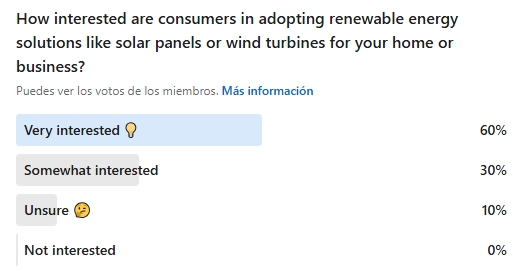
The survey data shows that consumer interest in renewable energy adoption is strong, with 90% expressing either strong or moderate interest in solutions like solar panels or wind turbines. This indicates an encouraging openness to change — but it’s not just environmental concern fueling this interest.
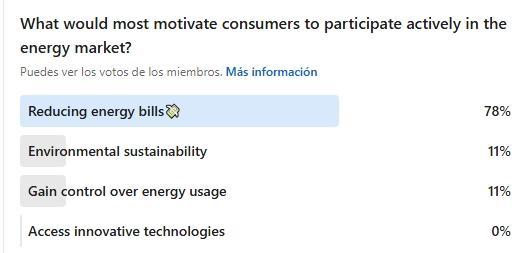
When asked what would most motivate consumers to participate actively in the energy market, a resounding 78% cited the potential to reduce energy bills as their top driver. In contrast, environmental sustainability and gaining control over energy usage each received just 11%, and access to innovative technologies received no votes.
These results highlight a key insight: Interest in renewables is high — but it’s primarily driven by tangible, economic benefits.
This has direct implications for OPENTUNITY. Through its OPENFLEX innovations, dynamic pricing tools, and demand-side flexibility solutions, the project is not only facilitating the integration of renewable sources but also helping consumers translate participation into real savings. It's a strong validation of OPENTUNITY’s dual focus on technical innovation and economic empowerment.
The Challenge: Complexity and Uncertainty
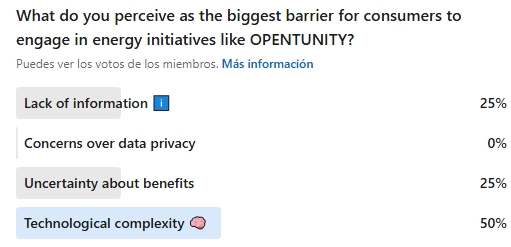
When asked about the biggest barrier to participating in energy initiatives like OPENTUNITY, the most common answer (of 50 percent) was technological complexity. This was followed by uncertainty about the benefits, and a perceived lack of accessible information. Interestingly, data privacy did not appear to be a major concern.
These results highlight the importance of our OPENABILITY pillar, which is focused on improving interoperability and user-friendliness of energy systems. If people are open to adopting new technologies, but are held back by confusion or lack of clarity, then making solutions intuitive and transparent becomes critical.
What Matters Most? Costs and Reliability
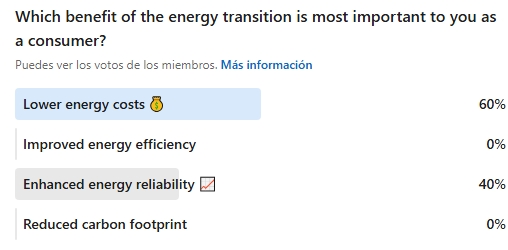
We also explored what consumers consider the most valuable outcomes of the energy transition. The top priority was lower energy costs (named by 60 percent), followed by improved reliability. Surprisingly, reducing carbon emissions and boosting energy efficiency received less attention in this round of polling.
This feedback is closely aligned with OPENTUNITY’s goals. Our smart flexibility algorithms, advanced grid tools, and local market frameworks are designed to deliver both cost savings and grid stability. By focusing on economic and practical benefits, we ensure our solutions meet people’s most immediate needs—while still supporting long-term sustainability.
Communication: Going Where People Are
Finally, we asked how citizens prefer to receive information about energy initiatives. Social media was by far the most popular channel (named by 80 percent), with project newsletters a distant second. Traditional media and webinars were not favored at all.
This finding reinforces the importance of our digital communication strategy. Through our LinkedIn and X (Twitter) channels, we’re not just sharing updates—we’re opening a conversation with stakeholders, citizens, and future energy users. And that conversation is shaping how we evolve the project.
Looking Ahead: People-Powered Innovation
These early results provide confirmation for OPENTUNITY’s approach: combining technological excellence with clear communication, citizen engagement, and real-world benefits. By listening closely to the people the energy transition will affect most, we can build systems that are not only smarter, but also more inclusive, responsive, and scalable.
More survey insights are on the way. Stay tuned for future articles exploring how citizens view flexibility, smart technologies, and the evolving role of consumers in Europe’s energy future.

OPENTUNITY’s 7th General Assembly in Oslo: A Step Forward in Energy Innovation
From June 11th to 12th, the OPENTUNITY consortium gathered in Oslo, Norway, for the 7th General Assembly — a key milestone to align on progress, refine technical strategies, and plan the path ahead. Hosted by project partner NODES, the meeting brought together all 21 partners for two days of in-depth discussions, hands-on collaboration, and stakeholder engagement.
Progress Across Pilot Sites

The meeting began with dedicated sessions from each of the four pilot sites — Slovenia, Greece, Spain, and Switzerland — where partners shared updates on citizen engagement actions, ongoing deployments, and the first insights from testing OPENTUNITY’s innovative tools.
From Slovenia, the University of Ljubljana highlighted ongoing smart energy management testing and their integration of HEMS and EV charging infrastructure. Greek partners HEDNO and IPTO reported progress in preparing the Mesogia region for flexibility trials. In Spain, ANELL and IMPULSA shared insights from the dual pilot zones in Santa Eulalia and Bigues i Riells, while Swiss partner AEM emphasized the role of local consumers in their urban pilot in Massagno.
Technical partners also presented the current status of test cases, showcasing how various OPENTUNITY tools — such as state estimation, flexibility forecasting, and interoperability modules — are coming together for real-world application.
Workshop with External DSOs and Flexibility Players
A highlight of the Oslo meeting was the External Workshop hosted on June 11th, which welcomed stakeholders from across the energy flexibility landscape. This interactive session aimed to connect OPENTUNITY’s research with real-world market experiences and featured contributions from:
- Flexia Consulting, who walked participants through the creation and scaling of the Swedish flexibility market Effekthandel Väst.
- Glitre Nett, who shared their day-to-day experience purchasing flexibility and integrating it into grid operations.
- Neowatt, an aggregator, who offered insights into the challenges and best practices from their role in enabling flexibility.
- Fingrid and Helen, who showcased coordination strategies between TSO and DSO levels through the Finnish FinFlex initiative.
This workshop proved invaluable in bridging the gap between research and market deployment, aligning well with OPENTUNITY’s vision to create scalable, interoperable, and user-focused solutions for the electricity ecosystem.


Next Steps for the Consortium
With the first project review successfully behind, partners are now focused on accelerating developments and preparing for field demonstrations. Key action points include:
- Finalizing technical deliverables for WP3 (Flexibility Solutions), WP4 (Grid Tools), and WP5 (Interoperability).
- Completing the definition of test cases with each pilot to ensure consistent validation across regions.
- Supporting pilot sites in deploying tools and engaging local citizens, ensuring communities are at the center of the transition.
- Advancing knowledge transfer and dissemination activities — including the upcoming submission of deliverables D8.3 and D8.5, and the creation of a collaborative video showcasing the full consortium.
- Each partner was also encouraged to revisit their exploitation strategies and explore opportunities for formal collaborations through MoUs (Memorandums of Understanding).
With strong momentum, OPENTUNITY continues to move from innovation to implementation — transforming flexibility, grid management, interoperability, and data exchange into actionable tools across Europe. The Oslo meeting reaffirmed our shared mission and strengthened the collaboration needed to deliver on the promise of a more flexible, resilient, and inclusive energy future.

OPENTUNITY at European Energy Forums
May has been an exciting and impactful month for the OPENTUNITY project, as several partners took part in high-level conferences and academic forums across Europe. From social sciences to engineering innovation, OPENTUNITY’s presence underscored its interdisciplinary relevance and the growing interest in its approach to enabling a flexible, interoperable, and inclusive energy system.
STS Conference 2025 – Graz, Austria
📅 May 5–7
At the Science, Technology and Society (STS) Conference in Graz, JOANNEUM RESEARCH represented OPENTUNITY through a dedicated session. The session, titled: “Advancing Urban and Rural Energy Systems for Inclusive, Scalable, and Technologically Integrated Energy Solutions,” explored how energy technologies can be developed in ways that are both technically sound and socially inclusive. Key insights included:
- The critical need for citizen involvement from the early stages of technology development.
- The gatekeeping role of energy companies in scaling energy communities.
- The importance of sector coupling in developing resilient urban energy systems.
This participation reinforced OPENTUNITY’s commitment to not only driving innovation but also shaping just and inclusive energy transitions.

Syngrid Summer School – Ljubljana, Slovenia
📅 May 14
Our partners from the University of Ljubljana and Kolektor sETup presented OPENTUNITY at the Syngrid Summer School, an event focused on the digitalization of energy systems and the role of EU-funded innovation in the energy transition.
The session featured:
- An introduction to the four main pillars of OPENTUNITY: OPENFLEX, OPENGRID, OPENSPACE, and OPENABILITY.
- Technical highlights from the Slovenian pilot site, including the integration of Reduxi HEMS and EV charging stations into Kolektor’s platform, enabling advanced forecasting and real-time flexibility services.
- Live examples from Kolektor sETup demonstrating how their platform OPTIMA is evolving through collaboration in projects like OPENTUNITY.
The presentation offered students and young professionals a hands-on view of how cutting-edge research is applied in real-world energy systems.


17th Conference of Slovenian Electric Power Engineers (CIGRE) – Laško, Slovenia
📅 May 20–22
Later in the month, OPENTUNITY was presented at the 17th CIGRE Conference in Laško, one of Slovenia’s leading professional events in the energy sector. During the conference, representatives from the Slovenian pilot shared the project’s vision and current achievements, particularly in:
- Enabling data-driven grid optimization through OPENGRID tools.
- Supporting real-time management of distributed energy resources (DERs).
- Highlighting OPENTUNITY’s federated data infrastructure (OPENSPACE) as a foundation for secure, trusted data exchange.
The event provided an excellent platform to engage with engineers, grid operators, and industry stakeholders, and to share the tangible progress being made through the pilot demonstrations.


Driving Collaboration Across Europe
These three events highlight OPENTUNITY’s strong presence in academic, technical, and professional arenas. By sharing results and engaging with diverse audiences — from students to engineers to researchers — the project is fostering knowledge exchange and building the collaborative ecosystem needed to deliver the energy systems of tomorrow.
Stay tuned as we continue to bring OPENTUNITY’s innovations to new platforms and audiences throughout 2025!