


News

OPENTUNITY is developing an advanced Short-Term Asset Management Tool
Reliable operation of power grids depends heavily on the health and performance of critical infrastructure components, especially assets like transformers. Unplanned outages and equipment failures can cause significant disruptions, operational inefficiencies, and a decline in customer trust. Traditional maintenance approaches, often based on routine inspections or scheduled servicing, do not always detect emerging problems in time and can result in unnecessary interventions.
To address these challenges, the OPENTUNITY project is pioneering a smarter, more proactive approach to asset management.
Advanced Monitoring Powered by Machine Learning

As part of this mission, ICCS has developed an advanced Short-Term Asset Management Tool that leverages real-time sensor data and cutting-edge machine learning techniques. This innovative solution enables Distribution and Transmission System Operators (DSOs and TSOs) to monitor, analyze, and protect their most valuable grid components more effectively.
By processing high-frequency data from key equipment, such as transformer oil temperature and dissolved gas levels, the tool applies predictive algorithms to detect early signs of deterioration or failure. These insights empower operators to act before problems escalate, minimizing downtime and avoiding costly repairs.
Operator-Centric Design for Real-World Use
To ensure seamless integration into daily operations, ICCS has also finalized a user-friendly interface 
tailored to the needs of grid operators. Through a clear and interactive dashboard, users can monitor the health of all critical assets at a glance, receive real-time alerts about abnormal conditions, and access six-hour-ahead forecasts of key parameters.
The tool employs industrial standards and advanced anomaly detection methods, delivering both situational awareness and actionable intelligence. This allows operators to transition from reactive maintenance to predictive intervention, ultimately improving system reliability and efficiency.
Benefits for Grid Resilience and Efficiency
With its powerful analytics engine, intuitive design, and predictive capabilities, the Short-Term Asset Management Tool is set to become a cornerstone of data-driven asset management in the energy sector. Among its key benefits:
- Reduced operational and maintenance costs.
- Minimized equipment failure and downtime.
- Extended lifespan of critical assets.
- Improved grid stability and service continuity.
By combining advanced technology with practical application, OPENTUNITY is redefining how utilities safeguard the backbone of their infrastructure, making the grid smarter, greener, and more resilient.


Empowering Slovenian Citizens in the Energy Transition
As part of the OPENTUNITY project, Reduxi, a brand of Amibit, is working to make electricity smarter, greener, and more accessible for users across Europe. Based in Slovenia, Reduxi brings expertise in AI-driven Energy Management Systems (EMS), enabling households and businesses to take a more active role in the evolving energy landscape.
Within OPENTUNITY, Reduxi plays a key role in the Slovenian pilot, contributing to the design and deployment of user-centric energy solutions. Their main focus lies in understanding how end users interact with energy today, how ready they are to embrace change, and what kind of tools and support they need to join the energy transition.
From Insights to Action: A Three-Phase Engagement Strategy
To bring users into the center of the energy transition, Reduxi, in collaboration with the University of Ljubljana, Joanneum Research, and ETRA, has launched a structured three-phase engagement process for the Slovenian pilot site:
- Phase 1 – Listening to Users:
A targeted survey was conducted to gather data on citizens' energy behaviors, cost perceptions, and familiarity with EMS technologies. - Phase 2 – Supporting Engagement:
Interested participants are now being equipped with Reduxi EMS devices, enabling real-time monitoring and personalized energy solutions. - Phase 3 – Deepening the Connection:
The project will move forward with NILM (Non-Intrusive Load Monitoring) integration and collect feedback to evaluate Reduxi’s service models and user satisfaction.
What the Survey Revealed: Key Takeaways
The survey, conducted between May 7 and June 2, 2025, received 62 responses (52 complete), primarily from Slovenian households. The findings highlight several important trends that are already shaping the pilot’s next steps:
Energy Costs Matter—But Aren’t (Yet) a Crisis:
While 70% of users expect prices to rise, only 28% say they are very concerned, suggesting that electricity still takes up a manageable part of most household budgets.
- Users Are Ready for Smarter Tools:
Interest in Energy Management Systems was strong, with 65% of participants expressing enthusiasm, rising to 74% among those with higher consumption or large appliances.
- NILM Sparks High Interest:
The idea of real-time appliance-level monitoring proved especially attractive, pointing to a clear demand for tools that give users more visibility and control. - Informed Citizens, Engaged Citizens:
Over 60% were aware of the upcoming Slovenian Electrical Network Act, demonstrating that energy policy awareness is high when it directly affects costs or choices.
What Comes Next for the Slovenian Pilot
Building on these insights, Reduxi and the pilot partners are moving into the deployment and testing phase:
- 🔧 EMS installations at selected sites are already underway.
- 🧠 NILM technologies will be integrated to enhance monitoring and consumer feedback.
- 📊 New business models tailored to user behavior and needs will be piloted and evaluated.
These steps aim to translate awareness into action, helping citizens not only understand energy transition but actively participate in it, while reducing their bills and environmental impact.
Why This Matters for OPENTUNITY
This work is a core part of OPENTUNITY’s mission to build an open, intelligent, and user-driven energy system. By placing users at the heart of the design process, the Slovenian pilot demonstrates how smart technology, tailored communication, and trust-based engagement can unlock real change.
Reduxi’s efforts are showing that citizen engagement isn't just about information, it's about interaction. And that’s exactly how OPENTUNITY plans to drive a fair and inclusive energy transition.

What Do Citizens Really Think About the Energy Transition?
At OPENTUNITY, we believe that the energy transition must reflect not only technological advancement, but also the real interests and concerns of citizens. That’s why we’ve launched an online stakeholder engagement campaign through short LinkedIn surveys — aiming to better understand how experts and the broader public perceive energy innovation and flexibility.
We’ve received 48 insightful responses, offering a valuable snapshot of current attitudes, expectations and barriers. Below, we explore the main takeaways and how they connect with OPENTUNITY’s objectives and ongoing developments.
Economic Value Drives Interest in Renewable Adoption
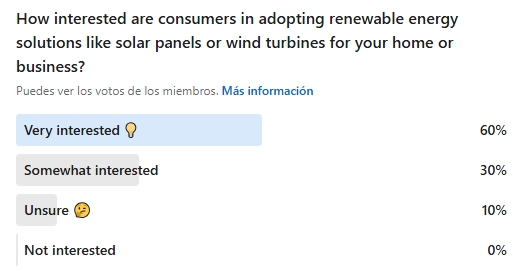
The survey data shows that consumer interest in renewable energy adoption is strong, with 90% expressing either strong or moderate interest in solutions like solar panels or wind turbines. This indicates an encouraging openness to change — but it’s not just environmental concern fueling this interest.
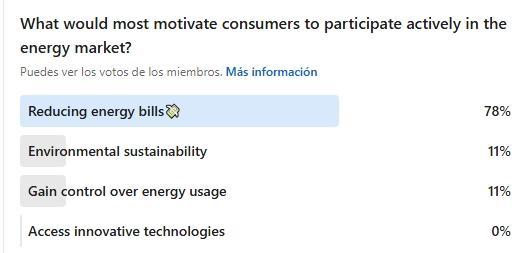
When asked what would most motivate consumers to participate actively in the energy market, a resounding 78% cited the potential to reduce energy bills as their top driver. In contrast, environmental sustainability and gaining control over energy usage each received just 11%, and access to innovative technologies received no votes.
These results highlight a key insight: Interest in renewables is high — but it’s primarily driven by tangible, economic benefits.
This has direct implications for OPENTUNITY. Through its OPENFLEX innovations, dynamic pricing tools, and demand-side flexibility solutions, the project is not only facilitating the integration of renewable sources but also helping consumers translate participation into real savings. It's a strong validation of OPENTUNITY’s dual focus on technical innovation and economic empowerment.
The Challenge: Complexity and Uncertainty
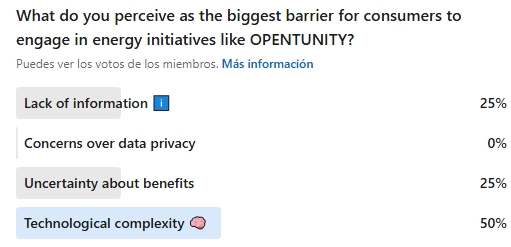
When asked about the biggest barrier to participating in energy initiatives like OPENTUNITY, the most common answer (of 50 percent) was technological complexity. This was followed by uncertainty about the benefits, and a perceived lack of accessible information. Interestingly, data privacy did not appear to be a major concern.
These results highlight the importance of our OPENABILITY pillar, which is focused on improving interoperability and user-friendliness of energy systems. If people are open to adopting new technologies, but are held back by confusion or lack of clarity, then making solutions intuitive and transparent becomes critical.
What Matters Most? Costs and Reliability
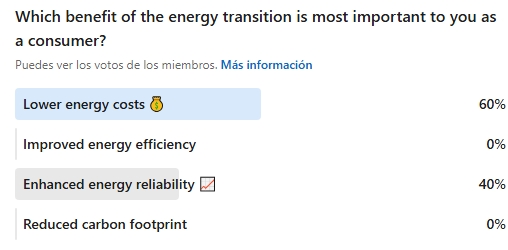
We also explored what consumers consider the most valuable outcomes of the energy transition. The top priority was lower energy costs (named by 60 percent), followed by improved reliability. Surprisingly, reducing carbon emissions and boosting energy efficiency received less attention in this round of polling.
This feedback is closely aligned with OPENTUNITY’s goals. Our smart flexibility algorithms, advanced grid tools, and local market frameworks are designed to deliver both cost savings and grid stability. By focusing on economic and practical benefits, we ensure our solutions meet people’s most immediate needs—while still supporting long-term sustainability.
Communication: Going Where People Are
Finally, we asked how citizens prefer to receive information about energy initiatives. Social media was by far the most popular channel (named by 80 percent), with project newsletters a distant second. Traditional media and webinars were not favored at all.
This finding reinforces the importance of our digital communication strategy. Through our LinkedIn and X (Twitter) channels, we’re not just sharing updates—we’re opening a conversation with stakeholders, citizens, and future energy users. And that conversation is shaping how we evolve the project.
Looking Ahead: People-Powered Innovation
These early results provide confirmation for OPENTUNITY’s approach: combining technological excellence with clear communication, citizen engagement, and real-world benefits. By listening closely to the people the energy transition will affect most, we can build systems that are not only smarter, but also more inclusive, responsive, and scalable.
More survey insights are on the way. Stay tuned for future articles exploring how citizens view flexibility, smart technologies, and the evolving role of consumers in Europe’s energy future.

OPENTUNITY’s 7th General Assembly in Oslo: A Step Forward in Energy Innovation
From June 11th to 12th, the OPENTUNITY consortium gathered in Oslo, Norway, for the 7th General Assembly — a key milestone to align on progress, refine technical strategies, and plan the path ahead. Hosted by project partner NODES, the meeting brought together all 21 partners for two days of in-depth discussions, hands-on collaboration, and stakeholder engagement.
Progress Across Pilot Sites

The meeting began with dedicated sessions from each of the four pilot sites — Slovenia, Greece, Spain, and Switzerland — where partners shared updates on citizen engagement actions, ongoing deployments, and the first insights from testing OPENTUNITY’s innovative tools.
From Slovenia, the University of Ljubljana highlighted ongoing smart energy management testing and their integration of HEMS and EV charging infrastructure. Greek partners HEDNO and IPTO reported progress in preparing the Mesogia region for flexibility trials. In Spain, ANELL and IMPULSA shared insights from the dual pilot zones in Santa Eulalia and Bigues i Riells, while Swiss partner AEM emphasized the role of local consumers in their urban pilot in Massagno.
Technical partners also presented the current status of test cases, showcasing how various OPENTUNITY tools — such as state estimation, flexibility forecasting, and interoperability modules — are coming together for real-world application.
Workshop with External DSOs and Flexibility Players
A highlight of the Oslo meeting was the External Workshop hosted on June 11th, which welcomed stakeholders from across the energy flexibility landscape. This interactive session aimed to connect OPENTUNITY’s research with real-world market experiences and featured contributions from:
- Flexia Consulting, who walked participants through the creation and scaling of the Swedish flexibility market Effekthandel Väst.
- Glitre Nett, who shared their day-to-day experience purchasing flexibility and integrating it into grid operations.
- Neowatt, an aggregator, who offered insights into the challenges and best practices from their role in enabling flexibility.
- Fingrid and Helen, who showcased coordination strategies between TSO and DSO levels through the Finnish FinFlex initiative.
This workshop proved invaluable in bridging the gap between research and market deployment, aligning well with OPENTUNITY’s vision to create scalable, interoperable, and user-focused solutions for the electricity ecosystem.


Next Steps for the Consortium
With the first project review successfully behind, partners are now focused on accelerating developments and preparing for field demonstrations. Key action points include:
- Finalizing technical deliverables for WP3 (Flexibility Solutions), WP4 (Grid Tools), and WP5 (Interoperability).
- Completing the definition of test cases with each pilot to ensure consistent validation across regions.
- Supporting pilot sites in deploying tools and engaging local citizens, ensuring communities are at the center of the transition.
- Advancing knowledge transfer and dissemination activities — including the upcoming submission of deliverables D8.3 and D8.5, and the creation of a collaborative video showcasing the full consortium.
- Each partner was also encouraged to revisit their exploitation strategies and explore opportunities for formal collaborations through MoUs (Memorandums of Understanding).
With strong momentum, OPENTUNITY continues to move from innovation to implementation — transforming flexibility, grid management, interoperability, and data exchange into actionable tools across Europe. The Oslo meeting reaffirmed our shared mission and strengthened the collaboration needed to deliver on the promise of a more flexible, resilient, and inclusive energy future.

OPENTUNITY at European Energy Forums
May has been an exciting and impactful month for the OPENTUNITY project, as several partners took part in high-level conferences and academic forums across Europe. From social sciences to engineering innovation, OPENTUNITY’s presence underscored its interdisciplinary relevance and the growing interest in its approach to enabling a flexible, interoperable, and inclusive energy system.
STS Conference 2025 – Graz, Austria
📅 May 5–7
At the Science, Technology and Society (STS) Conference in Graz, JOANNEUM RESEARCH represented OPENTUNITY through a dedicated session. The session, titled: “Advancing Urban and Rural Energy Systems for Inclusive, Scalable, and Technologically Integrated Energy Solutions,” explored how energy technologies can be developed in ways that are both technically sound and socially inclusive. Key insights included:
- The critical need for citizen involvement from the early stages of technology development.
- The gatekeeping role of energy companies in scaling energy communities.
- The importance of sector coupling in developing resilient urban energy systems.
This participation reinforced OPENTUNITY’s commitment to not only driving innovation but also shaping just and inclusive energy transitions.

Syngrid Summer School – Ljubljana, Slovenia
📅 May 14
Our partners from the University of Ljubljana and Kolektor sETup presented OPENTUNITY at the Syngrid Summer School, an event focused on the digitalization of energy systems and the role of EU-funded innovation in the energy transition.
The session featured:
- An introduction to the four main pillars of OPENTUNITY: OPENFLEX, OPENGRID, OPENSPACE, and OPENABILITY.
- Technical highlights from the Slovenian pilot site, including the integration of Reduxi HEMS and EV charging stations into Kolektor’s platform, enabling advanced forecasting and real-time flexibility services.
- Live examples from Kolektor sETup demonstrating how their platform OPTIMA is evolving through collaboration in projects like OPENTUNITY.
The presentation offered students and young professionals a hands-on view of how cutting-edge research is applied in real-world energy systems.


17th Conference of Slovenian Electric Power Engineers (CIGRE) – Laško, Slovenia
📅 May 20–22
Later in the month, OPENTUNITY was presented at the 17th CIGRE Conference in Laško, one of Slovenia’s leading professional events in the energy sector. During the conference, representatives from the Slovenian pilot shared the project’s vision and current achievements, particularly in:
- Enabling data-driven grid optimization through OPENGRID tools.
- Supporting real-time management of distributed energy resources (DERs).
- Highlighting OPENTUNITY’s federated data infrastructure (OPENSPACE) as a foundation for secure, trusted data exchange.
The event provided an excellent platform to engage with engineers, grid operators, and industry stakeholders, and to share the tangible progress being made through the pilot demonstrations.


Driving Collaboration Across Europe
These three events highlight OPENTUNITY’s strong presence in academic, technical, and professional arenas. By sharing results and engaging with diverse audiences — from students to engineers to researchers — the project is fostering knowledge exchange and building the collaborative ecosystem needed to deliver the energy systems of tomorrow.
Stay tuned as we continue to bring OPENTUNITY’s innovations to new platforms and audiences throughout 2025!

OPENTUNITY Joins EUSEW 2025 to Showcase Innovation in Energy Flexibility
We are thrilled to announce that OPENTUNITY will be present at the EU Sustainable Energy Week (EUSEW) 2025, the EU’s flagship event on renewables and energy efficiency. This year’s edition takes place in Brussels, gathering energy stakeholders from across Europe to discuss policies, trends, and innovations shaping a sustainable energy future.
You can find us at Booth C5, 2nd Floor of the Charlemagne Building, where we will be presenting the latest advances from our project and engaging with other key players in the energy transition.
At EUSEW, OPENTUNITY will showcase its integrated approach to unlocking flexibility across the energy system through its four core pillars:
- OPENFLEX: enabling consumers and prosumers to offer flexibility through smart home/building tools, with live pilot testing underway in Slovenia, Spain, Greece and Switzerland. Recent progress includes the integration of EV charging infrastructure and HEMS/BEMS platforms, as well as the development of AI models for flexibility forecasting.
- OPENGRID: supporting DSOs and TSOs with innovative grid management solutions. Among the tools currently being validated in all four pilot countries is our State Estimation module — designed for improved real-time grid visibility — and low-cost thermal rating tools that optimize asset usage.
- OPENSPACE: building a Federated Data Exchange Infrastructure. We have recently achieved a major milestone with the completion of the architectural foundation and Proof-of-Concepts for trusted data sharing services.
- OPENABILITY: promoting interoperability through alignment with European standards. The updated Standardization Action Plan provides a clear roadmap for OPENTUNITY’s contributions to ongoing regulatory and technical standardisation efforts.
Our participation in EUSEW is more than just an exhibition — it’s a step toward reinforcing OPENTUNITY’s role in Europe's digital and sustainable energy transformation. Come meet us at the EUSEW to learn how we are building scalable, replicable and interoperable solutions that empower energy actors across Europe.
Join us at Booth C5 and discover how OPENTUNITY is helping to shape the flexible energy system of tomorrow.

OPENTUNITY Joins the Energy Nexus Cluster
We’re excited to announce that OPENTUNITY has officially joined the Energy Nexus Cluster, a dynamic collaboration platform bringing together cutting-edge EU-funded projects committed to shaping the future of the European energy system.
What is the Energy Nexus Cluster?
The Energy Nexus Cluster is an initiative that unites Horizon Europe and Horizon 2020 projects with a shared ambition: to drive the digitalisation, decarbonisation, and integration of energy systems across Europe. By fostering cross-project collaboration, the cluster aims to align technical developments, harmonise research outcomes, and jointly communicate the transformative impact of EU innovation on energy systems.
This cluster supports knowledge exchange, co-creation opportunities, and joint dissemination efforts across projects working on smart grid flexibility, data spaces, local energy communities, AI integration, and user-centric energy solutions.
Collaborative Projects with Shared Vision
The Energy Nexus Cluster brings together a diverse group of forward-looking European projects. RESONANCE focuses on facilitating interoperable data exchange and cross-sector services, while STREAM aims to enable real-time flexibility for smart grids. SENERGY NETS works on integrated energy networks for decarbonisation, and REEFLEX enhances grid stability with flexibility services. BEFLEXIBLE and ELEXIA both empower stakeholders with advanced demand-side flexibility tools and market mechanisms. ENFLATE demonstrates scalable flexibility services across Europe; GLOCALFLEX, addressing local energy flexibility markets and social engagement strategies, and INDEPENDENT designs intelligent systems for local energy management. GEOFLEXheat focuses on geothermal energy and flexibility, contributing to low-carbon heating solutions. Now, OPENTUNITY joins these initiatives, bringing its expertise in federated data spaces, local flexibility markets, and demand-side engagement to the cluster.
Why This Matters for OPENTUNITY
Joining the Energy Nexus Cluster marks a strategic step forward for OPENTUNITY. It strengthens our engagement with other key players in the European innovation landscape and:
- Amplifies the visibility and impact of our work across the EU energy research community.
- Enables synergies in areas such as standardisation, digitalisation, and flexibility market design.
- Facilitates collaborative opportunities for joint events, deliverable alignment, and policy dialogue.
- Ensures that the outcomes and innovations of OPENTUNITY can both contribute to and benefit from broader discussions shaping Europe’s energy transition.
As we work to develop scalable solutions for interoperable data spaces, local flexibility markets, and end-user empowerment, OPENTUNITY is proud to collaborate with likeminded projects through the Energy Nexus Cluster. Together, we’re building the future of Europe’s smart, green, and resilient energy system.
If you want to learn more about the Energy Nexus Cluster or join us in this collaborative group, you can find more information here: https://glocalflex.eu/energy-nexus/

OPENTUNITY at ECESCON 16: Engaging Next Generations of Engineers
From April 25–27, 2025, IPTO, one of the key partners of the OPENTUNITY project, took part in the 16th Electrical and Computer Engineering Student Conference (ECESCON) held in Thessaloniki, Greece. During the event, IPTO had the opportunity to introduce the OPENTUNITY project to a vibrant and dynamic audience of engineering students, presenting its goals, innovations, and potential impact on the future of the energy system.
ECESCON is the largest student-led conference in the field of electrical and computer engineering in Greece. Since its inception in 2007, it has become a well-established platform for sharing technological advancements, encouraging networking among students and professionals, and fostering the spirit of innovation. Organized annually by and for students, the conference travels to different cities across the country and attracts participants from all Greek engineering departments.
The conference offered a wide range of activities including lectures, workshops, research paper presentations, competitions, and career events.
As part of OPENTUNITY’s commitment to capacity building, education, and youth engagement, IPTO’s presence at ECESCON aimed to inspire the next generation of engineers and raise awareness of the importance of digitalisation, data exchange, and flexibility in the future energy system. Students learned how OPENTUNITY’s innovative tools—such as federated data exchange infrastructure and smart grid-user cooperation models—can help accelerate Europe’s green and digital energy transition.


OPENTUNITY’s participation also aligns with ECESCON’s broader objectives:
- Promoting collaboration between students, researchers, and industry professionals.
- Highlighting emerging technologies in critical areas such as flexibility, energy data, and smart grid management.
- Encouraging diversity in engineering and creating more inclusive learning spaces.
By joining events like ECESCON, OPENTUNITY continues to strengthen its links with academia and future talent, helping ensure the energy systems of tomorrow are shaped by innovative, well-informed, and engaged professionals.

OPENTUNITY and the Rise of AI in Energy
A new report by the International Energy Agency (IEA), titled "Energy and AI", offers a comprehensive, data-driven analysis of how artificial intelligence (AI) is poised to reshape the global energy landscape. The report emphasizes both the transformative potential of AI and the energy challenges it may bring, particularly concerning the soaring electricity demand of data centers.
According to the IEA, the electricity demand from data centers could more than double by 2030, reaching 945 TWh—more than the current total electricity consumption of Japan. AI-optimized data centers are expected to account for the majority of this increase. In countries like the United States, data centers could drive nearly half of the projected electricity demand growth over the next five years.
Yet, while the rising energy consumption poses challenges, the report also highlights how AI can offer powerful solutions: reducing costs, enhancing system efficiency, increasing competitiveness, and lowering emissions. These insights align closely with OPENTUNITY’s mission.
 What This Means for OPENTUNITY
The OPENTUNITY project is dedicated to designing and testing innovative energy solutions that promote digitalization, flexibility, and sustainability in the energy system. AI plays an increasingly important role in enabling smarter, data-driven decision-making across the energy value chain—from optimizing grid operations to empowering end-users to manage their consumption more efficiently.
Several OPENTUNITY innovations, such as federated data exchange frameworks, intelligent grid flexibility mechanisms, and user-centered energy management tools, are designed to not only accommodate but leverage AI technologies. As the IEA report points out, such technologies can help mitigate the growing demand of AI itself by improving the overall energy system’s efficiency and enabling cleaner energy integration.
Bridging Innovation and Infrastructure
A critical point in the IEA report is the urgent need for investment in generation and grid infrastructure to support AI’s rising electricity demand. This complements one of OPENTUNITY’s key areas of focus: enhancing grid flexibility and promoting better coordination between distribution system operators (DSOs), transmission system operators (TSOs), and end-users.
Through its pilot projects across Europe, including initiatives focused on smart grid management, local flexibility markets, and data sovereignty, OPENTUNITY directly contributes to the kind of systemic transformation the IEA envisions—where technology, policy, and infrastructure evolve together to unlock a sustainable energy future.
 Looking Forward
The IEA also notes that the full potential of AI in the energy sector will require strong cooperation between policymakers, technology providers, and energy stakeholders. This spirit of collaboration is at the heart of the OPENTUNITY project, bringing together 21 partners from 9 countries to develop interoperable solutions that are scalable across Europe.
As AI becomes more deeply embedded in both scientific discovery and energy system operations, OPENTUNITY will continue to explore its role in accelerating clean energy innovation and ensuring that digital technologies remain aligned with Europe’s sustainability goals.
📄 Explore the full IEA report here: IEA Energy and AI Report
Want to learn how OPENTUNITY is preparing for an AI-driven energy future? Follow us for more updates.

OPENTUNITY's Network Planning Tool
Strategic planning of the distribution network is essential to efficiently integrate Renewable Energy Sources (RES), reduce costs, and ensure a secure grid operation. Traditionally, grid planning is based on expensive infrastructure expansion, which does not adapt to rapidly evolving flexibility markets or available flexibility resources.
New OPENTUNITY Network Planning Tool
Within the OPENTUNITY project, ICCS is developing an advanced Network Planning Tool that integrates best planning practices with novel research methodologies and very fast algorithms to address the challenges of modern distribution grids. The tool supports Distribution System Operators (DSOs) in making strategic and informed decisions by integrating sophisticated programming techniques such as Mixed-Integer Linear Programming (MILP) and Mixed-Integer Second-Order Cone Programming (MISOCP) for performing network planning, a fast power flow algorithm for critical scenario identification and timeseries clustering for scenarios extraction. Different objectives can be set, such as cost optimization, investments deferral, or maximizing RES capacity, allowing DSOs to quickly design and compare alternative investment options and operation scenarios.
A user interface provides graphical representations of key results. For example, in a cost optimization scenario (figure on the right side), the planning tool graphically represents the impact of strategic decisions, such as the optimal time to invest in infrastructure and its corresponding impact on power loss costs. The interface can alternatively illustrate scenarios with a focus on delaying expenditures, highlighting how strategic use of flexibility resources can defer costly investments (figure on the left side).


Power flow results can also be presented in all scenarios, e.g. for RES capacity maximization (Figure 3), identifying optimal locations and capacities of new RES power plants for given budgetary constraints. The tool ensures that RES capacity expansion is closely aligned with existing grid constraints. The computed RES capacity at each substation in this case is represented in map-based visualizations.
