


News

AI Innovation from OPENTUNITY Takes the Stage at ENLIT 2025
At ENLIT Europe 2025, OPENTUNITY once again demonstrated its commitment to shaping the future of smart grid innovation. This year, the spotlight was on the work of Elektro Ljubljana, whose contribution showcased how artificial intelligence can dramatically improve reliability and performance in low-voltage distribution networks, an area where fault detection remains notoriously challenging.
The presentation, delivered by Dr. Klemen Nagode during the session “AI in Practice – Part 2”, offered an insightful look at a rapidly evolving field where data, algorithms, and operational expertise converge to strengthen tomorrow’s electricity distribution systems.
Bringing AI Into the Heart of Low-Voltage Operations
Unlike transmission grids, low-voltage networks are vast, complex, and traditionally less monitored, making it difficult for operators to quickly identify emerging issues. Faults such as bad neutral contacts, voltage anomalies, or early signs of component degradation often remain invisible until they escalate into service interruptions.
To tackle this, Elektro Ljubljana developed an AI-based anomaly detection system designed to uncover these hidden issues early on. The solution analyses a rich blend of data sources, smart meters, protection relays, historical fault records, and state estimators, to detect patterns that signal abnormal behaviour.
Behind the scenes, the team carried out extensive feature engineering, model training, and data validation, using advanced machine learning techniques such as weighted K-nearest neighbors with optimised parameters. The result is a system capable of identifying subtle anomalies with remarkable speed, supporting predictive maintenance and reducing operational uncertainty.
How OPENTUNITY Strengthens This Work
The development does not stand alone, it is actively supported by several tools created within the OPENTUNITY project. Among them:
- Fuse-burn detection modules offering early indicators of device or line distress
- Real-Time Thermal Rating (RTTR), enabling dynamic monitoring of conductor temperature and loading
- Failure forecasting tools, combining short-term and long-term risk modelling
- Advanced asset management systems, providing a structured view of network conditions
These components bring additional layers of insight to the anomaly detection framework, helping enrich datasets, refine machine learning models, and improve the robustness of the overall solution. This illustrates OPENTUNITY’s mission: to build interoperable, complementary tools that elevate grid management through digital intelligence.
A Human–Machine Partnership
One of the strongest points highlighted in the session was the importance of collaboration with field maintenance teams. Real-world verification of model predictions, by technicians working directly on the network, provided essential feedback, allowing the algorithms to evolve beyond theoretical accuracy and into practical, operational usefulness.
This iterative loop between AI systems and human expertise created a powerful validation mechanism, ensuring that the tool performs reliably in diverse, real-life scenarios.
Why This Matters for the Future of Grid Operations
This work marks an important step forward for European distribution system operators. By combining AI, operational data, and domain expertise, the approach significantly improves fault detection capabilities in low-voltage networks, historically one of the most difficult areas to monitor.
It also demonstrates the potential of the solutions being developed in OPENTUNITY: tools that are not only innovative but also applicable, scalable, and designed to support day-to-day decision making.
Download the Presentation
Interested in the technical details?
👉 Download the full ENLIT 2025 presentation slides here:

OPENTUNITY Participates in the Energy Nexus Cluster Internal Workshop in Bilbao
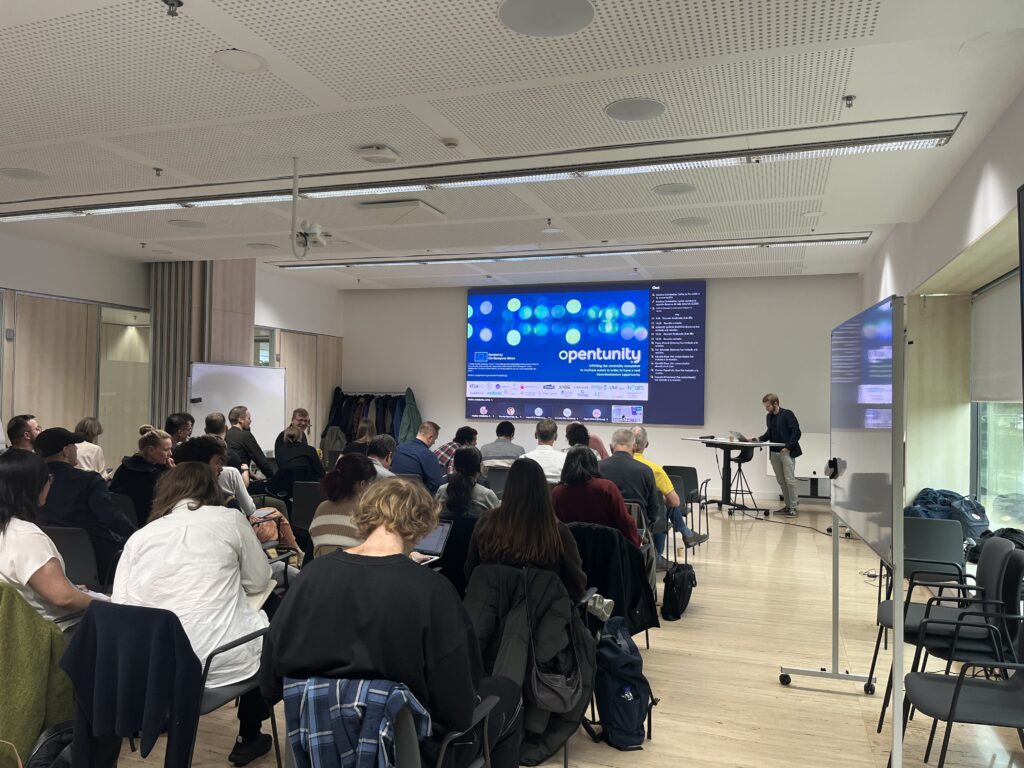
On 17 November 2025, OPENTUNITY took part in the Energy Nexus Cluster Internal Workshop, a technical and highly collaborative event held in Bilbao (Spain) and hosted by Tecnalia. The workshop brought together representatives from several EU-funded, energy-related research and innovation projects, creating a unique forum to deepen discussions, exchange expertise, and explore shared challenges across the sector.
A Collaborative Space for Knowledge Exchange
The objective of the workshop was clear:
to connect experts from the scientific community and industry, enabling cross-project learning and joint reflection on today’s most pressing topics in the energy transition.
Participants engaged in dynamic sessions where insights from ongoing European projects were openly shared. The workshop’s structure encouraged not only the presentation of technical results but also active dialogue and debate, fostering a space where problems could be examined collectively and solutions co-created.
OPENTUNITY’s Contribution: Insights Through Presentation
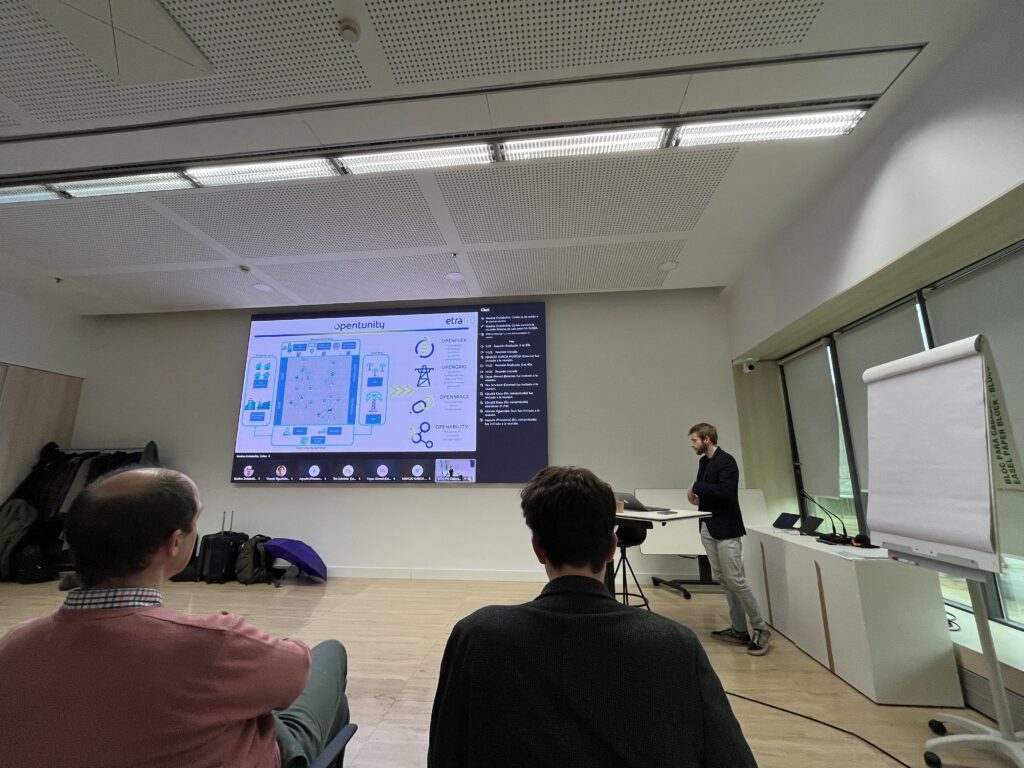
ETRA, representing OPENTUNITY, contributed to the workshop through a dedicated presentation, offering an overview of the project’s approach, challenges, and ongoing achievements. The audience, composed of researchers, technology experts, and industry representatives, showed strong interest in OPENTUNITY’s work on grid flexibility, digitalisation tools, and AI-enabled solutions.
The relevance of the workshop topics to OPENTUNITY’s scope made the exchanges particularly valuable, feeding reflection on interoperability, scalability, and the practical deployment of innovative technologies.

Main Takeaways and Conclusions
One of the workshop’s defining features was its high level of participation and interaction. Rather than a sequence of monologues, the event evolved into a genuine knowledge-sharing forum, where each presentation sparked discussions, questions, and real collaborative thinking.
Key conclusions include:
- The event confirmed the importance of cross-project dialogue to align approaches and accelerate innovation.
- Discussions directly addressed themes crucial for OPENTUNITY, including digital tools for grid management, flexibility markets, and AI-driven optimisation.
- The workshop environment strengthened connections with other EU energy projects, opening doors for future synergies and cooperation opportunities.
Driving Innovation Together
The Energy Nexus Cluster Internal Workshop once again demonstrated the value of bringing together diverse actors working toward Europe’s clean energy objectives. For OPENTUNITY, it was an excellent opportunity not only to present ongoing progress but also to gather insights that will help shape the project’s next steps.
Through active participation and knowledge-sharing, OPENTUNITY continues to contribute to a more interconnected, innovative, and resilient European energy ecosystem.
OPENTUNITY Showcasing AI-Driven Innovations at Enlit Europe 2025
The OPENTUNITY project took part in Enlit Europe 2025, held from 18 to 20 November in Bilbao, Spain, joining one of the most important annual gatherings for the European energy community. As a leading event connecting policy-makers, DSOs, TSOs, researchers, technology providers, and innovators, Enlit offered the perfect stage for OPENTUNITY to present its progress and exchange insights with key stakeholders shaping the future of the energy transition.
Positioned in the EU Projects Zone, OPENTUNITY engaged with visitors at stand 5.F30–S02, sharing updates on the project’s technological developments, pilot activities, and the role of flexibility in enabling a more resilient and citizen-centric energy system.
Why Enlit Matters for OPENTUNITY
Participation in Enlit Europe is not merely a visibility exercise,it is a strategic opportunity to:
- show tangible progress on the technologies developed within the project,
- align with European policy priorities around digitalisation, flexibility and consumer empowerment,
- strengthen synergies with other EU-funded initiatives,
- and gather feedback from practitioners, system operators and industry leaders.
With the project entering its final operational phase, Enlit provided an ideal moment to demonstrate how the solutions developed over the past years are now being deployed and tested across Europe.
What OPENTUNITY Showcased at Enlit
At the stand, partners presented the 13 innovative technologies currently being integrated and demonstrated across the project’s four pilot sites in Spain, Switzerland, Slovenia, and Greece. These innovations revolve around:
- AI-powered state estimation and topology detection.
- Non-Intrusive Load Monitoring (NILM).
- Local flexibility markets and TSO-DSO coordination.
- Real-Time Thermal Rating and asset management tools.
- Building and Home Energy Management Systems (BEMS/HEMS).
- Data-sharing infrastructures for interoperable grid intelligence.
Visitors were able to explore how these technologies contribute to a more flexible, reliable, and consumer-engaged electricity system, one capable of addressing the growing complexity of distributed renewable generation, electrification, and variable demand patterns.


OPENTUNITY in the Enlit Conference Programme
In addition to the exhibition stand, OPENTUNITY was also featured in the conference sessions. The project delivered a presentation summarising its current status, innovations and expected impact, highlighting the following themes:
1. Physics-Informed Neural Networks for State Estimation
OPENTUNITY showed how AI models enriched with physical grid constraints can address traditional observability gaps, providing DSOs with more accurate, real-time insight into grid conditions.
2. Real-Time Topology Detection
The project demonstrated how physics-informed AI can identify unreported topology changes, an essential capability for maintaining reliable grid models and enhancing operational safety.
3. NILM for Enhanced Prosumer Engagement
The session explored how NILM algorithms can disaggregate consumption from smart meter data without additional hardware, enabling prosumers to understand their usage patterns and optimise behaviour.
4. Multi-Country Pilots Testing 13 Technologies
The presentation highlighted the uniqueness of OPENTUNITY’s four pilot environments—urban, rural, industrial and community-based—which together create a robust testbed for validating AI tools and flexible market architectures.


Key Takeaways Shared at Enlit
The session concluded with several key messages:
- AI-driven state estimation significantly enhances DSO capabilities by combining machine learning with power system physics.
- Topology detection powered by neural networks allows operators to correct grid records in real time.
- NILM provides scalable prosumer-level intelligence without requiring additional hardware, unlocking new services and engagement models.
- Diverse, multi-country pilot testing is fundamental to ensuring the scalability and robustness of new energy innovations.
Looking Ahead
With development completed and demonstration activities underway, OPENTUNITY is entering a decisive stage. The feedback and interactions generated at Enlit Europe 2025 strengthen the consortium’s ambition to deliver solutions that are not only technologically advanced, but also operationally relevant and aligned with Europe’s evolving energy landscape.
As the project moves towards 2026, the focus remains clear: deploy, validate, and pave the way for large-scale adoption of smart, AI-enabled flexibility and grid-management tools across Europe.
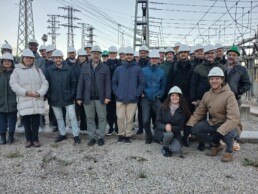
OPENTUNITY Completes Its Second Project Review in Granollers
The OPENTUNITY consortium recently met in Granollers (Spain) for its Second Review Meeting with the European Commission. This milestone marks an important step in evaluating the progress achieved over the past 16 months and preparing for the final phase of the project.
The review showcased substantial advancements in technology development, pilot deployment and flexibility market demonstration across Europe. The feedback from the European Commission was very positive, reinforcing the consortium's confidence in the relevance and quality of the work performed so far. At the same time, partners acknowledge that the upcoming months are crucial to complete all planned demonstrations and validate the project’s full potential.
A deep dive into the Spanish pilot
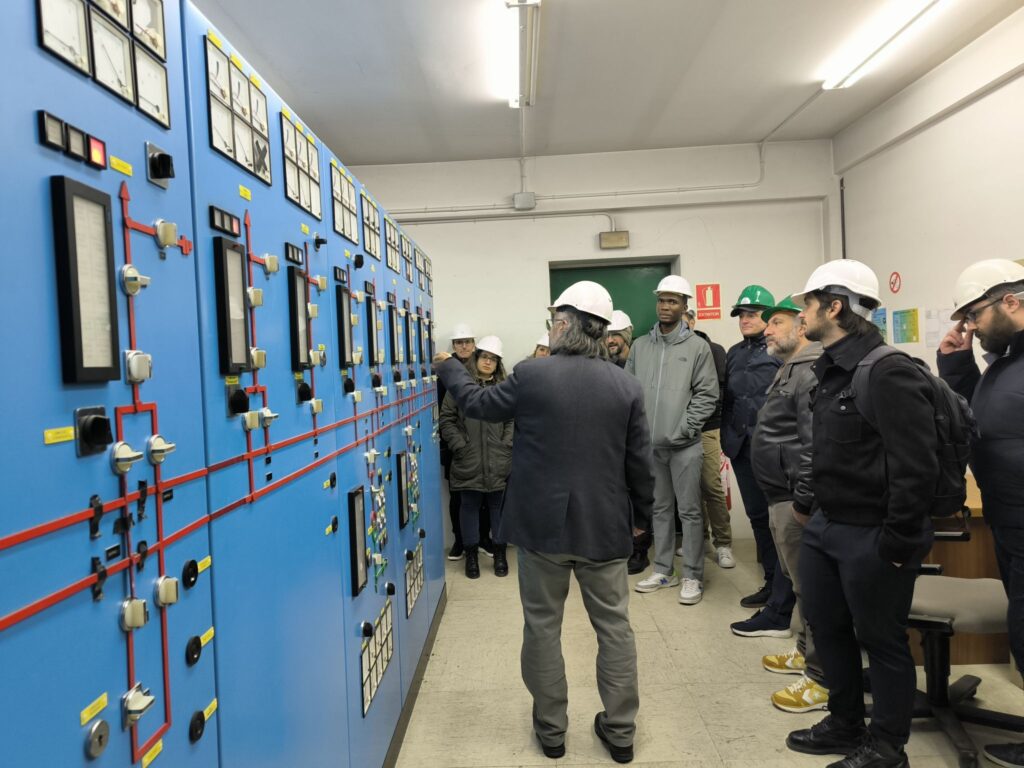
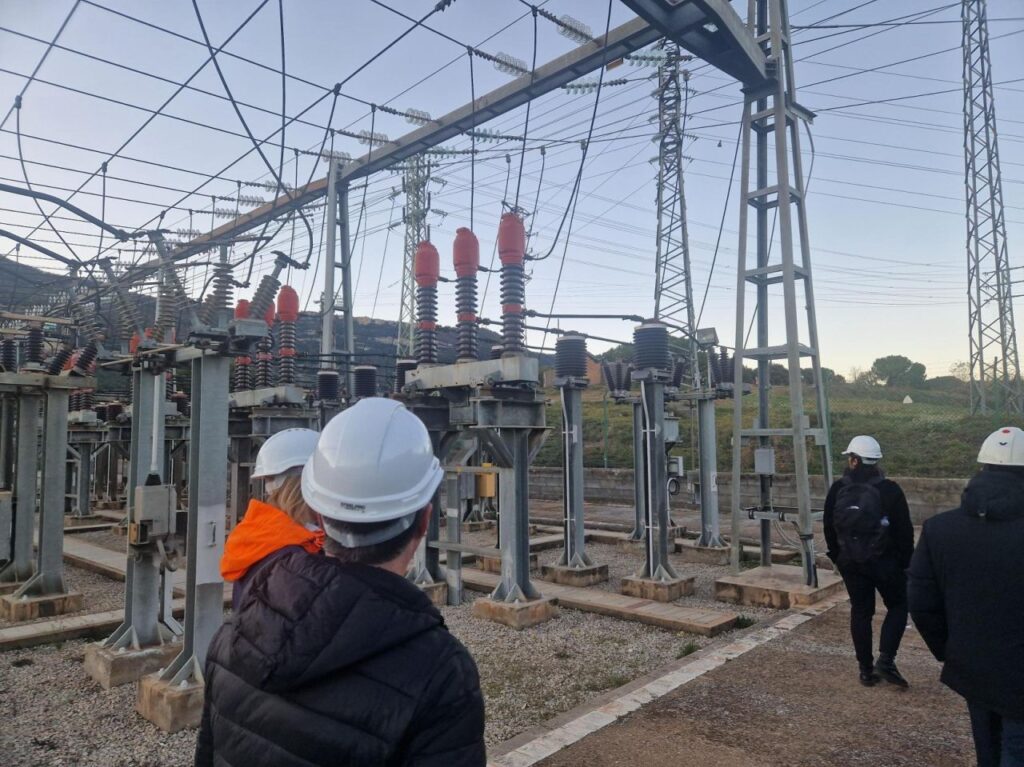
Alongside the review sessions, partners visited a key part of the Spanish pilot in Centelles, including a secondary substation that will host the Real-Time Thermal Rating (RTTR) demonstration.
During the visit, Anell presented:
- the origins and particularities of the local distribution grid,
- the industry characteristics of the region,
- and the societal importance of maintaining a reliable, modernised network.
Partners also reviewed the rationale for selecting the demonstration line, the expected benefits of deploying thermal sensors, and the adaptations required to test the innovative grid management tools developed within OPENTUNITY. This field visit provided valuable context and renewed motivation for all partners to continue supporting the energy transition at regional and local levels.
Pilot highlights: Four countries, one shared mission
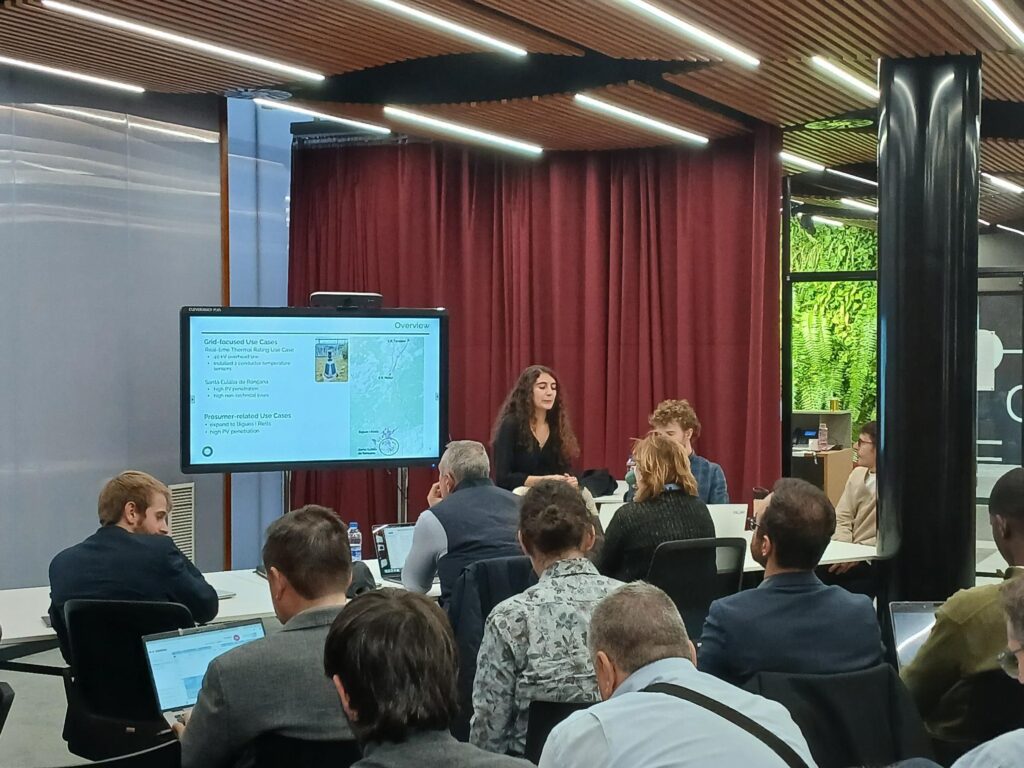
The review dedicated a full session to the project’s four pilot sites, each demonstrating innovative solutions tailored to their local systems.
Greece: Coordinated Flexibility Procurement
HEDNO S.A. and IPTO showcased their coordinated approach using the NODES Flexibility Trading Platform, including a TSO-DSO coordination tool that ensures safe activation of flexibility across voltage levels.
Switzerland: Local Energy Community for Peak-Shaving
AEM SA demonstrated how flexibility from its local energy community is used to alleviate grid congestion during peak-demand hours.
Spain: Flexibility Orders and Grid Intelligence
Anell presented the use of ETRA’s grid analysis tools (ETER) to detect grid needs and generate flexibility requests submitted through the NODES platform.
Slovenia: User-Centric Energy Engagement
The Slovenian pilot, led by UL in collaboration with multiple partners, presented:
- ongoing citizen engagement campaigns,
- updated business models featuring concrete cost-benefit figures,
- and the steps toward full deployment of OPENTUNITY technologies, including flexibility algorithms and EV-related solutions.
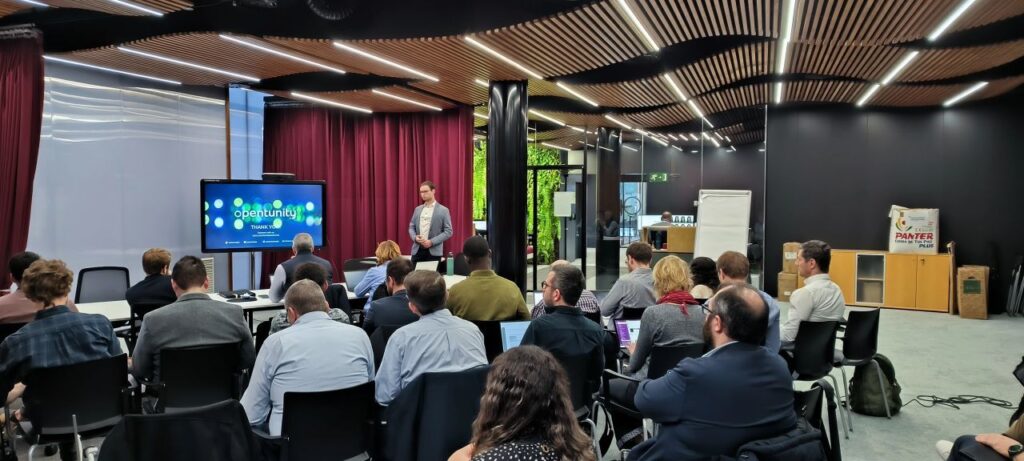
Live demonstrations: Turning R&D into reality
A key part of the review was the demonstration of OPENTUNITY’s most advanced tools, including:
Optimal Market Selection Algorithm
Developed by Setup and partners, this tool identifies the most profitable market—or combination of markets—for deploying flexibility assets.
Optimal Flexibility Allocation Algorithm
A smart decision-making engine that distributes available flexibility across a portfolio of assets in a cost-efficient manner, preserving user comfort and respecting technical limits.
Real-Time Thermal Rating Demonstration
Using line sensors installed in Spain, the consortium demonstrated how dynamic thermal ratings can unlock additional capacity and reduce operational bottlenecks.
The Commission highlighted these innovations as high-impact contributions toward a more flexible, resilient and data-driven European energy system.
Entering the final phase of the project
With the review successfully closed, OPENTUNITY now moves into its final project phase, focusing on:
- completing all demonstrations across the four pilots,
- validating KPI improvements,
- ensuring interoperability across technologies, and
- preparing for large-scale replication of the most successful solutions.
The consortium remains committed to delivering meaningful, real-world impact and contributing to Europe's transition toward a future powered by flexibility, digitalisation and consumer empowerment.

SETUP Develops an Optimal Market Selection Algorithm
Over the past 10 months, SETUP, in collaboration with Avantcar and the University of Ljubljana, has been working on an innovative algorithm designed to help flexibility providers make smarter decisions across multiple energy markets.
As part of the OPENTUNITY project, this work focuses on how the flexibility of distributed energy assets, such as electric vehicles, batteries, or demand-response resources, can be effectively offered in different market environments, each with its own technical and regulatory rules.
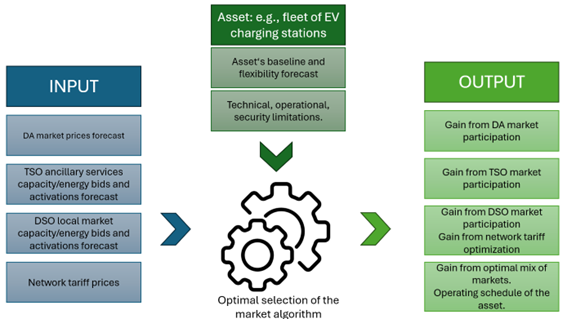
The result is an optimal market selection algorithm that identifies the most beneficial market combinations for flexibility providers. It analyses opportunities across day-ahead, intraday, ancillary services, and local DSO markets, recommending how and where flexibility should be offered to maximise its value.
By processing data on tariffs, market prices, and technical constraints, the algorithm provides:
- The optimal market or market combination for each asset,
- The expected revenues or cost savings, and
- The optimal operating schedule for flexibility deployment.
This development represents a significant step forward in enabling data-driven decision-making for aggregators and flexibility service providers, ensuring that flexibility assets deliver the greatest possible benefit to both the grid and end users.
Real-Time Thermal Monitoring at Anell's Network
At OPENTUNITY, we are committed to unlocking the full potential of the grid, making it smarter, more flexible, and ready for the demands of a high-renewable future. This summer, our partner Anell has taken a significant step toward that goal.
Where?
In a medium-voltage line within Anell’s distribution network in Catalonia (Spain).
What Happened?
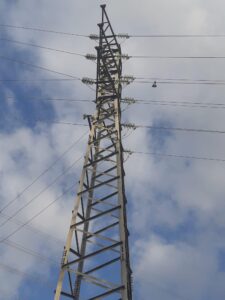
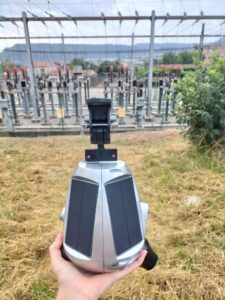
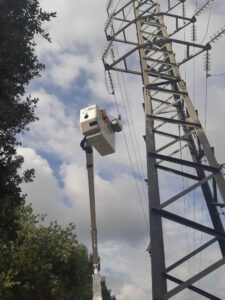
Two temperature sensors were installed directly on the conductor of a medium-voltage line as part of OPENTUNITY’s Real-Time Thermal Rating (RTTR) use case.
Why does this matter?
Traditionally, distribution system operators use static and conservative estimates to define the maximum current capacity of their lines, often based on worst-case weather conditions. In reality, line capacity varies depending on the actual conductor temperature, which fluctuates with current and ambient conditions. Under favorable conditions, the line can safely carry more energy than these conservative limits suggest.
That’s where OPENTUNITY comes in.
Smarter Algorithms for a Smarter Grid
Instead of deploying expensive sensors across the entire grid, OPENTUNITY is developing a data-driven algorithm to estimate conductor temperature in real time, using only ambient temperature and electrical current measurements.
To validate this model, Anell installed two temperature sensors on a live grid segment, enabling a comparison between measured and estimated conductor temperatures. These insights will support further development of the algorithm and its future deployment at scale.
“If we have better information on the capacity of our grid in real time, we can take better decisions when operating it at critical moments. Real-time thermal rating provides us just that.” – Anell team
Why Sentrisense?
As part of the validation, Anell chose to work with Sentrisense, a startup offering a lightweight and cost-effective temperature sensor design that differs from most commercial options. OPENTUNITY partners are now receiving data from the devices to refine their tools and algorithms.
OPENTUNITY at the Renewable Energy Grid Integration Week 2025
Last 7–10 October 2025, OPENTUNITY was represented at one of the most important annual events in the renewable energy sector, the Renewable Energy Grid Integration Week 2025, which hosted the 24th Wind & Solar Integration Workshop in Berlin. The event, organised by Energynautics, gathered more than 420 participants from 38 countries, bringing together leading experts, researchers, and industry representatives to discuss the challenges and innovations shaping the future of renewable energy integration.
Sharing Insights on Flexibility and Data Interoperability

Georgia Eirini Lazaridou from HEDNO presented a joint paper prepared by HEDNO, IPTO, and NODES, highlighting key findings and progress from the Greek Pilot of the OPENTUNITY project. The presentation focused on the importance of flexibility as a cornerstone for maintaining grid stability and reliability in systems with high renewable energy penetration.
The paper explored how Transmission and Distribution System Operators (TSOs and DSOs) can coordinate flexibility procurement through secure, transparent, and interoperable data exchange mechanisms, an approach that is central to OPENTUNITY’s mission.
📥 You can download the presentation slides here to explore the concepts and findings shared during the session.
OPENTUNITY presentation_Renewable Grid Integration Week 2025 – Opentunity
Flexibility: A Core Enabler for the Energy Transition
A recurring message throughout the workshop was clear: flexibility is the key enabler for addressing the operational challenges of modern power systems. As renewable energy sources like wind and solar become dominant, grid operators must adapt to manage variability and uncertainty in both demand and generation.
To achieve this, it is crucial to:
- Strengthen data exchange frameworks that are secure and interoperable,
- Encourage the participation of diverse flexible assets (such as distributed generation, storage, and demand-side response), and
- Support market-based operation models that reward flexibility contributions.
These topics are at the heart of OPENTUNITY’s ongoing work, particularly within the Greek Pilot, where HEDNO and IPTO are testing new coordination mechanisms for flexibility services and demonstrating their real-world potential.
Aligning Research and Practice
OPENTUNITY’s participation in the workshop reaffirmed how closely aligned its objectives are with the broader research and innovation community working on renewable integration. The discussions and feedback gathered in Berlin will help guide ongoing activities in the project, especially in refining data interoperability frameworks, flexibility market design, and grid operation strategies.
As the project moves into its final phase, these insights will play an important role in shaping the next generation of smart, flexible, and decarbonised European power systems.


What Citizens Really Think: Smart Tools, Simpler Markets, and Informed Choices
At OPENTUNITY, we believe that real innovation begins with understanding people. That’s why our project continues to ask:
What do energy users need, want, and understand about the energy transition?
In this second round of stakeholder engagement via social media surveys, we explored perceptions around consumer empowerment, smart technologies, and barriers to participation. The insights help us refine the tools and strategies we’re developing, making the energy system not only smarter, but more inclusive.
Energy Markets: Still Too Complex for Most Citizens
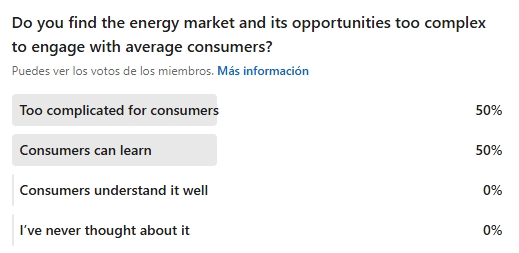
Half of the respondents believe the energy market is too complicated for the average consumer, while the other half thinks consumers are slowly learning to navigate it. No one believed that consumers fully understand it.
Similarly, when asked whether consumers are aware of their ability to actively participate (e.g., via demand response or selling excess energy), a combined 86% said only a minority knows or participates, and 43% said “almost nobody knows.”
This perception gap highlights the need for clearer communication, education, and digital interfaces that guide citizens, something OPENTUNITY addresses through its local engagement campaigns, pilot demonstrations, and work package on knowledge transfer (WP8).
It also reinforces the importance of EU efforts like the Clean Energy Package, which aims to strengthen consumer rights and awareness in the evolving energy market.
Cost Is Still the Top Priority
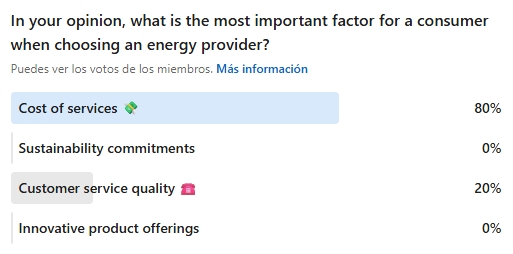
We also asked: What really matters when choosing an energy provider? A resounding 80% of respondents selected "Cost of Services", while 0% chose “Sustainability Commitments”.
This sends a strong message: while climate awareness is rising, economic pressure remains the primary driver of consumer behavior. OPENTUNITY acknowledges this reality by focusing on solutions that reduce energy costs while enabling environmental gains, such as enabling flexible demand and self-consumption.
 As energy prices remain volatile across Europe, especially in the context of geopolitics and the EU Green Deal, ensuring that smart = affordable is crucial for adoption.
Citizens Want Smart, Practical Solutions
When asked about their interest in using smart tools (like smart meters or automated energy management systems), 100% of respondents expressed interest, with 56% being highly interested. This confirms a clear trend: people are open to digital technologies that give them control over their consumption, especially when they simplify complex decisions.
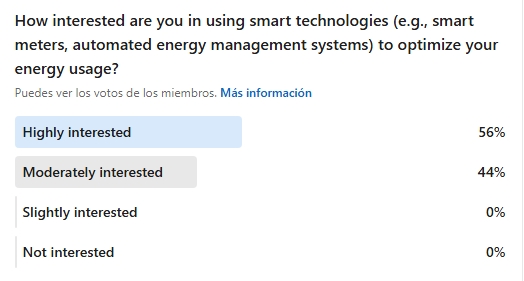
This enthusiasm reinforces our strategy: OPENTUNITY is working to deliver intuitive, impactful digital tools that allow users to take control of their energy usage without needing expert knowledge. These include:
- AI-based energy management systems (EMS).
- Predictive analytics tools for asset health monitoring (e.g., transformers).
- User dashboards for flexibility participation.
- And upcoming energy awareness apps for consumers.
These tools are designed to turn real-time data into actionable guidance, making energy-saving decisions accessible to everyone, not just experts.
Energy Decisions Are Social
Surprisingly, 100% of respondents said friends and family have an impact on energy-related choices, with most rating it as “moderately impactful.”
This social dimension of energy behavior confirms that peer influence, community engagement, and trust-building are key levers. It validates our pilot strategies in Slovenia, Spain, Switzerland, and Greece; where OPENTUNITY combines technical deployment with citizen workshops, local surveys, and real-world demonstrations.
Smart Tools as Habit-Changers
Finally, 100% of participants believe that smart tools can help change our energy habits to be more sustainable. This overwhelming consensus aligns perfectly with OPENTUNITY’s mission.
From smart home integrations to predictive maintenance and flexibility services, we are working on tools that don’t just monitor, they guide, recommend, and empower. The goal: create a feedback loop where data leads to action, and action leads to savings, both economic and environmental.
From Feedback to Features
Each of these survey results fuels the design and delivery of OPENTUNITY’s innovations. Whether through AI-powered analytics, intuitive dashboards, or community-based pilots, we are building a smarter, more inclusive energy system, one that listens, adapts, and empowers.
Because the energy transition won’t succeed without the people it’s meant to serve.

OPENTUNITY is developing an advanced Short-Term Asset Management Tool
Reliable operation of power grids depends heavily on the health and performance of critical infrastructure components, especially assets like transformers. Unplanned outages and equipment failures can cause significant disruptions, operational inefficiencies, and a decline in customer trust. Traditional maintenance approaches, often based on routine inspections or scheduled servicing, do not always detect emerging problems in time and can result in unnecessary interventions.
To address these challenges, the OPENTUNITY project is pioneering a smarter, more proactive approach to asset management.
Advanced Monitoring Powered by Machine Learning

As part of this mission, ICCS has developed an advanced Short-Term Asset Management Tool that leverages real-time sensor data and cutting-edge machine learning techniques. This innovative solution enables Distribution and Transmission System Operators (DSOs and TSOs) to monitor, analyze, and protect their most valuable grid components more effectively.
By processing high-frequency data from key equipment, such as transformer oil temperature and dissolved gas levels, the tool applies predictive algorithms to detect early signs of deterioration or failure. These insights empower operators to act before problems escalate, minimizing downtime and avoiding costly repairs.
Operator-Centric Design for Real-World Use
To ensure seamless integration into daily operations, ICCS has also finalized a user-friendly interface 
tailored to the needs of grid operators. Through a clear and interactive dashboard, users can monitor the health of all critical assets at a glance, receive real-time alerts about abnormal conditions, and access six-hour-ahead forecasts of key parameters.
The tool employs industrial standards and advanced anomaly detection methods, delivering both situational awareness and actionable intelligence. This allows operators to transition from reactive maintenance to predictive intervention, ultimately improving system reliability and efficiency.
Benefits for Grid Resilience and Efficiency
With its powerful analytics engine, intuitive design, and predictive capabilities, the Short-Term Asset Management Tool is set to become a cornerstone of data-driven asset management in the energy sector. Among its key benefits:
- Reduced operational and maintenance costs.
- Minimized equipment failure and downtime.
- Extended lifespan of critical assets.
- Improved grid stability and service continuity.
By combining advanced technology with practical application, OPENTUNITY is redefining how utilities safeguard the backbone of their infrastructure, making the grid smarter, greener, and more resilient.

Empowering Slovenian Citizens in the Energy Transition
As part of the OPENTUNITY project, Reduxi, a brand of Amibit, is working to make electricity smarter, greener, and more accessible for users across Europe. Based in Slovenia, Reduxi brings expertise in AI-driven Energy Management Systems (EMS), enabling households and businesses to take a more active role in the evolving energy landscape.
Within OPENTUNITY, Reduxi plays a key role in the Slovenian pilot, contributing to the design and deployment of user-centric energy solutions. Their main focus lies in understanding how end users interact with energy today, how ready they are to embrace change, and what kind of tools and support they need to join the energy transition.
From Insights to Action: A Three-Phase Engagement Strategy
To bring users into the center of the energy transition, Reduxi, in collaboration with the University of Ljubljana, Joanneum Research, and ETRA, has launched a structured three-phase engagement process for the Slovenian pilot site:
- Phase 1 – Listening to Users:
A targeted survey was conducted to gather data on citizens' energy behaviors, cost perceptions, and familiarity with EMS technologies. - Phase 2 – Supporting Engagement:
Interested participants are now being equipped with Reduxi EMS devices, enabling real-time monitoring and personalized energy solutions. - Phase 3 – Deepening the Connection:
The project will move forward with NILM (Non-Intrusive Load Monitoring) integration and collect feedback to evaluate Reduxi’s service models and user satisfaction.
What the Survey Revealed: Key Takeaways
The survey, conducted between May 7 and June 2, 2025, received 62 responses (52 complete), primarily from Slovenian households. The findings highlight several important trends that are already shaping the pilot’s next steps:
Energy Costs Matter—But Aren’t (Yet) a Crisis:
While 70% of users expect prices to rise, only 28% say they are very concerned, suggesting that electricity still takes up a manageable part of most household budgets.
- Users Are Ready for Smarter Tools:
Interest in Energy Management Systems was strong, with 65% of participants expressing enthusiasm, rising to 74% among those with higher consumption or large appliances.
- NILM Sparks High Interest:
The idea of real-time appliance-level monitoring proved especially attractive, pointing to a clear demand for tools that give users more visibility and control. - Informed Citizens, Engaged Citizens:
Over 60% were aware of the upcoming Slovenian Electrical Network Act, demonstrating that energy policy awareness is high when it directly affects costs or choices.
What Comes Next for the Slovenian Pilot
Building on these insights, Reduxi and the pilot partners are moving into the deployment and testing phase:
- 🔧 EMS installations at selected sites are already underway.
- 🧠 NILM technologies will be integrated to enhance monitoring and consumer feedback.
- 📊 New business models tailored to user behavior and needs will be piloted and evaluated.
These steps aim to translate awareness into action, helping citizens not only understand energy transition but actively participate in it, while reducing their bills and environmental impact.
Why This Matters for OPENTUNITY
This work is a core part of OPENTUNITY’s mission to build an open, intelligent, and user-driven energy system. By placing users at the heart of the design process, the Slovenian pilot demonstrates how smart technology, tailored communication, and trust-based engagement can unlock real change.
Reduxi’s efforts are showing that citizen engagement isn't just about information, it's about interaction. And that’s exactly how OPENTUNITY plans to drive a fair and inclusive energy transition.