


EV charging stations
Understanding User Acceptance of Flexible EV Car-Sharing Models
The transition towards more sustainable mobility is not only about developing new technologies. It also depends on understanding how people use these technologies and what would encourage them to adopt new ways of moving and consuming energy.
Mobility and housing are among the areas with the greatest impact on individuals’ private lifestyles and energy demand. As electric vehicles become increasingly common, new opportunities are emerging to connect mobility with the electricity system. One of these opportunities lies in combining car-sharing services with the flexibility offered by electric vehicle charging.
Within the OPENTUNITY project, Joanneum Research and Avantcar are working together to investigate how users perceive new car-sharing business models that make use of EV charging flexibility both at home and on the go.
Exploring the user perspective
These business models could enable electric vehicles to contribute more actively to the energy system. By adapting when and how vehicles are charged, it may be possible to make better use of renewable electricity and reduce pressure on the grid during periods of high demand.
However, the success of these solutions depends on more than their technical feasibility. Users need to see clear benefits and feel comfortable with the services being offered. For this reason, the research carried out by Joanneum Research and Avantcar focuses on understanding the factors that influence the acceptance of these new mobility and energy services.
A major strength of the study is that it is based on the opinions of nearly 1,000 actual car-sharing users, rather than relying solely on general public perceptions. This provides a more realistic picture of how potential users may react to the proposed business models.
Adapting the offer to different user needs could increase the size of the potential target groups by between 18% and 44%.
Looking at the complete user journey
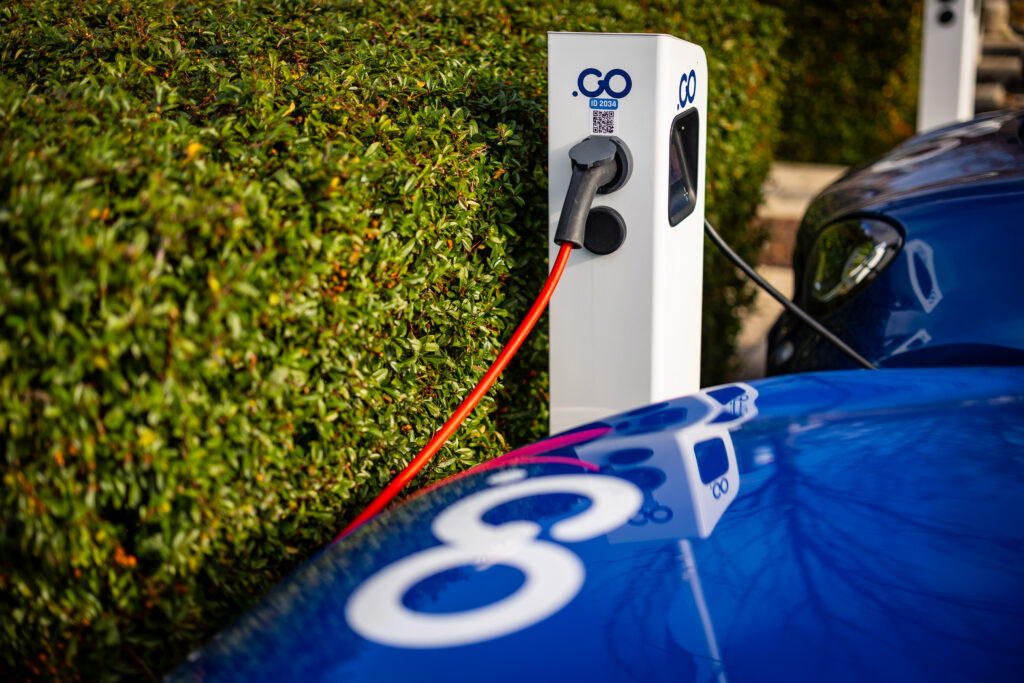
The research covers the full experience of using the service, from making a reservation to returning the vehicle. This approach allows the project partners to examine how users might respond to the different steps involved in participating in more flexible EV charging schemes.
The study also goes beyond simply asking whether users are interested or not. It explores the reasons behind their responses, including more specific concerns such as comfort, financial benefits, fear of vehicle damage, or questions related to responsibility and liability.
Preliminary findings indicate that comfort and financial benefits are among the main drivers of user acceptance. At the same time, the research is now going further to identify how these motivations and concerns vary between different groups of users.
Unlocking the potential of new business models
A better understanding of users who express interest under certain conditions could significantly expand the potential target groups for these new business models. Based on the research conducted so far, adapting the offer to different user needs could increase the size of the potential target groups by between 18% and 44%.
Users need to see clear benefits and feel comfortable with the services being offered.
These insights will help Avantcar refine and validate the proposed business models in real-life conditions, ensuring that they are not only technically viable but also aligned with the expectations and concerns of potential users.
Through this collaboration, OPENTUNITY is contributing to a more integrated approach to the energy transition, one in which electric vehicles are not only a means of transport, but can also become a source of flexibility for the wider energy system. Understanding the people who will use these services is an essential step towards making that vision a reality.

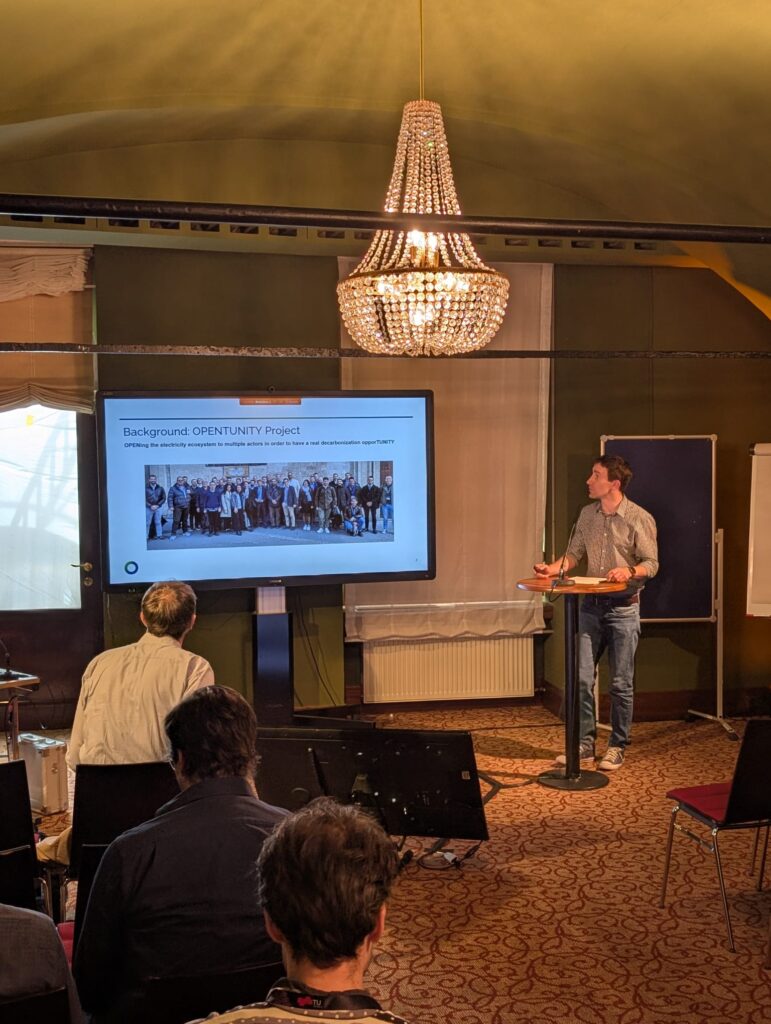
JOANNEUM RESEARCH Presents Carsharing Flexibility at STS Conference Graz
Between May 4 and 6, 2026, our partner JOANNEUM RESEARCH (JR) represented the OPENTUNITY project at the STS Conference Graz 2026 in Austria. Organized by the Graz University of Technology, this event is a cornerstone for the scientific community to discuss the intersections of Science, Technology, and Society.
The Focus: Can Carsharing Support Grid Flexibility?
The core of JR’s participation was the presentation of their latest research titled: “Shared cars, flexible charging: When cost savings meet additional effort”. The study addresses a fundamental challenge in the energy transition: how to manage the volatility of renewable energy by utilizing the inherent flexibility of electric vehicles (EVs).
The research specifically explores whether integrating flexibility into a carsharing business model (such as the one operated by our partner Avant car in Slovenia) is viable from both a technical and social perspective.
Key Insights: Flex On-the-Go vs. Flex at Home
The study, based on a survey of over 950 Avant car customers, analyzed two main scenarios for flexible charging:
- Flex on-the-go: Charging the rented vehicle at suggested points during the trip to support the grid.
- Flex at home: Taking the rented vehicle home and allowing it to be charged flexibly overnight.
The findings were revealing:
- Motivation: Cost savings remain the primary driver for users (over 85% interest), followed by a desire to support sustainability and the energy transition.
- Barriers: For many users, the "additional effort" is a significant hurdle. Many feel that since they are paying for a mobility service, they do not want the extra complexity of managing charging schedules.
- Feasibility: The research suggests there is no "quick win," but flexibility models can succeed if cost savings are high enough and the additional effort for the user is kept to an absolute minimum.
Scientific Exchange and Future Outlook
For the OPENTUNITY project, participating in the STS Conference was a "great opportunity for exchange between applied research and colleagues with a more academic approach". This collaboration with Avant car allowed the team to access real-world field data, reducing sampling bias and ensuring that the project's innovations are grounded in actual user behavior.
By exploring these social and technical boundaries, OPENTUNITY continues to pave the way for a more integrated and decarbonized European electricity ecosystem.
--------------------------------------------------------------------------------
Resources for Download
You can access the full technical details and the results presented at the conference through the following links:
📥 [Download the Presentation Slides] (PDF)

Driving Smarter EV Infrastructure: Avantcar and SETUP’s Data-Driven Journey
From Data to Insight: Understanding EV Charging Patterns
In collaboration with Kolektor SETUP, Avantcar embarked on a transformative software development initiative over the past nine months, revolutionizing the management and optimization of EV charging stations. This innovative project aimed to collect critical measurement data and develop baseline forecasts, laying the foundation for smarter, more sustainable energy management within Avantcar’s charging network.
At the start of 2024, SETUP delved into analyzing measurement data from Avantcar’s EV charging points, uncovering usage patterns that revealed key insights. During January and February, the team identified various EV charger types, conducted essential communication tests, and dissected data from a “typical week.” Peaks in charging activity were mapped to morning, midday, and afternoon hours, with distinct differences observed between workdays and non-workdays. This data served as the basis for evaluating the system's capacity to manage peak power demands effectively.

Figure 1: Example of data analysis of AVA’s charging points.
Forecasting the Future: Advanced Algorithms for Energy Management
The next phase advanced the project by leveraging sophisticated forecasting techniques. Using diverse features—including season, month, hour, workday/non-workday status, temperature, and precipitation—three advanced algorithms were tested: Random Forest Regressor, LightGBM, and Histogram-Based Gradient Boosting Regression Tree (HGBRT). All three achieved impressive results, with a ~5% normalized Mean Absolute Percentage Error (nMAPE). HGBRT emerged as the preferred model, thanks to its consistent accuracy and robust performance.
This collaboration underscores the power of data-driven insights in shaping the future of EV infrastructure. By integrating advanced analytics and predictive modeling, Avantcar and SETUP are not only enhancing energy efficiency but also paving the way for smarter, more reliable EV charging solutions that align with evolving consumer needs and environmental goals.

Figure 2: Avantcar fleet

Integration of Avantcar’s EV charging stations and Amibit’s HEMS devices with Kolektor sETup’s aggregator platform
Integration of Avantcar’s EV charging stations and Amibit’s HEMS devices with Kolektor sETup’s aggregator platform
10/05/2024
Kolektor sETup’s is an independent aggregator specialising in the optimisation of flexibility asset portfolios and the provision of ancillary services to Slovenian DSOs and a TSO. A primary focus of Kolektor sETup’s endeavors is to introduce innovative approaches to ancillary service provision, leveraging fleets of, for example, EV charging points or home energy management systems (HEMS) devices rather than utilising solely individual, larger flexibility assets such as diesel generators. This objective is integral to the OPENTUNITY innovation initiative, driving forward our commitment to pioneering solutions in the energy sector.
Over the past six months, Kolektor sETup has been fully immersed in integrating Avantcar’s fleet of EV charging stations and Amibit’s HEMS devices fleet with its aggregator platform. This process began with the seamless integration of a single EV charging station and a single HEMS device to test the monitoring and management capabilities of these individual devices. With the successful validation of this initial integration, Kolektor sETup swiftly progressed to integrate over 70 EV charging stations and more than 50 HEMS devices into its aggregator platform.
Real-time consumption data from both fleets is now systematically collected and securely stored within the databases of Kolektor sETup’s aggregator platform. With the completion of the integration phase, Kolektor sETup has initiated the data collection period, paving the way for the subsequent development of forecast algorithms tailored to each fleet. These algorithms will serve as the foundation for offering ancillary services, marking a significant step forward in our ongoing efforts to innovate and optimize within the energy sector.


