


What Do Citizens Really Think About the Energy Transition?
At OPENTUNITY, we believe that the energy transition must reflect not only technological advancement, but also the real interests and concerns of citizens. That’s why we’ve launched an online stakeholder engagement campaign through short LinkedIn surveys — aiming to better understand how experts and the broader public perceive energy innovation and flexibility.
We’ve received 48 insightful responses, offering a valuable snapshot of current attitudes, expectations and barriers. Below, we explore the main takeaways and how they connect with OPENTUNITY’s objectives and ongoing developments.
Economic Value Drives Interest in Renewable Adoption
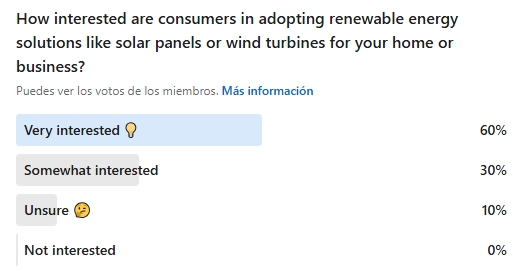
The survey data shows that consumer interest in renewable energy adoption is strong, with 90% expressing either strong or moderate interest in solutions like solar panels or wind turbines. This indicates an encouraging openness to change — but it’s not just environmental concern fueling this interest.
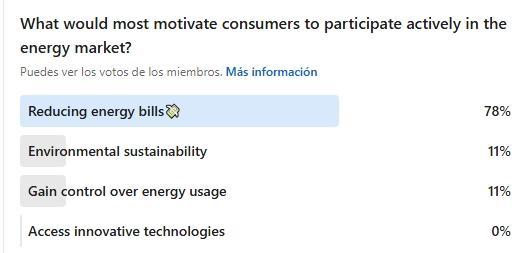
When asked what would most motivate consumers to participate actively in the energy market, a resounding 78% cited the potential to reduce energy bills as their top driver. In contrast, environmental sustainability and gaining control over energy usage each received just 11%, and access to innovative technologies received no votes.
These results highlight a key insight: Interest in renewables is high — but it’s primarily driven by tangible, economic benefits.
This has direct implications for OPENTUNITY. Through its OPENFLEX innovations, dynamic pricing tools, and demand-side flexibility solutions, the project is not only facilitating the integration of renewable sources but also helping consumers translate participation into real savings. It’s a strong validation of OPENTUNITY’s dual focus on technical innovation and economic empowerment.
The Challenge: Complexity and Uncertainty
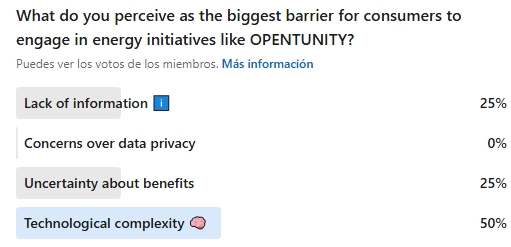
When asked about the biggest barrier to participating in energy initiatives like OPENTUNITY, the most common answer (of 50 percent) was technological complexity. This was followed by uncertainty about the benefits, and a perceived lack of accessible information. Interestingly, data privacy did not appear to be a major concern.
These results highlight the importance of our OPENABILITY pillar, which is focused on improving interoperability and user-friendliness of energy systems. If people are open to adopting new technologies, but are held back by confusion or lack of clarity, then making solutions intuitive and transparent becomes critical.
What Matters Most? Costs and Reliability
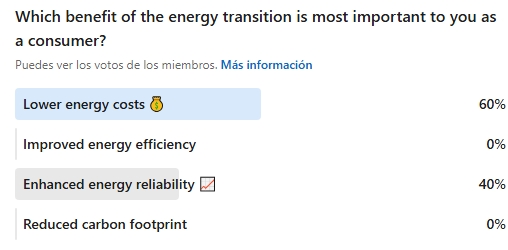
We also explored what consumers consider the most valuable outcomes of the energy transition. The top priority was lower energy costs (named by 60 percent), followed by improved reliability. Surprisingly, reducing carbon emissions and boosting energy efficiency received less attention in this round of polling.
This feedback is closely aligned with OPENTUNITY’s goals. Our smart flexibility algorithms, advanced grid tools, and local market frameworks are designed to deliver both cost savings and grid stability. By focusing on economic and practical benefits, we ensure our solutions meet people’s most immediate needs—while still supporting long-term sustainability.
Communication: Going Where People Are
Finally, we asked how citizens prefer to receive information about energy initiatives. Social media was by far the most popular channel (named by 80 percent), with project newsletters a distant second. Traditional media and webinars were not favored at all.
This finding reinforces the importance of our digital communication strategy. Through our LinkedIn and X (Twitter) channels, we’re not just sharing updates—we’re opening a conversation with stakeholders, citizens, and future energy users. And that conversation is shaping how we evolve the project.
Looking Ahead: People-Powered Innovation
These early results provide confirmation for OPENTUNITY’s approach: combining technological excellence with clear communication, citizen engagement, and real-world benefits. By listening closely to the people the energy transition will affect most, we can build systems that are not only smarter, but also more inclusive, responsive, and scalable.
More survey insights are on the way. Stay tuned for future articles exploring how citizens view flexibility, smart technologies, and the evolving role of consumers in Europe’s energy future.