


OPENTUNITY engages with consumers on the benefits and motivations of energy flexibility in Graz
What would encourage consumers to shift their electricity consumption and become active participants in the energy system? Financial incentives, practical guidance and easy-to-use solutions are among the key factors.
These questions were at the centre of OPENTUNITY’s participation in Markt der Zukunft, a climate and culture festival held on 6 November 2026 at Kunsthaus Graz, Austria.
Bringing together representatives from science, business, civil society, art and local initiatives, Markt der Zukunft provides a space to discuss ecological and social challenges and explore pathways towards more sustainable futures.
Representing OPENTUNITY, project partner JR took part in the event with an exhibition stand, presenting the project’s work on consumer flexibility and the role end-users can play in a more flexible energy system.
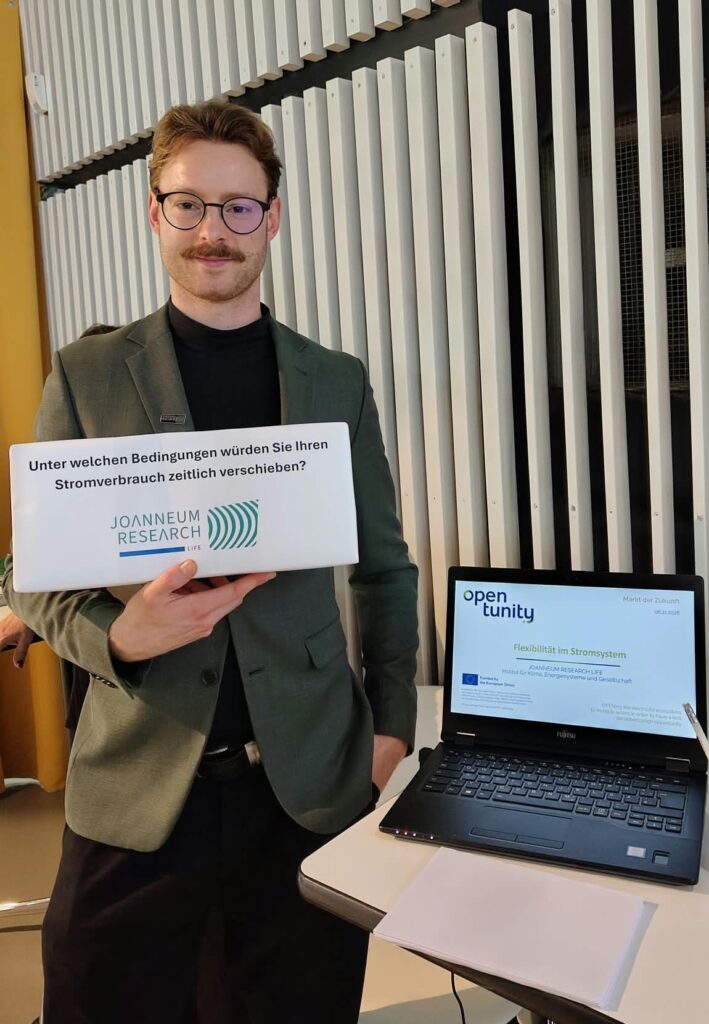
Making energy flexibility understandable and accessible
Visitors had the opportunity to learn what energy flexibility means, how it can support the electricity system and which technologies can provide it. The presentation also highlighted the potential economic benefits for end-consumers and how households can move beyond being passive electricity consumers to become active participants in the energy transition.
A key part of the discussions focused on the factors that encourage or discourage consumers from offering flexibility. Understanding these motivations is essential to developing solutions that respond to people’s actual needs and make participation easier.
What motivates consumers to offer flexibility?
Feedback gathered during the event highlighted several conditions that could encourage households to shift their electricity consumption:
- Clear financial benefits: consumers are more willing to adapt their consumption when they can see tangible economic savings or rewards.
- Practical guidance: concrete recommendations on when to use electricity can help consumers identify the best moments to shift their consumption.
- Simple and automated solutions: flexibility services should require minimal effort, while allowing users to override automated actions when necessary.
- Environmental awareness: concerns about climate change and the desire to contribute to a more sustainable energy system are also important motivators.
These insights underline that unlocking consumer flexibility is not only a technological challenge. It also requires understanding user behaviour, addressing practical concerns and providing clear incentives.
Through its participation in Markt der Zukunft, OPENTUNITY strengthened its engagement with the public and gathered valuable feedback to help shape more accessible and consumer-oriented flexibility solutions.