


Workshop
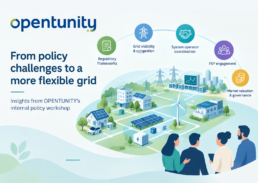
OPENTUNITY explores policy and regulatory challenges for flexibility in European electricity grids
An internal policy workshop held on 1 October brought together project partners to examine regulatory barriers to distribution-level flexibility, discuss lessons from the pilot demonstrations and shape recommendations for the project’s final policy deliverable.
As Europe’s electricity system becomes increasingly decentralised, flexibility is gaining importance as a way to manage congestion, integrate renewable energy and make better use of existing grid infrastructure.
However, regulatory differences, limited network visibility and barriers to market participation can still hinder its wider deployment.
These challenges were at the centre of the OPENTUNITY Internal Policy Workshop, held on 1 October 2026. The session reviewed regulatory approaches across European countries and explored how the project’s findings could contribute to more effective frameworks for flexibility procurement and activation.
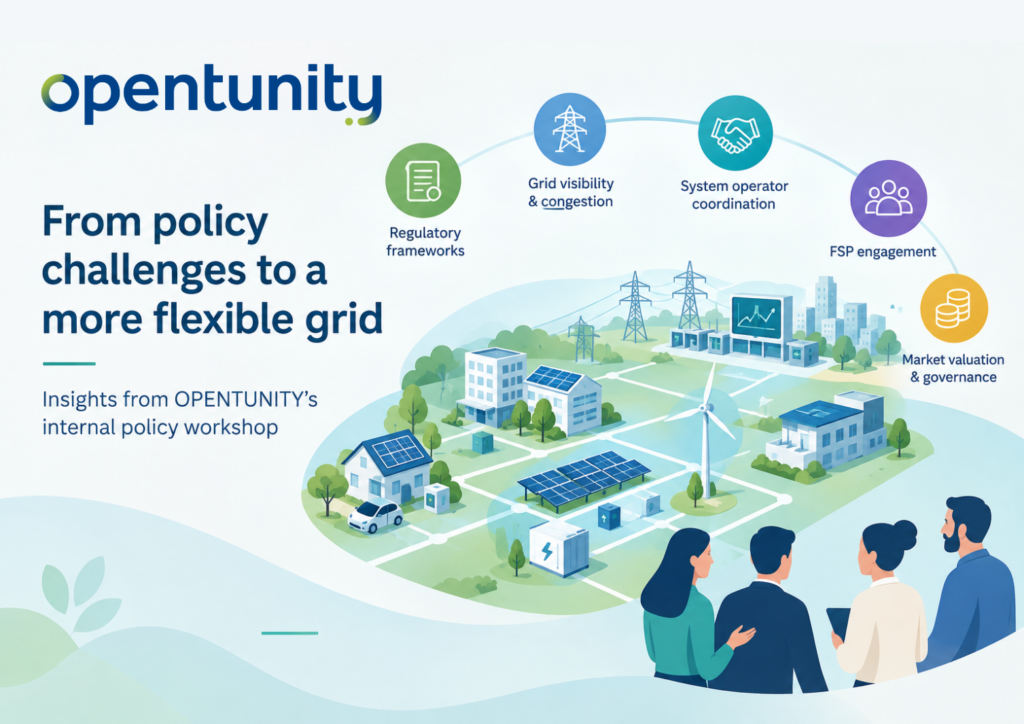
Five key challenges for flexibility deployment
Discussions highlighted five interconnected areas requiring further attention:
- Diverging national regulations: Different approaches to implementing EU electricity market rules can slow the development of flexibility markets. Regulatory sandboxes and pilot schemes offer opportunities to test new mechanisms before their wider adoption.
- Limited low-voltage grid visibility: Incomplete monitoring and delays in smart meter data can make it difficult for distribution system operators (DSOs) to identify and manage local congestion in real time.
- Coordination between system operators: Effective flexibility activation requires better coordination between transmission and distribution system operators, as well as between neighbouring or interconnected distribution networks.
- Barriers to participation: Smaller flexibility service providers, including households, farmers and municipal facilities, may face high entry costs, administrative complexity and concerns about financial penalties.
- Economic incentives and market governance: Existing regulatory frameworks can favour traditional grid reinforcement over flexibility procurement, underlining the need for clearer valuation methodologies and suitable market arrangements.
The workshop also emphasised that technical solutions alone are not enough. Building trust among participants, demonstrating tangible local benefits and ensuring that participation costs remain proportionate to potential revenues are important to encourage wider engagement in flexibility markets.
 From project findings to policy recommendations
Experiences from the OPENTUNITY pilots provided a practical basis for discussing how digital platforms and coordination mechanisms can support flexibility services. In particular, the Greek demonstration highlighted workflows for coordination between transmission and distribution system operators.
Participants also examined different models for flexibility platform governance, the role of dynamic tariffs compared with market-based flexibility procurement, and opportunities to harmonise flexibility products across Europe. Greater convergence in areas such as minimum bid sizes, response times and verification procedures could help reduce fragmentation and support wider market development.
Next steps
The workshop marks an important step towards OPENTUNITY’s final policy and regulatory recommendations, which will consolidate the challenges identified, the solutions explored through the project and the remaining gaps that need to be addressed.
The next steps include updating the policy analysis, preparing a structured matrix linking regulatory bottlenecks with project solutions and areas for further work, and organising a follow-up workshop with external stakeholders, including DSOs, regulators, aggregators and flexibility service providers.
The feedback gathered will contribute to the final policy deliverable, planned for December 2026, helping translate OPENTUNITY’s findings into recommendations to support the wider adoption of flexibility solutions across Europe.

Inside the Greek Citizen Engagement Workshop
On July, 2026, the OPENTUNITY Greek Pilot reached a significant milestone in its mission to place citizens at the heart of the energy transition. In a collaborative effort, partners HEDNO, IPTO, HYPERTECH and ICCS, under the strategic guidance of JOANNEUM RESEARCH, hosted a dynamic online workshop titled:
"Becoming Part of the Energy Future – How OPENTUNITY Empowers Citizens and Professionals".
Bridging the Gap: From Technical Concepts to Daily Benefits
The primary goal of the session was to strip away complex technical jargon and introduce the OPENTUNITY ecosystem in a simple, engaging way. Rather than focusing solely on engineering, the workshop highlighted how small changes in everyday energy consumption can collectively improve the stability of the national electricity system.
Participants explored the necessity of smart grids and flexibility services, discovering how these innovations allow households to transition from passive consumers to active partners who benefit directly from new digital energy services.
An Interactive Look at the Future Grid
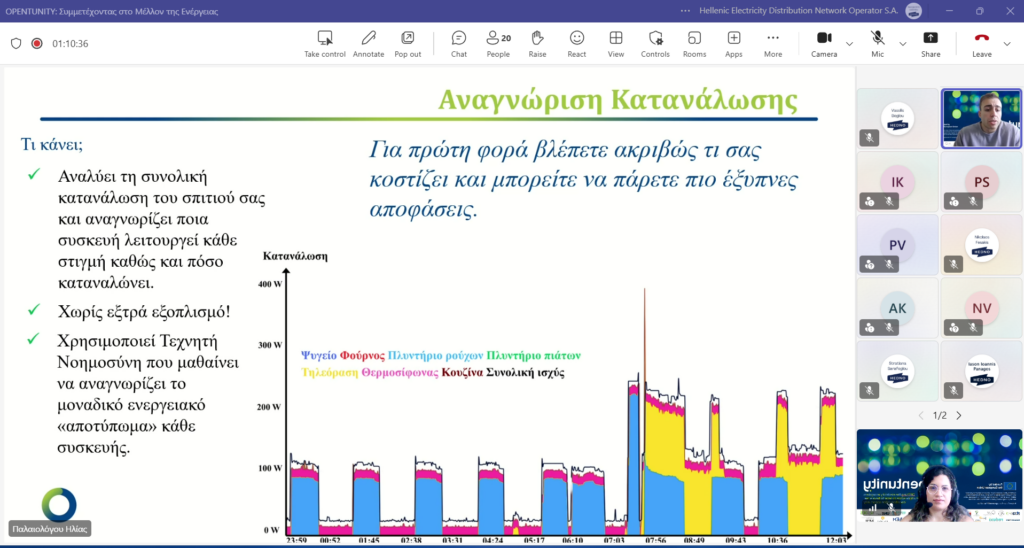
To keep the two-hour session engaging for its 23 participants, the presenters utilised interactive live polls via QR codes and short videos to illustrate key concepts. The comprehensive agenda covered:
- The Big Picture: An introduction to the OPENTUNITY project and the specific challenges facing today’s electricity system.
- Defining Flexibility: Why smart grids are essential for the modern energy landscape and how flexibility benefits both the system and the consumer.
- Live Tool Demonstrations: A first-hand look at the innovations driving the project, including NILM (Non-Intrusive Load Monitoring), HEMS/BEMS (Home/Building Energy Management Systems), the Network Planning Tool, and the Local Flexibility Market.
Strengthening DSO-TSO Synergies in Greece
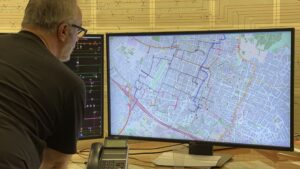
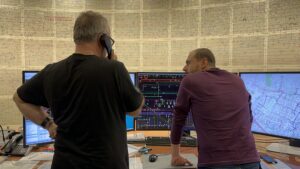
The workshop is a core part of the activities in the Greek pilot site, which covers the Mesogia area (Koropi, Lavrio, and N. Makri) as well as the interconnected islands of Kea, Andros, and Tinos. A key focus of this pilot is increasing the digitalisation of both the DSO (HEDNO) and the TSO (IPTO) while establishing vital synergies between them to better manage grid operations.
The Human Element of the Energy Transition
The event concluded with an open discussion where experts shared their views on how these digital tools can be practically adopted in daily life. By fostering this direct dialogue, OPENTUNITY continues to ensure that the European energy ecosystem is not just technically advanced, but truly user-centric and accessible to all citizens.

To explore more about our innovations or to view technical details on our Greek pilot:
Standardising Peer-to-Peer Energy Trading: Opentunity Leads the Way with New CENELEC Agreement
OPENTUNITY is proud to announce significant progress in its contribution to European standardisation. As a primary promoter, the project is spearheading the CENELEC Workshop Agreement (CWA) titled “Impact of P2P trading at distribution grid level,” a critical step toward harmonising decentralised energy markets across the continent.
A Collaborative Effort for European Standardisation
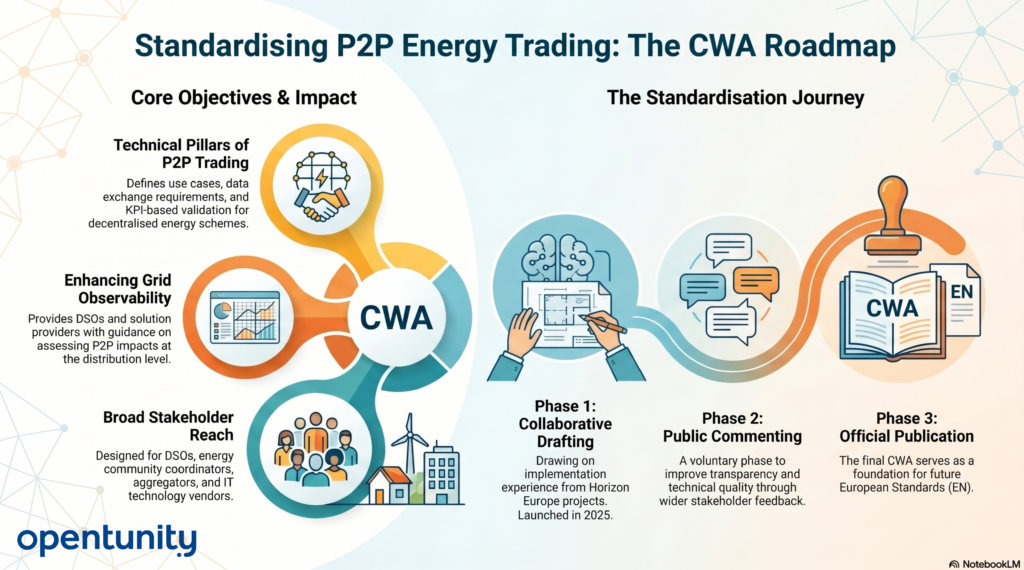
Launched in 2025, this CWA is the result of a strategic collaboration between two major Horizon Europe projects: OPENTUNITY and FEDECOM. A CWA serves as a formal standardisation deliverable that reflects a consensus between the individuals and organisations responsible for its development. By drawing on the collective outcomes of these projects, the agreement aims to establish a common framework for the implementation of peer-to-peer (P2P) energy trading.
Defining the Framework for P2P Implementation
The agreement is designed to be a comprehensive guide for the energy sector. It focuses on several technical and operational pillars necessary for successful P2P integration at the distribution level, including:
- Use Cases and Requirements: Identifying specific scenarios for P2P trading and the necessary data exchange and interoperability standards.
- Grid Observability: Addressing how decentralised trading impacts the monitoring and management of distribution grids.
- Validation Approaches: Establishing KPI-based methods to measure the performance and impact of these schemes.
This CWA will provide essential implementation guidance for a wide range of stakeholders, including Distribution System Operators (DSOs), energy community coordinators, and technology providers such as aggregators and IT integrators.
The Path to Official Publication: Public Engagement
Following the development of a mature draft based on contributor consensus, the document is currently undergoing formal approval by Workshop participants. Once endorsed, the project will enter a vital Public Commenting phase.
This phase allows any interested party to review the text and submit feedback, ensuring the document meets the highest standards of transparency, openness, and technical quality. Engaging a wider pool of stakeholders is considered a highly beneficial step in refining the final agreement.
 Building the Foundation for Future Standards
After the public review, the Workshop will assess all comments to finalise the text for official publication as a CENELEC Workshop Agreement. This document will not only provide a consensual reference for immediate use but will also serve as the foundational roadmap for future European Standards (EN) and Technical Specifications (TS).
By leading this initiative, OPENTUNITY continues to ensure that the innovations developed within the project contribute to a more integrated, standardised, and efficient European energy landscape.

OPENTUNITY’s 7th General Assembly in Oslo: A Step Forward in Energy Innovation
From June 11th to 12th, the OPENTUNITY consortium gathered in Oslo, Norway, for the 7th General Assembly — a key milestone to align on progress, refine technical strategies, and plan the path ahead. Hosted by project partner NODES, the meeting brought together all 21 partners for two days of in-depth discussions, hands-on collaboration, and stakeholder engagement.
Progress Across Pilot Sites

The meeting began with dedicated sessions from each of the four pilot sites — Slovenia, Greece, Spain, and Switzerland — where partners shared updates on citizen engagement actions, ongoing deployments, and the first insights from testing OPENTUNITY’s innovative tools.
From Slovenia, the University of Ljubljana highlighted ongoing smart energy management testing and their integration of HEMS and EV charging infrastructure. Greek partners HEDNO and IPTO reported progress in preparing the Mesogia region for flexibility trials. In Spain, ANELL and IMPULSA shared insights from the dual pilot zones in Santa Eulalia and Bigues i Riells, while Swiss partner AEM emphasized the role of local consumers in their urban pilot in Massagno.
Technical partners also presented the current status of test cases, showcasing how various OPENTUNITY tools — such as state estimation, flexibility forecasting, and interoperability modules — are coming together for real-world application.
Workshop with External DSOs and Flexibility Players
A highlight of the Oslo meeting was the External Workshop hosted on June 11th, which welcomed stakeholders from across the energy flexibility landscape. This interactive session aimed to connect OPENTUNITY’s research with real-world market experiences and featured contributions from:
- Flexia Consulting, who walked participants through the creation and scaling of the Swedish flexibility market Effekthandel Väst.
- Glitre Nett, who shared their day-to-day experience purchasing flexibility and integrating it into grid operations.
- Neowatt, an aggregator, who offered insights into the challenges and best practices from their role in enabling flexibility.
- Fingrid and Helen, who showcased coordination strategies between TSO and DSO levels through the Finnish FinFlex initiative.
This workshop proved invaluable in bridging the gap between research and market deployment, aligning well with OPENTUNITY’s vision to create scalable, interoperable, and user-focused solutions for the electricity ecosystem.


Next Steps for the Consortium
With the first project review successfully behind, partners are now focused on accelerating developments and preparing for field demonstrations. Key action points include:
- Finalizing technical deliverables for WP3 (Flexibility Solutions), WP4 (Grid Tools), and WP5 (Interoperability).
- Completing the definition of test cases with each pilot to ensure consistent validation across regions.
- Supporting pilot sites in deploying tools and engaging local citizens, ensuring communities are at the center of the transition.
- Advancing knowledge transfer and dissemination activities — including the upcoming submission of deliverables D8.3 and D8.5, and the creation of a collaborative video showcasing the full consortium.
- Each partner was also encouraged to revisit their exploitation strategies and explore opportunities for formal collaborations through MoUs (Memorandums of Understanding).
With strong momentum, OPENTUNITY continues to move from innovation to implementation — transforming flexibility, grid management, interoperability, and data exchange into actionable tools across Europe. The Oslo meeting reaffirmed our shared mission and strengthened the collaboration needed to deliver on the promise of a more flexible, resilient, and inclusive energy future.

OPENTUNITY's Participation in the European Week of Regions and Cities
The European Week of Regions and Cities, organized annually by the European Commission, is a four-day event where cities and regions showcase their ability to foster growth, create jobs, and implement the EU's cohesion policy. It also highlights the importance of local and regional governance for sustainable European growth. This year, OPENTUNITY's partner, JOANNEUM RESEARCH, took part in a significant workshop titled "Fostering the Uptake and Social Impact of the Energy Transition through Citizen Engagement", held on October 10.
Key Highlights from the Workshop

The workshop revealed several key insights that will shape the future of citizen engagement in the energy transition.
One of the most notable aspects was the high level of participation and the intense discussions that took place. This clearly demonstrated the eagerness of practitioners to better understand how to effectively involve citizens in the journey toward a more sustainable future. Another critical takeaway was the importance of early engagement. Bringing citizens into the fold from the beginning of energy projects ensures better alignment between community needs and project goals, improves mutual understanding, and enhances the overall impact of initiatives. Moreover, the workshop highlighted the value of showcasing success stories. There are already outstanding examples of effective citizen engagement in the energy transition, and sharing these experiences can serve as a valuable learning tool for others. By highlighting these success stories, the broader community can adopt best practices and continue to improve citizen participation in energy projects.

Conclusions and Next Steps
The workshop concluded with a consensus on the need for continued efforts to engage citizens early in the energy transition process. It was clear that practitioners are keen to collaborate and learn from successful examples, refining their approaches to include communities in meaningful ways. OPENTUNITY will continue to focus on promoting early citizen involvement and sharing successful case studies to drive the energy transition forward.
In conclusion, the participation of OPENTUNITY and JOANNEUM RESEARCH in the European Week of Regions and Cities underscored the critical role of citizen engagement in achieving a sustainable future. By fostering collaboration between stakeholders and communities, OPENTUNITY is contributing to the creation of energy solutions that not only meet environmental goals but also resonate with the people they impact.