


Smart Grids

Smart Grids in Practice: OPENTUNITY Brings Flexibility into the Discussion
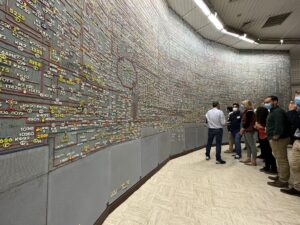
On 10 September 2026, energy professionals and researchers gathered in Ljubljana, Slovenia, for “Smart Grids in Practice: Experiences and Results from European Projects STREAM and OPENTUNITY”, an event organised by Elektro Ljubljana and the University of Ljubljana.
Bringing together around 30 participants from distribution and transmission system operators, technology companies, research organisations and the energy media, the event provided an opportunity to present the results emerging from both projects and, importantly, to discuss how these experiences can translate into practical changes in the energy system.
From project results to practical discussions
OPENTUNITY was represented throughout the event by several project partners, providing different perspectives on the project's work and its results.
Janez Gregor Golja from the University of Ljubljana opened the OPENTUNITY contributions with an overview of the project's objectives, innovations, pilot sites and current stage, highlighting some of the main outcomes from the demonstration activities carried out across the four pilots, as well as the project's cross-platform demonstrations.
The presentations then moved into specific examples of how OPENTUNITY technologies are being applied and tested in practice. Amibit presented its Reduxi HEMS system and its work within the project on heat pump flexibility, coordination with Elektro Ljubljana, NILM participation and user research. Elektro Ljubljana shared its experience as a DSO and data provider, including the processes required to make operational data available for testing OPENTUNITY's DSO-focused tools, such as ICCS's short- and long-term asset management and grid planning solutions.


Other contributions connected OPENTUNITY's work with broader questions around flexibility and electrification. Avantcar discussed the challenges and opportunities associated with the rapid growth of e-mobility and highlighted the OPENTUNITY solution developed with Kolektor sETup for optimising EV charging schedules according to day-ahead electricity prices. The approach significantly reduced charging costs for the part of the fleet where it was tested.
How can flexibility support smarter grid development?
The event's two roundtable discussions provided an opportunity to move from project results towards some of the practical challenges facing the energy sector.
The first discussion focused on the DSO perspective and the value of flexibility. Participants explored where flexibility can be most useful for network operators and what regulatory, technical and operational changes may be needed to make greater use of it.
 One of the key ideas discussed was the potential of flexible connections to make better use of existing grid capacity. Instead of dimensioning networks exclusively around occasional peaks, flexibility could in some situations allow certain assets to temporarily adjust their consumption or generation when network constraints occur. This could help operators accommodate additional renewable generation or new connections while potentially delaying or reducing some infrastructure investments.
The discussion also highlighted that flexibility should not be seen as a replacement for traditional grid reinforcement. Its value depends on the specific network conditions, the reliability of the flexibility service and the regulatory and contractual framework governing its use.
Connecting flexibility with the growth of e-mobility

The second roundtable focused on e-mobility, looking at both the challenges created by the rapid electrification of transport and the opportunity for EVs to become an additional source of flexibility for the electricity system.

EV charging infrastructure can create new peaks in electricity demand, but smart charging and other flexibility mechanisms can also turn these assets into a resource for grid management. The experience presented by Avantcar within OPENTUNITY provided a concrete example of how charging schedules can be optimised while reducing costs.
This dual role of electric vehicles as both a new source of demand and a potential flexibility resource, will become increasingly relevant as EV adoption continues to grow.
From European projects to real-world change
The event demonstrated the value of bringing project partners and energy-sector stakeholders together to discuss not only what has been developed, but also how these solutions could work in practice.
For OPENTUNITY, the discussions provided an opportunity to share the results of its demonstrations while gathering perspectives from actors directly involved in operating and developing electricity networks. The exchange also highlighted some of the remaining challenges that need to be addressed if flexibility is to become a reliable and scalable tool for the future energy system.
As OPENTUNITY approaches the final months of the project, these discussions are particularly relevant:
the focus is increasingly shifting from developing and demonstrating individual innovations towards understanding their practical impact, scalability and potential contribution to a more flexible and resilient European grid.

Inside the Greek Citizen Engagement Workshop
On July, 2026, the OPENTUNITY Greek Pilot reached a significant milestone in its mission to place citizens at the heart of the energy transition. In a collaborative effort, partners HEDNO, IPTO, HYPERTECH and ICCS, under the strategic guidance of JOANNEUM RESEARCH, hosted a dynamic online workshop titled:
"Becoming Part of the Energy Future – How OPENTUNITY Empowers Citizens and Professionals".
Bridging the Gap: From Technical Concepts to Daily Benefits
The primary goal of the session was to strip away complex technical jargon and introduce the OPENTUNITY ecosystem in a simple, engaging way. Rather than focusing solely on engineering, the workshop highlighted how small changes in everyday energy consumption can collectively improve the stability of the national electricity system.
Participants explored the necessity of smart grids and flexibility services, discovering how these innovations allow households to transition from passive consumers to active partners who benefit directly from new digital energy services.
An Interactive Look at the Future Grid
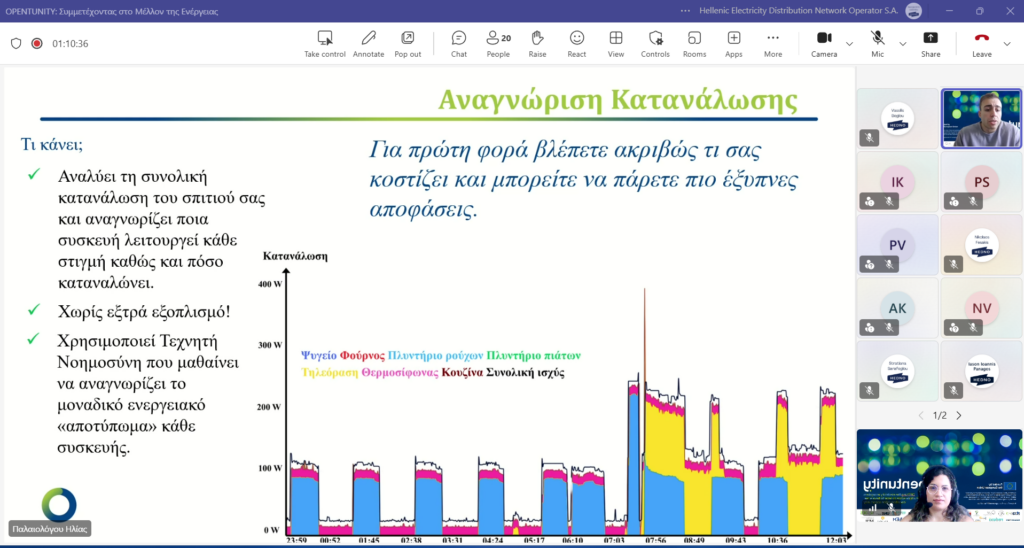
To keep the two-hour session engaging for its 23 participants, the presenters utilised interactive live polls via QR codes and short videos to illustrate key concepts. The comprehensive agenda covered:
- The Big Picture: An introduction to the OPENTUNITY project and the specific challenges facing today’s electricity system.
- Defining Flexibility: Why smart grids are essential for the modern energy landscape and how flexibility benefits both the system and the consumer.
- Live Tool Demonstrations: A first-hand look at the innovations driving the project, including NILM (Non-Intrusive Load Monitoring), HEMS/BEMS (Home/Building Energy Management Systems), the Network Planning Tool, and the Local Flexibility Market.
Strengthening DSO-TSO Synergies in Greece
The workshop is a core part of the activities in the Greek pilot site, which covers the Mesogia area (Koropi, Lavrio, and N. Makri) as well as the interconnected islands of Kea, Andros, and Tinos. A key focus of this pilot is increasing the digitalisation of both the DSO (HEDNO) and the TSO (IPTO) while establishing vital synergies between them to better manage grid operations.
The Human Element of the Energy Transition
The event concluded with an open discussion where experts shared their views on how these digital tools can be practically adopted in daily life. By fostering this direct dialogue, OPENTUNITY continues to ensure that the European energy ecosystem is not just technically advanced, but truly user-centric and accessible to all citizens.
To explore more about our innovations or to view technical details on our Greek pilot:
Enhancing Grid Reliability in Slovenia: OPENTUNITY Deploys Advanced Transformer Monitoring
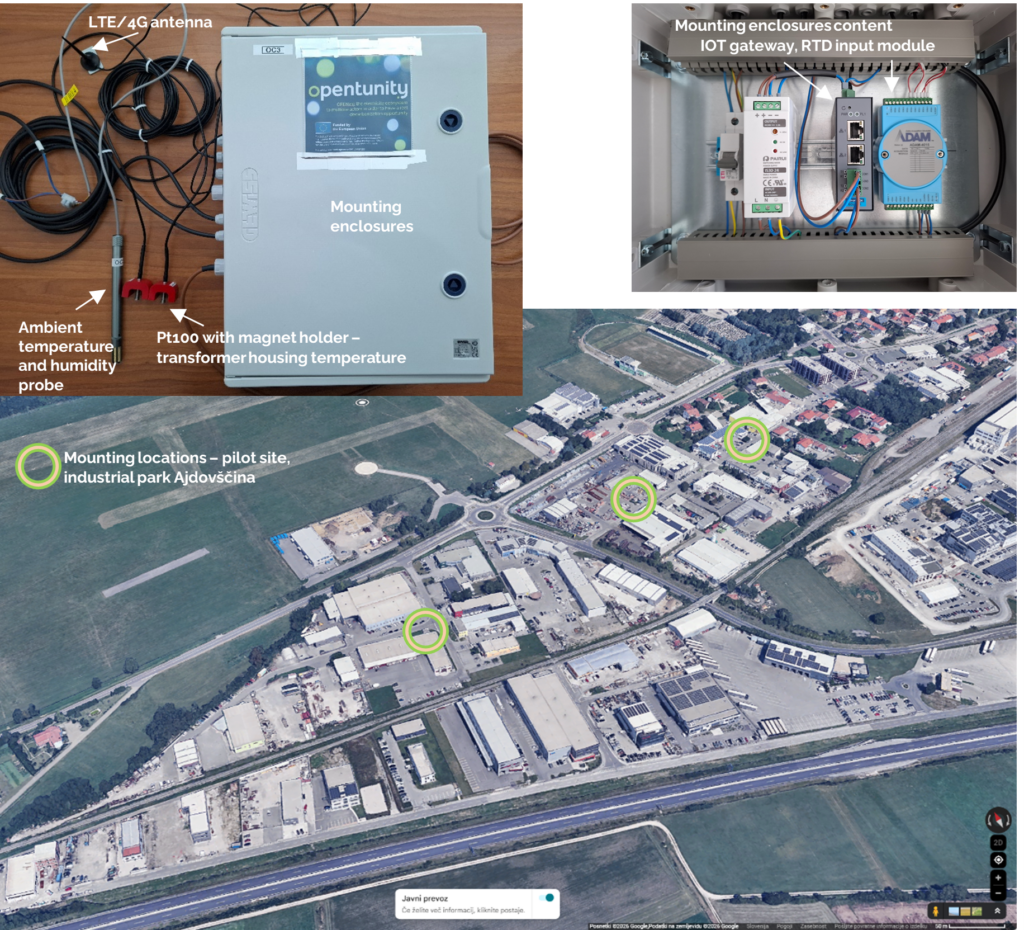
In the drive toward a more resilient and decarbonised European energy grid, monitoring critical infrastructure is paramount. On April 18, 2026, a significant milestone was reached in the Slovenian pilot site of the OPENTUNITY project. Our partner Elektro Primorska (EP), in collaboration with ICCS, successfully installed specialized measurement equipment on three Medium Voltage/Low Voltage (MV/LV) transformers located in the Ajdovščina industrial park.
The Challenge: Real-Time Asset Management
Power transformers are essential components of the electricity distribution network, but they are often the most vulnerable to failure. Traditionally, asset management has been a long-term process, looking at equipment health over months or years. However, to ensure grid stability, there is a growing need for short-term asset management.
The tool developed by ICCS is designed to operate in a near real-time context. Its primary goal is to identify transformers that may be on the verge of failure within hours, allowing operators to intervene before a blackout occurs.
Innovation through Indirect Measurement
To predict these failures, the tool requires precise data on transformer load current,
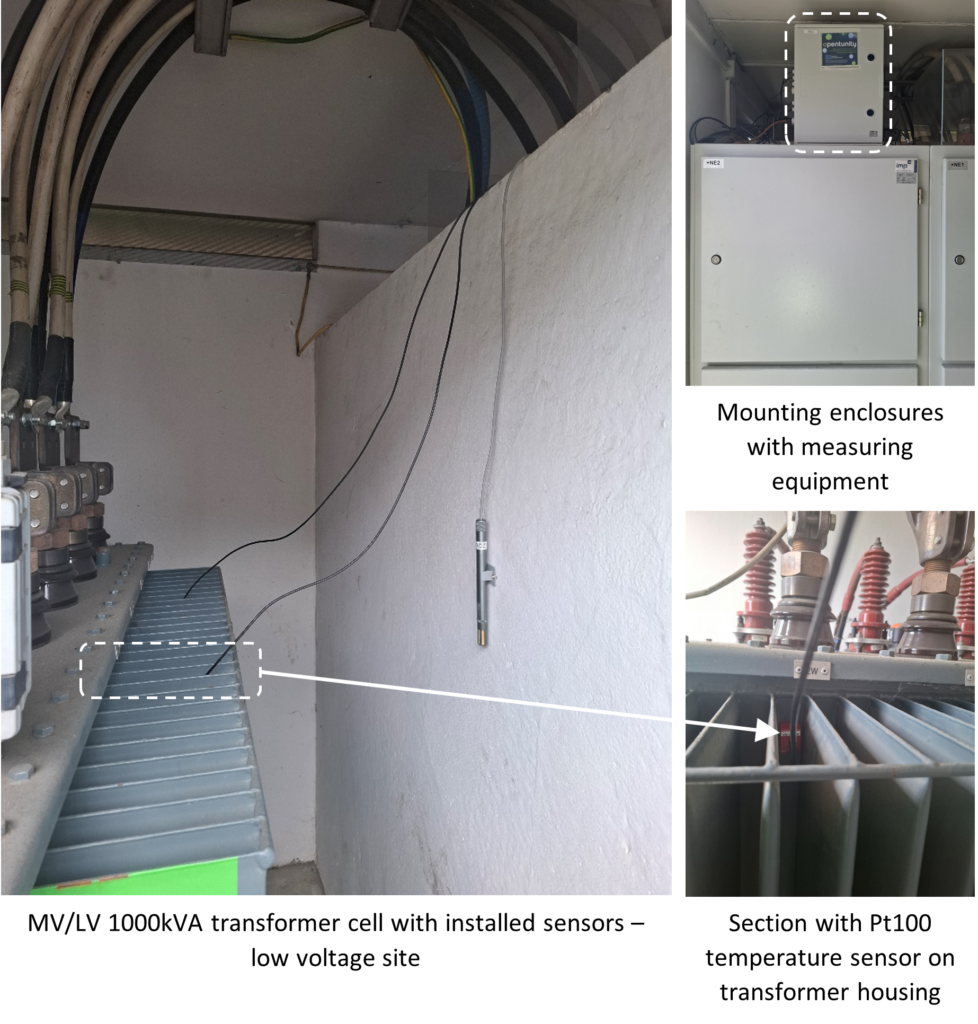
ambient temperature, and top-oil temperature. A technical challenge arises because many older MV/LV transformers are not equipped with built-in top-oil temperature sensors.
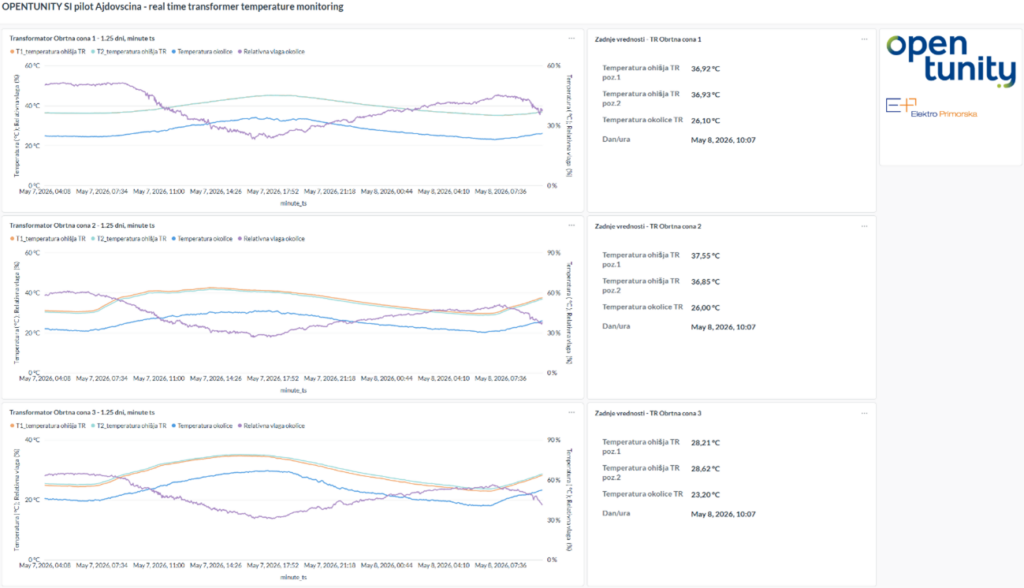
To solve this, the team at Elektro Primorska developed an innovative, purpose-built measuring system. Instead of invasive procedures, the system uses Pt100 sensors with magnet holders placed directly on the transformer housing. This allows for the indirect measurement of top-oil temperature through a direct correlation with the housing temperature.
A Robust Technical Setup for Smart Monitoring
The installation at the Ajdovščina pilot site features a high-tech stack of industrial components designed for reliability and speed:
- Data Acquisition: The system utilizes Advantech components, including IoT gateways and RTD input modules, for local data storage and transmission.
- Environmental Sensing: Along with transformer housing temperature, the system includes an ambient probe to measure surrounding air temperature and relative humidity.
- High-Speed Connectivity: Data is transmitted via a secure MQTT protocol over a mobile LTE/4G network.
- Real-Time Visualization: Measurements are received at 5-second intervals and stored in an SQL database. This high frequency allows for a real-time dashboard where operators can monitor current and historical data instantly.
 Why This Matters for the Future of Energy
This activity falls under the OPENGRID category of the OPENTUNITY project, which focuses on supporting Distribution System Operators (DSOs) in managing grid issues more effectively. By transforming standard transformers into "smart" assets, Elektro Primorska is demonstrating how existing infrastructure can be upgraded to support a more flexible and digitalised energy ecosystem.
As part of the broader Slovenian pilot, which also involves portions of the grids of Elektro Ljubljana, these advancements are crucial for utilizing the flexibility potential of domestic assets and electric vehicles while maintaining a stable and secure grid.
--------------------------------------------------------------------------------
Project Overview
- Location: Ajdovščina industrial park, Slovenia.
- Partners Involved: Elektro Primorska (EP) and ICCS.
- Key Innovation: Indirect top-oil temperature monitoring for predictive maintenance.
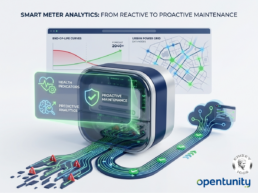
Enhancing Grid Reliability with OPENTUNITY’s Long-Term Asset Management Tool
Electricity networks are becoming increasingly dependent on digital field devices whose performance must be assessed over the full span of their service life. Among these assets, smart meters are particularly important, as their degradation can compromise data availability, increase maintenance effort, and ultimately affect the quality of grid operation.
Traditional asset replacement strategies, typically based on age or fixed maintenance intervals, are often too general to reflect the real condition and risk profile of such equipment. As grids become more digitalised, there is a growing need for more accurate and data-driven approaches to asset management.
A data-driven solution within OPENTUNITY
To address this need, ICCS has developed, within the OPENTUNITY project, a Long-Term Asset Management Tool focused on the reliability assessment of smart meters.
The solution leverages historical data from Advanced Metering Infrastructure
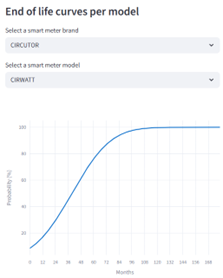
systems to model how assets age under real operating conditions. Based on this information, it estimates the probability of failure for different meter populations, providing system operators with a more realistic understanding of asset behaviour over time.
A key outcome of this analysis is the generation of End-of-Life curves for different types of smart meters. These curves help operators identify when specific models are expected to enter higher-risk phases, supporting more informed and timely decision-making.
From population trends to individual risk detection
In addition to long-term statistical analysis, the tool incorporates machine learning techniques applied to operational measurements. This allows the identification of individual devices that may present an increased risk of failure, even if they are not yet part of a broader trend.
By combining population-level insights with device-specific analysis, the tool enables early detection of potential issues and helps prevent failures before they become widespread.
Supporting decision-making through an intuitive interface
The Long-Term Asset Management Tool is supported by a user-friendly interface designed to facilitate its integration into daily operations. Through this platform, users can upload meter and substation data, review key performance indicators, and explore reliability trends across their asset base.
Operators can also compare the performance of different meter models, estimate expected failures over selected time horizons, and identify critical devices that require priority attention. The inclusion of geographic visualisation further supports this process, offering a clearer view of how risks are distributed across the network.
Towards proactive and efficient maintenance strategies
By linking statistical reliability analysis with data-driven risk detection, the tool provides utilities with a solid basis for medium- and long-term planning. It supports a transition from reactive maintenance practices to a more proactive and targeted approach, where decisions are based on actual asset condition rather than predefined schedules.
This shift enables better allocation of maintenance resources, reduces operational costs, and improves the overall reliability of the digital infrastructure that underpins modern power systems.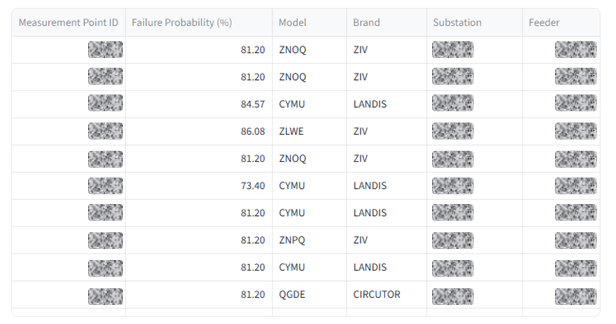
Strengthening the foundations of future power systems
As electricity networks continue to evolve, ensuring the reliability of digital assets such as smart meters becomes increasingly critical. The Long-Term Asset Management Tool developed within OPENTUNITY represents an important step in this direction, providing system operators with the tools they need to manage complexity and enhance grid resilience.
Real-Time Thermal Monitoring at Anell's Network
At OPENTUNITY, we are committed to unlocking the full potential of the grid, making it smarter, more flexible, and ready for the demands of a high-renewable future. This summer, our partner Anell has taken a significant step toward that goal.
Where?
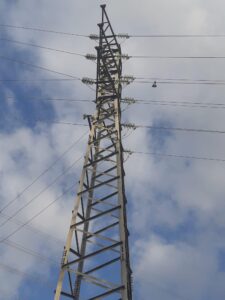
In a medium-voltage line within Anell’s distribution network in Catalonia (Spain).
What Happened?
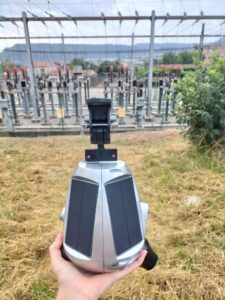
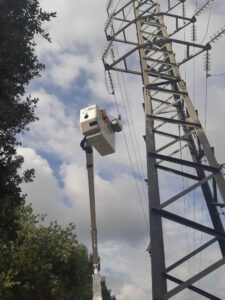
Two temperature sensors were installed directly on the conductor of a medium-voltage line as part of OPENTUNITY’s Real-Time Thermal Rating (RTTR) use case.
Why does this matter?
Traditionally, distribution system operators use static and conservative estimates to define the maximum current capacity of their lines, often based on worst-case weather conditions. In reality, line capacity varies depending on the actual conductor temperature, which fluctuates with current and ambient conditions. Under favorable conditions, the line can safely carry more energy than these conservative limits suggest.
That’s where OPENTUNITY comes in.
Smarter Algorithms for a Smarter Grid
Instead of deploying expensive sensors across the entire grid, OPENTUNITY is developing a data-driven algorithm to estimate conductor temperature in real time, using only ambient temperature and electrical current measurements.
To validate this model, Anell installed two temperature sensors on a live grid segment, enabling a comparison between measured and estimated conductor temperatures. These insights will support further development of the algorithm and its future deployment at scale.
“If we have better information on the capacity of our grid in real time, we can take better decisions when operating it at critical moments. Real-time thermal rating provides us just that.” – Anell team
Why Sentrisense?
As part of the validation, Anell chose to work with Sentrisense, a startup offering a lightweight and cost-effective temperature sensor design that differs from most commercial options. OPENTUNITY partners are now receiving data from the devices to refine their tools and algorithms.

OPENTUNITY's Network Planning Tool
Strategic planning of the distribution network is essential to efficiently integrate Renewable Energy Sources (RES), reduce costs, and ensure a secure grid operation. Traditionally, grid planning is based on expensive infrastructure expansion, which does not adapt to rapidly evolving flexibility markets or available flexibility resources.
New OPENTUNITY Network Planning Tool
Within the OPENTUNITY project, ICCS is developing an advanced Network Planning Tool that integrates best planning practices with novel research methodologies and very fast algorithms to address the challenges of modern distribution grids. The tool supports Distribution System Operators (DSOs) in making strategic and informed decisions by integrating sophisticated programming techniques such as Mixed-Integer Linear Programming (MILP) and Mixed-Integer Second-Order Cone Programming (MISOCP) for performing network planning, a fast power flow algorithm for critical scenario identification and timeseries clustering for scenarios extraction. Different objectives can be set, such as cost optimization, investments deferral, or maximizing RES capacity, allowing DSOs to quickly design and compare alternative investment options and operation scenarios.
A user interface provides graphical representations of key results. For example, in a cost optimization scenario (figure on the right side), the planning tool graphically represents the impact of strategic decisions, such as the optimal time to invest in infrastructure and its corresponding impact on power loss costs. The interface can alternatively illustrate scenarios with a focus on delaying expenditures, highlighting how strategic use of flexibility resources can defer costly investments (figure on the left side).


Power flow results can also be presented in all scenarios, e.g. for RES capacity maximization (Figure 3), identifying optimal locations and capacities of new RES power plants for given budgetary constraints. The tool ensures that RES capacity expansion is closely aligned with existing grid constraints. The computed RES capacity at each substation in this case is represented in map-based visualizations.


OPENTUNITY at the BRIDGE General Assembly 2025
OPENTUNITY is proud to participate in the BRIDGE General Assembly 2025, an essential gathering that brings together key players from EU-funded projects in the fields of smart grids, energy storage, islands, and digitalization. This annual event serves as a platform for knowledge exchange, collaboration, and strategic alignment to accelerate the European energy transition.
What is BRIDGE?
BRIDGE is an initiative by the European Commission that unites Horizon 2020 and Horizon Europe projects working on smart grids, demand response, energy communities, and digitalization. By fostering collaboration between projects, BRIDGE helps create a coherent regulatory, technical, and market framework that supports innovation and integration across the European energy landscape.
Through dedicated working groups and task forces, BRIDGE facilitates discussion on key topics such as:
- Regulatory framework for new market models.
- Data management and interoperability in digitalized energy systems.
- Business models for flexibility and storage services.
- Consumer and citizen engagement strategies.
The BRIDGE General Assembly: Objectives and Key Discussions
The BRIDGE General Assembly is a key event that brings together all participating projects to:
- Share project results and best practices.
- Discuss policy and regulatory developments impacting the energy transition.
- Align efforts across projects to maximize impact.
- Identify synergies between different initiatives.
This year’s assembly focused on scaling up innovative solutions and reinforcing the role of digitalization and flexibility markets in achieving Europe’s clean energy goals.

Why OPENTUNITY’s Participation Matters
OPENTUNITY is committed to contributing to BRIDGE by sharing insights from our work on flexibility markets, data-driven grid management, and citizen engagement. Our participation allows us to:
- Showcase how OPENTUNITY innovations support DSO-TSO coordination and local flexibility markets.
- Exchange expertise on interoperability, data spaces, and digital energy platforms.
- Strengthen partnerships with other EU-funded projects and stakeholders.
- Influence the policy and regulatory discussions shaping the future of the European energy system.

Looking ahead
Engagement in BRIDGE activities is crucial for ensuring that the solutions developed in OPENTUNITY align with broader European objectives and remain at the forefront of energy system transformation.

Advanced State Estimation for Distribution Grids Based on Deep Learning
State estimation techniques establish a link between the measuring devices of an electrical network and the control centers to present and monitor all the electrical magnitudes of the network itself. State estimation approaches have been applied in transmission networks for many years, but these techniques are not directly applicable in distribution networks.
In distribution systems, State estimation algorithms aim to obtain the state of the system, i.e. the voltages at all buses and connection points. It is a necessary process before calculating the power flow and safety analysis. In addition, it should be added that traditional state estimation only takes into account statistical distributions to model uncertainties in measurements (e.g., power distribution among single-bus feeders).
Development of Deep Learning Algorithms
The development is based on a multipurpose prediction software module. This module includes a time series decomposition model with three main components: trends, seasonality (in different periods, varying from daily period to an annual period), and exogenous variables (holidays, weather, etc.). The modeling of these components can be summarized as follows:
- Trends can be modeled using two internal models: A saturated nonlinear growth model and a trend model with change points. The saturated nonlinear growth model captures the initial acceleration and subsequent deceleration as a limit is reached. The trend model with change points identifies specific moments where the trend changes direction or speed, allowing a better adaptation to market dynamics
- Seasonality in energy consumption, such as increased demand in summer due to the use of air conditioning, can be modeled using Fourier series. By breaking down demand into sinusoidal components, seasonal patterns can be identified, and deep learning models can be adjusted to forecast these periodic variations. This improves the accuracy of the state estimation by taking into account regular fluctuations in energy demand.
- Exogenous variables are added to the overall model as additive linear regressions. These variables, which are factors external to the system (but influence its behavior) are incorporated into the model to improve the accuracy of the predictions. In the context of state estimation, exogenous variables can include factors such as temperature, time of day, day of the week, special events, or even energy prices. By adding these variables using additive linear regressions, their direct and linear impact on the variable of interest can be captured, allowing the model to adjust its predictions more accurately and better reflect the reality of the electricity system. These results in a more robust and reliable.
For the generation of the models, historical data by the project Pilot Sites have been used.
Integration into the ETRA I+D ÉTER software tool
ETRA I+D has its own tool called ÉTER, developed and validated in real conditions in the different European projects in which it has participated. The purpose of ÉTER is to control, manage and monitor an electricity distribution network, improving its flexibility, stability and security; being particularly relevant in scenarios with a high penetration of renewable energies and that require better demand management.
ÉTER currently integrates a State estimation module, but based mainly on probabilistic methods. The ultimate goal of ETRA is to integrate this new State estimation module based on Deep Learning into ÉTER once it has been validated in the OPENTUNITY pilots.
The following image shows how the power flows calculated with the current State estimation module are displayed in ÉTER. The visualization once the new module is integrated will be similar, but the calculations are expected to be more accurate and reliable.
