


Grid Monitoring
Real-Time Thermal Monitoring at Anell's Network
At OPENTUNITY, we are committed to unlocking the full potential of the grid, making it smarter, more flexible, and ready for the demands of a high-renewable future. This summer, our partner Anell has taken a significant step toward that goal.
Where?
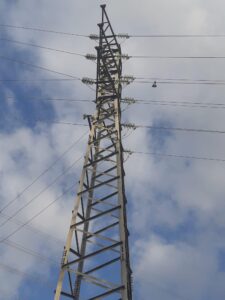
In a medium-voltage line within Anell’s distribution network in Catalonia (Spain).
What Happened?
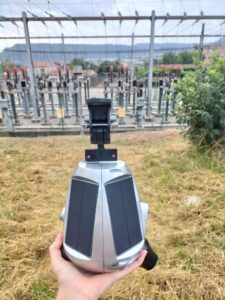
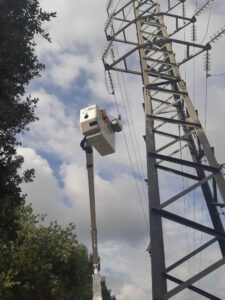
Two temperature sensors were installed directly on the conductor of a medium-voltage line as part of OPENTUNITY’s Real-Time Thermal Rating (RTTR) use case.
Why does this matter?
Traditionally, distribution system operators use static and conservative estimates to define the maximum current capacity of their lines, often based on worst-case weather conditions. In reality, line capacity varies depending on the actual conductor temperature, which fluctuates with current and ambient conditions. Under favorable conditions, the line can safely carry more energy than these conservative limits suggest.
That’s where OPENTUNITY comes in.
Smarter Algorithms for a Smarter Grid
Instead of deploying expensive sensors across the entire grid, OPENTUNITY is developing a data-driven algorithm to estimate conductor temperature in real time, using only ambient temperature and electrical current measurements.
To validate this model, Anell installed two temperature sensors on a live grid segment, enabling a comparison between measured and estimated conductor temperatures. These insights will support further development of the algorithm and its future deployment at scale.
“If we have better information on the capacity of our grid in real time, we can take better decisions when operating it at critical moments. Real-time thermal rating provides us just that.” – Anell team
Why Sentrisense?
As part of the validation, Anell chose to work with Sentrisense, a startup offering a lightweight and cost-effective temperature sensor design that differs from most commercial options. OPENTUNITY partners are now receiving data from the devices to refine their tools and algorithms.


OPENTUNITY and the Rise of AI in Energy
A new report by the International Energy Agency (IEA), titled "Energy and AI", offers a comprehensive, data-driven analysis of how artificial intelligence (AI) is poised to reshape the global energy landscape. The report emphasizes both the transformative potential of AI and the energy challenges it may bring, particularly concerning the soaring electricity demand of data centers.
According to the IEA, the electricity demand from data centers could more than double by 2030, reaching 945 TWh—more than the current total electricity consumption of Japan. AI-optimized data centers are expected to account for the majority of this increase. In countries like the United States, data centers could drive nearly half of the projected electricity demand growth over the next five years.
Yet, while the rising energy consumption poses challenges, the report also highlights how AI can offer powerful solutions: reducing costs, enhancing system efficiency, increasing competitiveness, and lowering emissions. These insights align closely with OPENTUNITY’s mission.
 What This Means for OPENTUNITY
The OPENTUNITY project is dedicated to designing and testing innovative energy solutions that promote digitalization, flexibility, and sustainability in the energy system. AI plays an increasingly important role in enabling smarter, data-driven decision-making across the energy value chain—from optimizing grid operations to empowering end-users to manage their consumption more efficiently.
Several OPENTUNITY innovations, such as federated data exchange frameworks, intelligent grid flexibility mechanisms, and user-centered energy management tools, are designed to not only accommodate but leverage AI technologies. As the IEA report points out, such technologies can help mitigate the growing demand of AI itself by improving the overall energy system’s efficiency and enabling cleaner energy integration.
Bridging Innovation and Infrastructure
A critical point in the IEA report is the urgent need for investment in generation and grid infrastructure to support AI’s rising electricity demand. This complements one of OPENTUNITY’s key areas of focus: enhancing grid flexibility and promoting better coordination between distribution system operators (DSOs), transmission system operators (TSOs), and end-users.
Through its pilot projects across Europe, including initiatives focused on smart grid management, local flexibility markets, and data sovereignty, OPENTUNITY directly contributes to the kind of systemic transformation the IEA envisions—where technology, policy, and infrastructure evolve together to unlock a sustainable energy future.
 Looking Forward
The IEA also notes that the full potential of AI in the energy sector will require strong cooperation between policymakers, technology providers, and energy stakeholders. This spirit of collaboration is at the heart of the OPENTUNITY project, bringing together 21 partners from 9 countries to develop interoperable solutions that are scalable across Europe.
As AI becomes more deeply embedded in both scientific discovery and energy system operations, OPENTUNITY will continue to explore its role in accelerating clean energy innovation and ensuring that digital technologies remain aligned with Europe’s sustainability goals.
📄 Explore the full IEA report here: IEA Energy and AI Report
Want to learn how OPENTUNITY is preparing for an AI-driven energy future? Follow us for more updates.

OPENTUNITY's Network Planning Tool
Strategic planning of the distribution network is essential to efficiently integrate Renewable Energy Sources (RES), reduce costs, and ensure a secure grid operation. Traditionally, grid planning is based on expensive infrastructure expansion, which does not adapt to rapidly evolving flexibility markets or available flexibility resources.
New OPENTUNITY Network Planning Tool
Within the OPENTUNITY project, ICCS is developing an advanced Network Planning Tool that integrates best planning practices with novel research methodologies and very fast algorithms to address the challenges of modern distribution grids. The tool supports Distribution System Operators (DSOs) in making strategic and informed decisions by integrating sophisticated programming techniques such as Mixed-Integer Linear Programming (MILP) and Mixed-Integer Second-Order Cone Programming (MISOCP) for performing network planning, a fast power flow algorithm for critical scenario identification and timeseries clustering for scenarios extraction. Different objectives can be set, such as cost optimization, investments deferral, or maximizing RES capacity, allowing DSOs to quickly design and compare alternative investment options and operation scenarios.
A user interface provides graphical representations of key results. For example, in a cost optimization scenario (figure on the right side), the planning tool graphically represents the impact of strategic decisions, such as the optimal time to invest in infrastructure and its corresponding impact on power loss costs. The interface can alternatively illustrate scenarios with a focus on delaying expenditures, highlighting how strategic use of flexibility resources can defer costly investments (figure on the left side).


Power flow results can also be presented in all scenarios, e.g. for RES capacity maximization (Figure 3), identifying optimal locations and capacities of new RES power plants for given budgetary constraints. The tool ensures that RES capacity expansion is closely aligned with existing grid constraints. The computed RES capacity at each substation in this case is represented in map-based visualizations.


Advanced State Estimation for Distribution Grids Based on Deep Learning
State estimation techniques establish a link between the measuring devices of an electrical network and the control centers to present and monitor all the electrical magnitudes of the network itself. State estimation approaches have been applied in transmission networks for many years, but these techniques are not directly applicable in distribution networks.
In distribution systems, State estimation algorithms aim to obtain the state of the system, i.e. the voltages at all buses and connection points. It is a necessary process before calculating the power flow and safety analysis. In addition, it should be added that traditional state estimation only takes into account statistical distributions to model uncertainties in measurements (e.g., power distribution among single-bus feeders).
Development of Deep Learning Algorithms
The development is based on a multipurpose prediction software module. This module includes a time series decomposition model with three main components: trends, seasonality (in different periods, varying from daily period to an annual period), and exogenous variables (holidays, weather, etc.). The modeling of these components can be summarized as follows:
- Trends can be modeled using two internal models: A saturated nonlinear growth model and a trend model with change points. The saturated nonlinear growth model captures the initial acceleration and subsequent deceleration as a limit is reached. The trend model with change points identifies specific moments where the trend changes direction or speed, allowing a better adaptation to market dynamics
- Seasonality in energy consumption, such as increased demand in summer due to the use of air conditioning, can be modeled using Fourier series. By breaking down demand into sinusoidal components, seasonal patterns can be identified, and deep learning models can be adjusted to forecast these periodic variations. This improves the accuracy of the state estimation by taking into account regular fluctuations in energy demand.
- Exogenous variables are added to the overall model as additive linear regressions. These variables, which are factors external to the system (but influence its behavior) are incorporated into the model to improve the accuracy of the predictions. In the context of state estimation, exogenous variables can include factors such as temperature, time of day, day of the week, special events, or even energy prices. By adding these variables using additive linear regressions, their direct and linear impact on the variable of interest can be captured, allowing the model to adjust its predictions more accurately and better reflect the reality of the electricity system. These results in a more robust and reliable.
For the generation of the models, historical data by the project Pilot Sites have been used.
Integration into the ETRA I+D ÉTER software tool
ETRA I+D has its own tool called ÉTER, developed and validated in real conditions in the different European projects in which it has participated. The purpose of ÉTER is to control, manage and monitor an electricity distribution network, improving its flexibility, stability and security; being particularly relevant in scenarios with a high penetration of renewable energies and that require better demand management.
ÉTER currently integrates a State estimation module, but based mainly on probabilistic methods. The ultimate goal of ETRA is to integrate this new State estimation module based on Deep Learning into ÉTER once it has been validated in the OPENTUNITY pilots.
The following image shows how the power flows calculated with the current State estimation module are displayed in ÉTER. The visualization once the new module is integrated will be similar, but the calculations are expected to be more accurate and reliable.
